Y2K Fashion Is Back: Why the Late '90s and Early 2000s Are Having Their Biggest Moment Yet
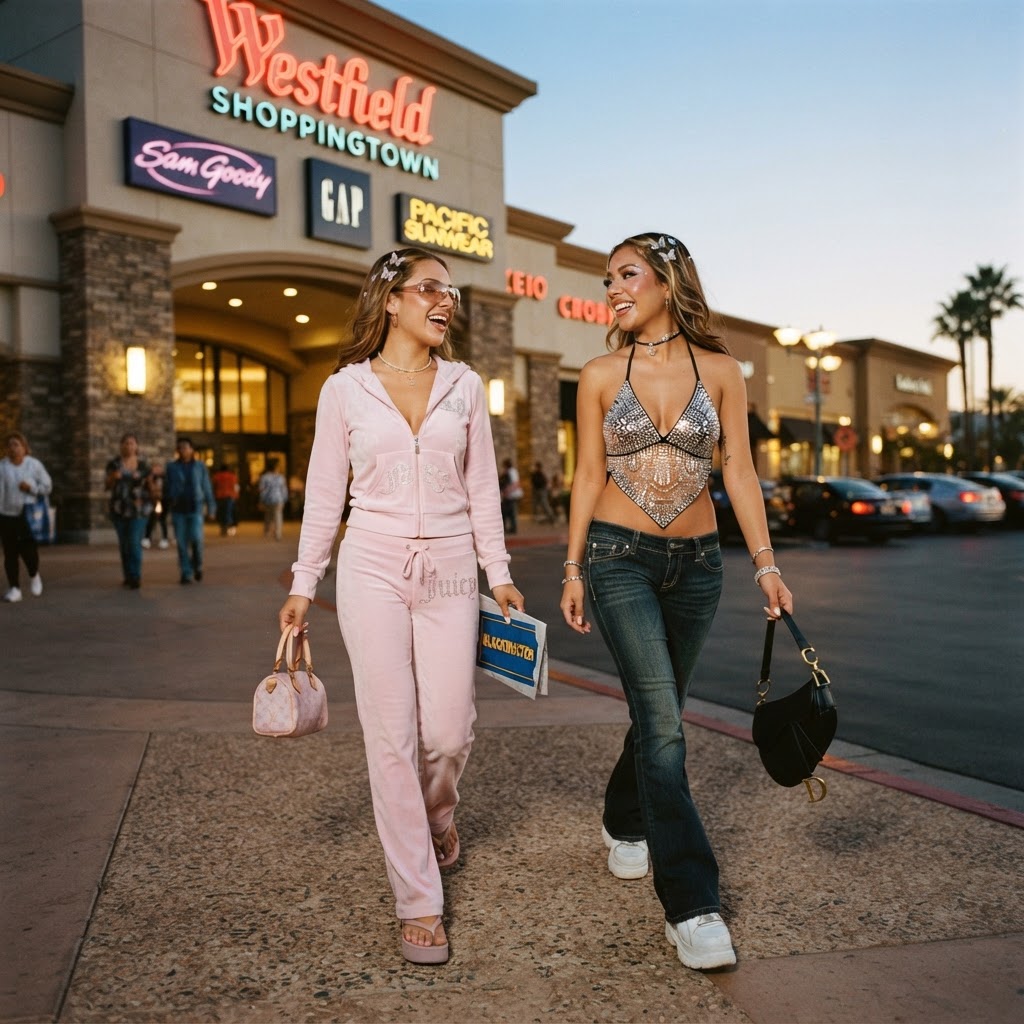
Low-rise jeans, butterfly clips, and bedazzled everything — Y2K fashion has officially left the archives and taken over the zeitgeist. What was once dismissed as a guilty pleasure era is now one of the most coveted aesthetic movements in vintage fashion. Here's why the turn-of-the-millennium look is resonating so powerfully in 2024, and how to wear it with intention.
The Nostalgia Cycle Hits Y2K
Fashion historians will tell you that style operates on a roughly 20-to-30-year nostalgia cycle. The '70s came back in the '90s. The '80s surged in the 2000s. And now, right on schedule, the late 1990s and early 2000s have returned — not as a punchline, but as a full-throated aesthetic revival embraced by everyone from Gen Z thrifters to high-fashion houses.
The term Y2K fashion refers broadly to the style that emerged from approximately 1997 through 2004, a period defined by millennial anxieties, the explosion of the internet, pop stardom at its most maximalist, and a cultural obsession with the future that felt simultaneously utopian and slightly unhinged. It was the era of TRL, frosted lip gloss, Von Dutch trucker hats, and velour tracksuits. And right now, it is everywhere.
But why? And why now?
A Generation Reclaiming Its Childhood
The most straightforward explanation is demographic. The oldest members of Gen Z — those born between roughly 1997 and 2012 — grew up watching their millennial older siblings and parents dress in Y2K silhouettes. These looks are encoded in their earliest memories: the chunky platform sneakers their babysitter wore, the low-slung cargo pants on their favorite pop star's album cover, the shimmery halter tops at every school dance.
Nostalgia is a powerful commercial and emotional force, and Gen Z is now old enough — and financially independent enough — to act on it. Rather than simply recreating the era digitally through TikTok aesthetics, they are actively seeking out authentic vintage pieces from the period, hunting for the real Von Dutch, the actual Juicy Couture zip-up, the genuine early-aughts Levi's low-rise cut.
This is what separates the current Y2K revival from a mere trend: it is rooted in a desire for authenticity over imitation.
Pop Culture Is Doing the Heavy Lifting
It would be impossible to discuss the Y2K resurgence without acknowledging how aggressively pop culture has amplified it. Artists like Doja Cat, Olivia Rodrigo, Ice Spice, and Billie Eilish have each, at various points, leaned into early-aughts aesthetics in their music videos, red carpet appearances, and merchandise — sending millions of fans scrambling to replicate the look.
Meanwhile, the fashion industry itself has been raiding the Y2K vault. Miu Miu's micro-miniskirts brought back the barely-there hemlines of 2001. Diesel's logo-heavy revival echoed the branding maximalism of the original era. Versace and Roberto Cavalli revisited the low-cut, skin-baring silhouettes that defined early-aughts red carpets. When luxury fashion says a decade is relevant, the vintage market listens — and demand for original pieces spikes accordingly.
Streaming has also played a quietly enormous role. The re-release of early-2000s reality TV, the success of documentaries about pop icons of the era, and the endless loop of throwback content on platforms like TikTok and Instagram have kept Y2K visuals in constant circulation, making them feel simultaneously retro and utterly contemporary.
The Aesthetic Itself: Why It Works in 2024
Beyond nostalgia and celebrity influence, there is a genuine aesthetic argument for why Y2K fashion translates so well to the current moment.
The era was defined by contrast and contradiction: it was futuristic yet playful, overtly sexual yet cartoonish, mass-produced yet deeply personalized. Rhinestones met athletic wear. Butterfly motifs met cyberpunk metallics. Baby pink met chrome. There was an almost anarchic joy to the dressing of the period — a sense that more was always more, that visible branding was a flex, that femininity could be simultaneously ironic and earnest.
In an era defined by digital minimalism, algorithmic conformity, and the quiet luxury aesthetic's relentless beige, Y2K's maximalism feels genuinely countercultural. Wearing a bedazzled halter top or a pair of ultra-low-rise flares in 2024 is a statement — an act of deliberate exuberance against the muted, tasteful norm.
There is also something politically resonant about reclaiming an era that was, at the time, often criticized for its supposedly shallow materialism. The cultural reassessment of early-aughts pop stars — Britney Spears, Christina Aguilera, Paris Hilton — has reframed their fashion choices not as vapid excess but as bold, boundary-pushing self-expression. Wearing Y2K is, for many, a way of honoring that reappraisal.
What to Look For: Key Y2K Pieces Worth Seeking Out
If you are ready to build an authentic Y2K wardrobe, knowing which pieces carry the most cultural weight — and the most wearability — is essential.
Velour and terry cloth tracksuits remain the crown jewel of Y2K collecting. Original Juicy Couture pieces from 2001–2005 are highly sought after, particularly in pink, baby blue, and chocolate brown colorways with the signature charm details.
Low-rise denim is perhaps the most wearable Y2K piece for 2024. Look for straight-leg or slight flare cuts from brands like Frankie B., Earl Jean, or vintage Seven For All Mankind from their earliest runs.
Logo-heavy accessories — including LV monogram bags, Dior saddle bags, and Fendi baguettes from the period — have become serious collector's items. Even non-luxury logo pieces, like original Von Dutch hats or Ed Hardy tees, carry significant vintage cachet.
Metallic and iridescent fabrics are quintessentially Y2K. A genuine early-2000s liquid silver slip dress or a holographic mini skirt from the era will always turn heads.
Finally, do not underestimate footwear. Original Steve Madden platform sandals, early Nike Shox, and Skechers Energy sneakers from the late '90s are increasingly difficult to find in good condition — which makes them all the more valuable.
Styling Y2K for the Modern Wardrobe
The key to wearing Y2K in 2024 without veering into costume territory is selective commitment. Choose one statement piece — the low-rise jean, the velour hoodie, the logo belt — and let it anchor an otherwise contemporary outfit. A vintage Juicy Couture track jacket looks fresh over wide-leg tailored trousers. A bedazzled cami pairs beautifully with a sleek blazer and loafers.
Conversely, if full maximalist commitment is your goal, lean all the way in. Layer the butterfly clips. Add the platform boots. Stack the charm bracelets. Y2K was never a half-measure aesthetic, and there is real power in honoring that completely.
The most important rule is intentionality. Vintage fashion is always most compelling when worn with awareness — when the person in the piece understands what it meant then, and has decided what it means now.
Find Your Y2K Era at Ensemble
The Y2K revival is not a passing micro-trend — it is a full cultural reassessment of an era that deserves to be taken seriously, worn proudly, and preserved carefully. As demand grows, authentic pieces from the late 1990s and early 2000s are becoming harder to find and faster to sell.
At Ensemble, our curated marketplace specializes in authenticated vintage clothing from every decade of the twentieth and early twenty-first centuries — including an ever-growing selection of genuine Y2K pieces sourced from collectors, estate sales, and wardrobes across the country. Whether you are hunting for that perfect velour zip-up or a pristine logo bag from 2002, our sellers know their eras, their labels, and their history.
The millennium already happened once. It is happening again — and this time, the fashion is even better for knowing what it means.