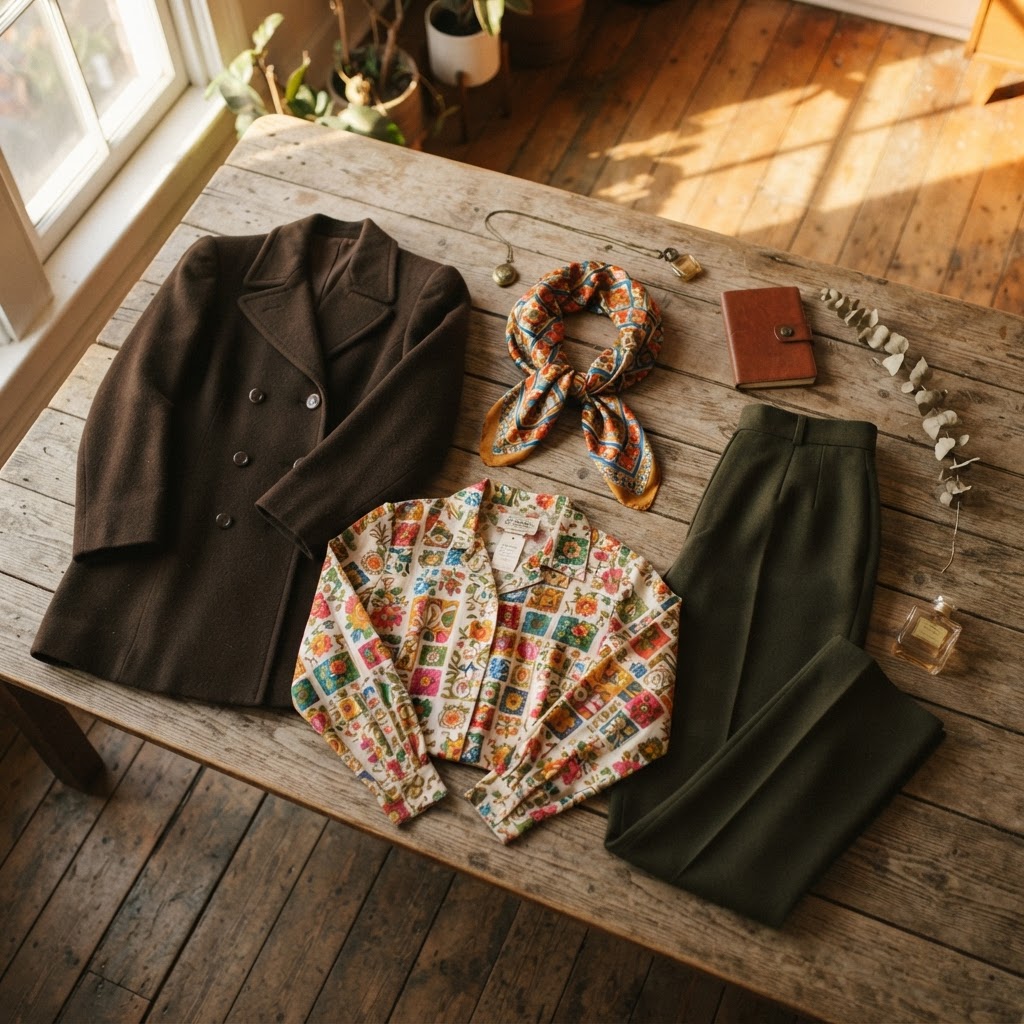
Why Wearing Vintage Is One of the Most Sustainable Fashion Choices You Can Make
Fast fashion dominates headlines for all the wrong reasons—pollution, waste, and exploitation. But there's a beautifully simple antidote hiding in closets, markets, and curated online platforms: vintage fashion. Choosing pre-loved clothing isn't just a style statement; it's an eco-conscious act with real, measurable impact.
The Hidden Cost of "New"
Every time a new garment rolls off a production line, it carries an invisible price tag far beyond what's printed on the label. The global fashion industry is responsible for approximately 10% of annual carbon emissions worldwide—more than aviation and maritime shipping combined. A single pair of jeans requires roughly 1,800 gallons of water to produce, from cotton cultivation to finishing. Polyester, the world's most popular fabric, sheds microplastics into waterways with every wash cycle, silently accumulating in oceans and food chains.
Fast fashion has accelerated this damage dramatically. Brands now release 52 micro-seasons per year, encouraging consumers to treat clothing as disposable. The result? More than 92 million tons of textile waste generated globally every year. When you hold a brand-new, trend-driven garment in your hands, you're holding a product whose environmental debt has already been paid—and not cheaply.
Vintage fashion offers a fundamentally different equation.
What Makes Vintage Inherently Sustainable
At its core, buying vintage is an act of circular economy thinking. Rather than extracting new raw materials, consuming energy in manufacturing, and generating fresh waste, you're extending the lifecycle of something that already exists. The carbon, water, and labor embedded in that 1970s suede jacket or that 1950s cotton tea dress have already been spent. By wearing it again, you amortize that environmental cost across decades of use—and you prevent the item from ending up in a landfill.
This concept is called garment longevity, and it's one of the most effective levers for reducing fashion's footprint. Studies suggest that extending the active life of a garment by just nine months reduces its carbon, water, and waste footprint by 20–30%. Vintage pieces, which may already be 30, 50, or even 90 years old, have beaten that benchmark many times over.
There's also the matter of craftsmanship. Clothing made between the 1920s and the early 2000s was, in many cases, built to last. Natural fibers like wool, silk, linen, and cotton were standard. Seams were finished properly. Linings were sewn with care. These garments survived because they were made to. Contrast that with today's ultra-cheap construction, where a $15 blouse might fray after three washes, and the sustainability argument for vintage becomes even more compelling.
Vintage vs. "Sustainable" New Brands: A Nuanced Comparison
The rise of eco-conscious fashion brands is genuinely encouraging. Labels using organic cotton, recycled fibers, and ethical labor practices are pushing the industry in the right direction. But even the most sustainable new garment carries a production footprint. Organic cotton still requires water. Recycled polyester still uses energy. Shipping still emits carbon.
Vintage, by contrast, requires zero new production. The only carbon cost is transportation—and when you shop through a curated online vintage marketplace, that footprint is often comparable to, or less than, purchasing new.
This doesn't mean sustainable new fashion is bad. It means that vintage should be the first stop in any eco-conscious wardrobe-building journey. Shop pre-loved first. Fill gaps with thoughtfully made new pieces when necessary. This hierarchy of consumption is how individual style choices translate into genuine environmental benefit.
The Decades of Difference: How Era Shapes Sustainability
Not all vintage is created equally from an eco-perspective, and understanding the fashion history behind different eras helps you shop smarter.
1920s–1940s: Wartime rationing and Depression-era frugality meant garments were made with minimal waste and maximum durability. Natural fibers dominated entirely. Finding authentic pieces from this era is rare and precious—wear them, but treat them as heirlooms.
1950s–1960s: The postwar boom introduced synthetics like nylon and later polyester, but quality construction remained the norm. A well-preserved 1960s shift dress or a 1950s wool coat is both a style icon and a testament to lasting craftsmanship.
1970s: The decade of natural fibers making a cultural comeback—think cotton peasant blouses, leather goods, and denim that was built to endure a decade of hard wear. Seventies vintage is plentiful, wearable, and incredibly on-trend right now.
1980s–1990s: Synthetic blends became more common, but oversized silhouettes and bold constructions from the '80s, along with the minimalist and grunge aesthetics of the '90s, produced pieces with enormous staying power. These decades represent the sweet spot of vintage availability and wearability.
2000s–2010s: Now entering vintage territory, early-aughts and 2010s fashion carries some of the highest synthetic content—but the sheer volume of well-preserved pieces and the current nostalgia wave make this era a sustainable goldmine for younger shoppers.
Building an Eco-Conscious Wardrobe with Vintage
Approaching vintage shopping with intention makes all the difference between a sustainable wardrobe and a cluttered one. Here are some principles to guide you:
Buy for longevity, not novelty. The sustainability argument collapses if you buy vintage impulsively and discard it quickly. Choose pieces you'll genuinely wear for years. Classic silhouettes, neutral palettes, and quality construction are your friends.
Prioritize natural fibers. Wool, cotton, silk, and linen biodegrade. They breathe better, last longer, and age beautifully. When shopping vintage, check labels and feel the weight of the fabric—natural fibers have a drape and substance that synthetics rarely replicate.
Learn basic care and repair. One of the simplest sustainable acts is maintaining what you own. A loose button, a small seam tear, or a scuffed leather toe can all be remedied with minimal effort. Resources for learning basic mending—or finding a skilled tailor—are more accessible than ever.
Resist trend-chasing even in vintage. It's tempting to buy every piece that aligns with this season's aesthetic, but overconsumption is overconsumption regardless of the garment's age. A curated, intentional collection of vintage pieces will always outperform a sprawling, trend-driven haul.
Think in outfits, not items. Before purchasing, consider how a piece integrates with what you already own. A 1970s blazer that works with three existing outfits is infinitely more sustainable than a one-off statement piece you'll wear once.
The Cultural Argument: Preserving Fashion History
Sustainability isn't only environmental. There's a cultural sustainability to vintage fashion that deserves recognition. Each decade's clothing is a document—of aesthetics, of social movements, of technological change, of what people valued and how they expressed it. The silhouettes of the 1940s reflect wartime practicality. The bold prints of the 1960s carry the fingerprints of liberation movements. The oversized power suits of the 1980s are artifacts of shifting gender dynamics in the workplace.
When you wear vintage, you participate in an ongoing conversation between past and present. You become a steward of material culture. That's a form of care that extends far beyond carbon calculations.
Conclusion: Your Wardrobe as a Values Statement
Fashion has always been personal, but it has never been consequence-free. Every purchasing decision sends a signal—to brands, to markets, to the broader culture—about what we value and what kind of industry we want to support. Choosing vintage is one of the clearest, most accessible ways to align your wardrobe with a commitment to the planet.
At Ensemble, we've built our marketplace around exactly this belief. Our collection spans authentic pieces from the 1920s through the 2010s, curated for quality, provenance, and wearability. Whether you're building a wardrobe from scratch or searching for that one perfect piece to complete an outfit, shopping vintage through Ensemble means you're making a choice that's good for your style—and genuinely good for the world. Browse our collections today and discover that the most sustainable wardrobe is one that's already been worn, loved, and made to last.