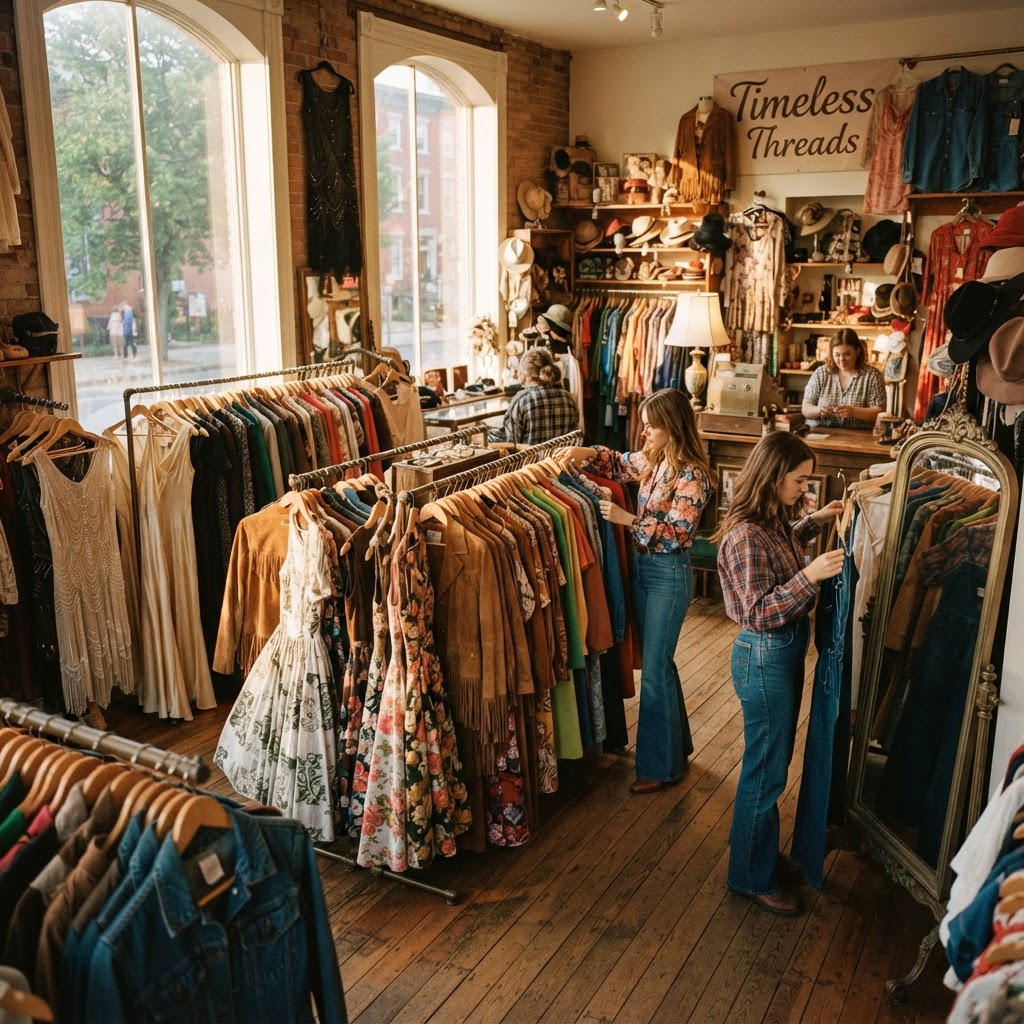
Why Vintage Fashion Marketplaces Are Booming — And How Ensemble Is Leading the Charge
The vintage fashion market has exploded into a multi-billion dollar industry, transforming the way buyers and sellers connect over clothing that carries history in every stitch. But not all vintage marketplaces are created equal. Here's what's driving the rise of resale culture — and why Ensemble stands apart from the crowd.
The Vintage Revolution Is Here
Something remarkable has happened to the way we think about fashion over the past decade. What was once considered "secondhand" or "thrifted" has been reborn as vintage — a word that carries weight, history, and an unmistakable sense of style. From the flapper dresses of the 1920s to the neon windbreakers of the 1990s, vintage clothing has become one of the most sought-after categories in all of fashion retail.
According to recent market research, the global secondhand apparel market is projected to reach $350 billion by 2027, growing three times faster than the broader fashion industry. Platforms dedicated to vintage and pre-loved clothing are a major driver of this growth. Sellers who once relied on weekend flea markets and local consignment shops now have access to global audiences, and buyers are more educated — and more enthusiastic — than ever before.
So what's behind this seismic shift? And more importantly, if you're a seller with a rack full of carefully curated pieces, where should you be listing them?
Why Vintage Fashion Has Captured the Cultural Moment
Several forces have converged to make vintage fashion not just popular, but essential.
Sustainability is perhaps the most powerful driver. As awareness of fast fashion's environmental toll has grown, consumers — especially younger generations — are actively seeking alternatives. Buying vintage means opting out of a system that generates enormous waste, and that choice has become a badge of conscious consumption.
Nostalgia plays an equally important role. Each decade carries its own aesthetic DNA, and wearing a piece from the 1970s or 1980s is a way of connecting with a cultural moment. It's fashion as time travel. Collectors don't just want clothes; they want the feeling and story those clothes represent.
Finally, there's the uniqueness factor. In a world of fast-fashion homogeneity, vintage pieces are inherently one-of-a-kind. You won't find your exact outfit on three other people at the same party. That exclusivity is enormously appealing in an age saturated by mass production.
The Marketplace Explosion: A New Landscape for Sellers
The rise of vintage fashion demand naturally gave birth to a wave of online marketplaces. Platforms like Depop, Poshmark, eBay, and Etsy all carved out space in the resale market. Each brought something to the table — social features, broad audiences, ease of listing — but they also brought significant limitations for serious vintage sellers.
On generalist platforms, a 1940s silk blouse competes for attention alongside a fast-fashion crop top listed for $8. Algorithms reward volume and speed, not curation or expertise. Sellers who specialize in authentic vintage pieces often find themselves lost in a sea of "Y2K-inspired" reproductions and modern castoffs dressed up with retro hashtags.
This is the fundamental problem with marketplaces that try to be everything to everyone: authenticity gets diluted. For a seller who has spent years building expertise in mid-century fashion or 1980s designer pieces, that dilution is more than frustrating — it's bad for business.
What Serious Vintage Sellers Actually Need
If you've been in the vintage game for any length of time, you know that selling authentic clothing isn't like selling just any product. It requires a specific set of tools and an audience that actually understands what you're offering.
Here's what distinguishes a great vintage marketplace from a generic resale platform:
Era-specific categorization. Buyers searching for a 1960s mod dress shouldn't have to wade through 2000s fast fashion. Proper decade-based organization helps serious buyers find exactly what they're looking for — and helps your listings get discovered by the right people.
An educated buyer base. The best vintage platforms attract buyers who understand the difference between a true 1950s circle skirt and a modern reproduction. These buyers are willing to pay fair prices because they recognize genuine quality and provenance.
Authentication and trust signals. In vintage fashion, condition, provenance, and accurate dating matter enormously. Platforms that encourage detailed descriptions, original tags, and honest condition reporting build the kind of trust that leads to repeat customers and strong seller reputations.
Community and expertise. Vintage fashion is deeply communal. The best sellers aren't just moving inventory — they're sharing knowledge, building relationships, and contributing to a broader culture of appreciation for fashion history.
The Problem With "Vintage Everywhere"
One of the side effects of vintage fashion's popularity is the proliferation of items being mislabeled as vintage. Reproductions, fast-fashion "vintage-inspired" pieces, and modern items with retro aesthetics increasingly crowd out the real thing on generalist platforms.
For sellers of authentic pieces, this is a serious credibility issue. When buyers can't trust that what they're buying is genuinely from the era it claims, they become skeptical — and that skepticism hurts honest sellers most. The vintage market needs spaces where authenticity is the baseline, not the exception.
This is why dedicated vintage marketplaces have such a critical role to play. When a platform commits to a defined era range and enforces meaningful standards, it creates an environment where both buyers and sellers can operate with confidence.
Seller Tips: How to Stand Out in the Modern Vintage Market
Whether you're just starting out or you're a seasoned vintage dealer, here are strategies that consistently drive results:
Tell the story of the piece. Buyers of vintage aren't just purchasing a garment — they're purchasing a narrative. Where did the piece come from? What era does it represent? What cultural moment does it capture? The more context you provide, the more compelling your listing becomes.
Photograph like a professional. Natural light, clean backgrounds, and multiple angles are non-negotiable. Show the label, any wear or flaws, and styling shots that help buyers envision the piece in their own wardrobe.
Be precise about dating. Don't just say "vintage 80s" — if you can narrow it down, do. Buyers searching for early 1980s new wave aesthetic pieces have different needs than those seeking late 1980s power-dressing silhouettes. Specificity builds credibility.
Price with confidence. Research comparable sold listings and price your pieces fairly — not cheaply. Underpricing authentic vintage not only hurts your margins; it signals to buyers that something might be off about the piece.
Build your reputation through education. Share what you know. Post about how to identify authentic labels, how to care for vintage fabrics, or the history behind a particular style. Sellers who educate their audience build loyal followings.
Ensemble: Built for the Vintage Seller Who Takes This Seriously
This is precisely the gap that Ensemble was created to fill. As a marketplace dedicated exclusively to authentic clothing from the 1920s through the 2010s, Ensemble has built something that generalist platforms simply cannot offer: a focused, knowledgeable community where vintage truly means vintage.
Every feature of Ensemble is designed with the serious seller in mind. The platform's decade-based organization means your 1970s boho pieces reach buyers who are specifically seeking that era. The buyer community is composed of people who understand and value authenticity — which means fair prices, fewer disputes, and more satisfying transactions.
For sellers who have spent years building expertise and curating collections, Ensemble offers what the broader market has long been missing: a home that respects the craft.
Conclusion: The Right Marketplace Makes All the Difference
The vintage fashion boom isn't a trend — it's a fundamental shift in how people relate to clothing, history, and consumption. That shift creates enormous opportunity for knowledgeable sellers. But opportunity is only meaningful if you have the right platform to build on.
With Ensemble, you're not just listing clothes. You're joining a marketplace built on the belief that every authentic vintage piece deserves to be seen, understood, and valued. Whether you specialize in 1930s bias-cut gowns or 1990s streetwear, Ensemble is where your expertise finds its audience — and where your business can truly grow.