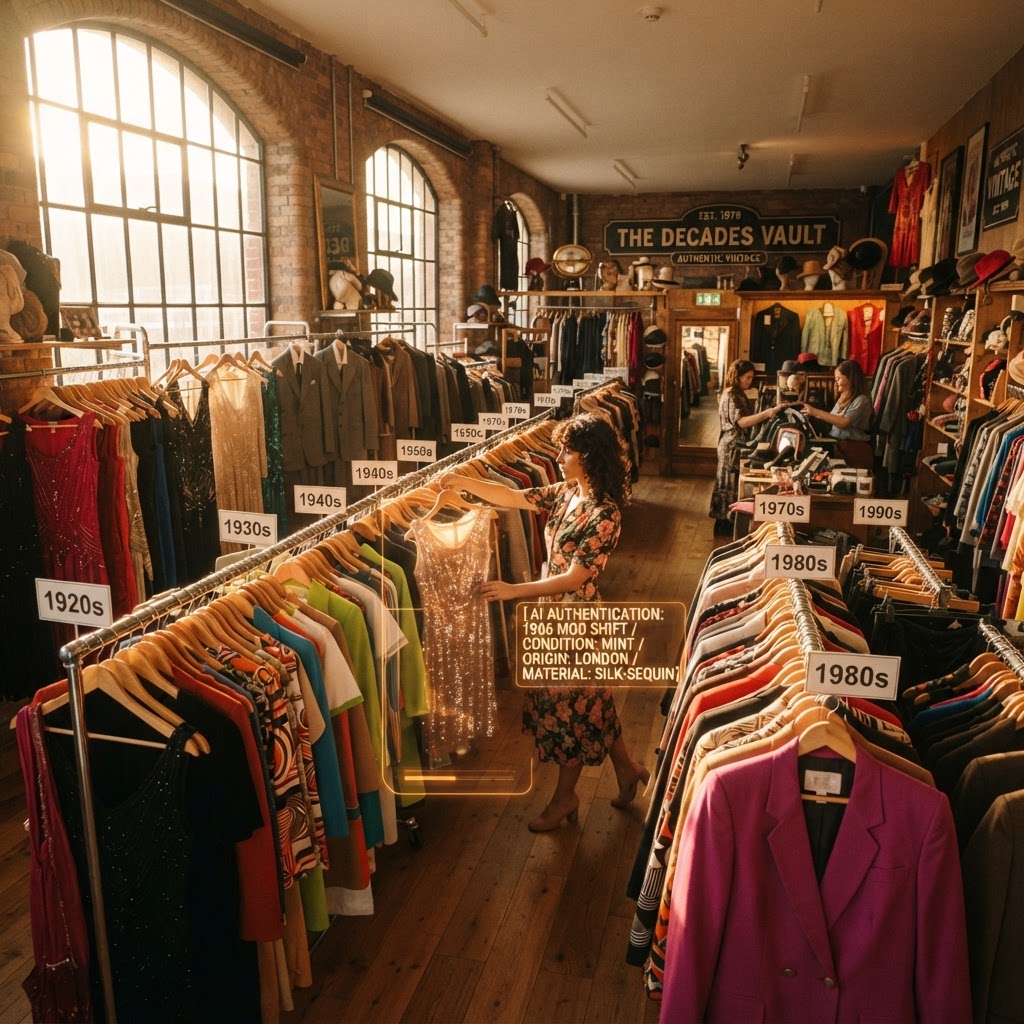
Why Vintage Fashion Buyers Are Turning to AI-Powered Marketplaces (And What It Means for Sellers)
The vintage fashion world is changing fast, and savvy buyers are leading the charge toward AI-powered marketplaces that make finding authentic pieces easier than ever. From smarter search tools to instant authentication insights, technology is reshaping how collectors shop for everything from 1930s silk bias-cut gowns to 1990s grunge staples. If you're a seller, understanding this shift isn't optional — it's your competitive edge.
The Vintage Fashion Boom Meets the AI Revolution
Vintage fashion has never been more popular. Driven by sustainability concerns, a hunger for individuality, and a deep cultural nostalgia, buyers are scouring the internet for authentic pieces from every decade — from the beaded flapper dresses of the 1920s to the neon windbreakers of the 1980s to the low-rise denim of the early 2000s. But as demand has surged, so has one persistent problem: trust.
How does a buyer in Tokyo know that the "genuine 1960s mod mini dress" listed by a seller in Toronto is actually what it claims to be? How do collectors separate true deadstock from clever reproductions? This is precisely the gap that AI-powered marketplaces are stepping in to fill — and buyers have taken notice in a big way.
What Buyers Actually Want (And Weren't Getting Before)
For years, vintage shoppers relied on a patchwork of expertise: forum communities, personal blogs, YouTube authentication guides, and the occasional in-person vintage fair. While these resources remain valuable, they're slow, inconsistent, and inaccessible to newer collectors who haven't yet built deep decade-specific knowledge.
Modern vintage buyers want three things above all else:
- Authenticity confidence — certainty that a piece is genuinely from the era it claims
- Efficient discovery — the ability to find exactly what they're looking for without scrolling endlessly
- Fair pricing context — an understanding of whether a listed price reflects true market value
Traditional marketplaces, even well-curated ones, have historically struggled to deliver all three simultaneously. AI is changing that calculus entirely.
How AI Is Transforming the Buying Experience
Smarter Search and Discovery
One of the most immediate ways AI is winning over vintage buyers is through intelligent search functionality. Rather than forcing shoppers to know exactly the right terminology — "raglan sleeve," "boxy boyfriend cut," "lettuce hem" — AI-powered search tools can interpret natural language queries and visual inputs.
A buyer can now upload a photo of a look they love from a film set in the 1970s and ask a marketplace to find similar pieces in their size and budget. They can describe a vague aesthetic — "earthy, textured, bohemian, early 1970s" — and receive curated results that actually match the vibe. This kind of semantic and visual search removes the steep learning curve that once kept casual shoppers from becoming serious collectors.
For sellers, this means your carefully sourced 1972 peasant blouse can now reach the buyer who was looking for exactly that piece but didn't know what to call it.
AI-Assisted Authentication
Authentication has long been the holy grail of vintage fashion retail. AI tools are now being trained on thousands of data points — label typography, stitching patterns, fabric compositions, zipper hardware styles, care tag regulations by decade — to help verify the age and origin of garments.
While no AI tool replaces the trained eye of a true vintage expert, these systems are remarkably good at flagging inconsistencies. A label that claims to be from 1955 but uses font styles that weren't common until the 1970s? An AI model can catch that. A zipper style that wasn't manufactured until a decade after the listed date? Flagged.
Buyers feel dramatically more confident purchasing from platforms that incorporate these verification layers, and trust translates directly into higher conversion rates — good news for sellers willing to provide detailed, accurate listings.
Dynamic Pricing Intelligence
One of the trickiest aspects of selling vintage is pricing. Markets fluctuate based on trends, celebrity influence, and cultural moments. A 1980s power blazer might be worth significantly more today than it was three years ago simply because of a hit TV show or a viral red carpet moment.
AI-powered pricing tools analyze real-time market data — recent sales, current listings, trend forecasts — to help both buyers and sellers understand fair value. Buyers appreciate knowing they're not overpaying, and sellers benefit from guidance that helps them price competitively without undervaluing their inventory.
This dynamic pricing intelligence is particularly valuable for sellers who specialize in a specific era but may be less familiar with the broader market. A seller who lives and breathes 1940s wartime fashion might not know the current going rate for a pristine 1990s Versace piece they've stumbled upon — AI closes that knowledge gap instantly.
The Trust Economy and Why It Matters for Sellers
At the heart of the AI-powered marketplace revolution is a fundamental shift toward what economists call the trust economy. Buyers are increasingly willing to pay a premium — and return repeatedly — to platforms where they feel confident in what they're purchasing.
This has profound implications for sellers. The days of vague listings with minimal photos and optimistic era attributions are fading. Today's buyers, empowered by AI tools that help them ask better questions and spot red flags, expect transparency and detail.
The sellers thriving in this new environment share a few key habits:
- Exhaustive photography: multiple angles, close-ups of labels, hardware, stitching, and any flaws
- Precise attribution: specific decade ranges rather than broad guesses, with notes explaining how the attribution was made
- Honest condition reporting: buyers don't mind wear and patina — they mind surprises
- Rich contextual storytelling: the history of a garment, its likely original use, the cultural moment it comes from
AI tools on modern platforms can actually assist sellers in building out these rich descriptions, suggesting relevant historical context and flagging any inconsistencies in their own listings before they go live.
Sustainability and the Conscious Consumer
It's worth noting that the rise of AI-powered vintage marketplaces is also being driven by the sustainability movement. A growing segment of fashion consumers is actively choosing vintage as an ethical alternative to fast fashion. These buyers tend to be digitally native, research-oriented, and deeply skeptical of greenwashing.
For this demographic, AI-powered marketplaces aren't just convenient — they're aligned with values. The ability to verify a garment's age and provenance, understand its material composition, and make an informed purchase feels fundamentally more responsible than buying new. Platforms that use technology to enhance transparency are speaking directly to this buyer's deepest motivations.
As a seller, positioning your inventory within this sustainability narrative — and using platform tools that support transparent, verifiable listings — isn't just good marketing. It's good ethics.
What This Means for Your Selling Strategy
The shift toward AI-powered vintage marketplaces isn't a distant future trend — it's happening right now, and the sellers who adapt early will have a significant advantage. Here's what to focus on:
Invest in your listing quality. More than ever, the effort you put into photographing, describing, and authenticating your pieces will determine your success. AI tools can amplify great listings; they can't rescue lazy ones.
Embrace platform technology. If a marketplace offers AI-assisted pricing, authentication support, or enhanced search categorization tools, use them. These features exist to help your pieces reach the right buyers faster.
Build your expertise narrative. Buyers want to buy from people who know their stuff. Share your authentication process, your sourcing story, your decade specialties. In an AI-enhanced marketplace, the human voice behind a listing still matters — perhaps more than ever.
Stay curious about trends. AI pricing tools will show you where the market is moving. Pay attention. The savviest vintage sellers are part merchants, part historians, and part trend forecasters.
Conclusion: The Future of Vintage Is Intelligent
Vintage fashion has always been about more than clothing — it's about history, identity, and the stories that garments carry across decades. What AI-powered marketplaces are doing is making those stories more accessible, more verifiable, and more discoverable than ever before.
At Ensemble, we believe that technology should serve the magic of vintage, not replace it. Our platform is built to connect passionate sellers with knowledgeable buyers across every era from the 1920s through the 2010s, using intelligent tools that build trust, support fair pricing, and celebrate the authenticity that makes vintage fashion so enduringly extraordinary.
Whether you're sourcing 1950s circle skirts or curating a collection of early 2000s Y2K pieces, Ensemble's AI-powered features are designed to help your inventory shine — and help the right buyer find exactly what they've been looking for. The future of vintage is intelligent, transparent, and full of incredible finds. We'd love for you to be part of it.