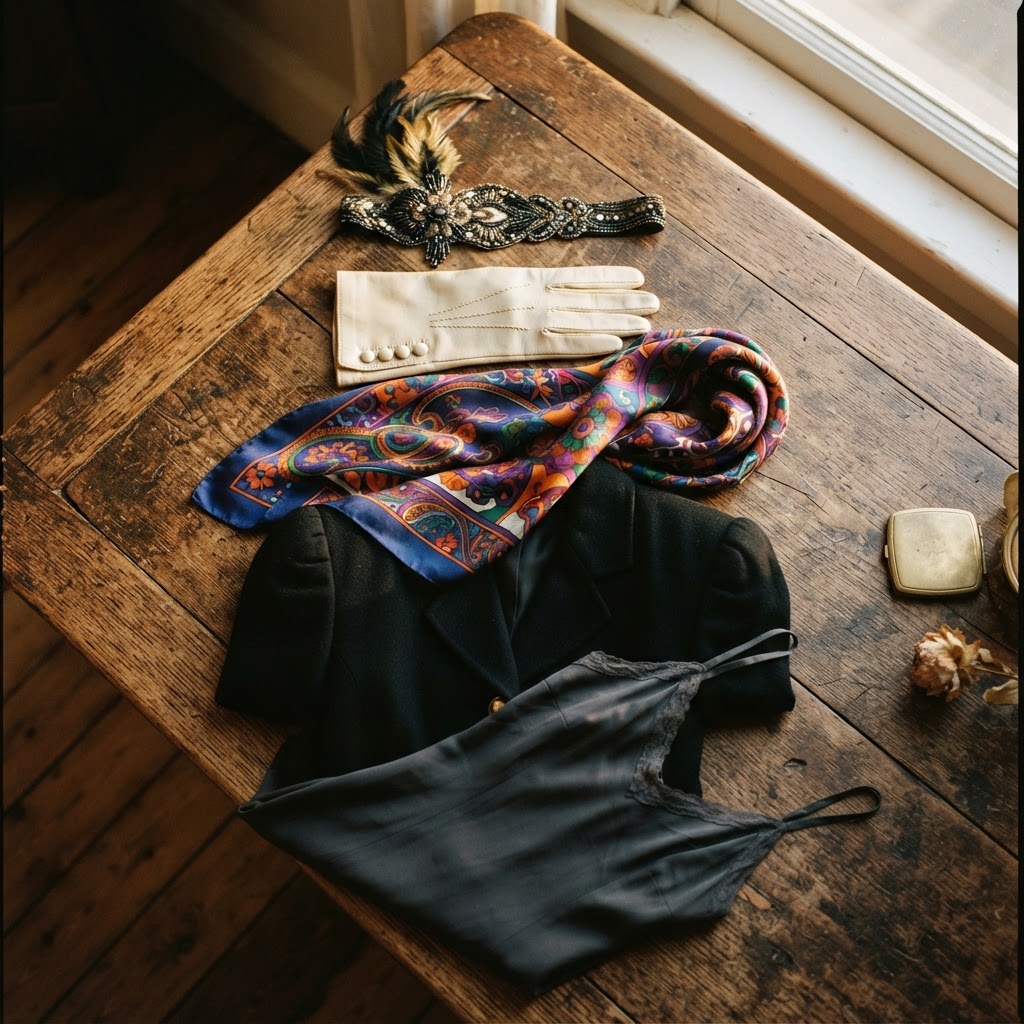
Vintage vs. Antique vs. Retro Fashion: The Ultimate Style Dictionary You Need to Know
If you've ever called a '90s windbreaker 'antique' or described your grandmother's 1940s tea dress as 'retro,' you're not alone — but you might be raising a few eyebrows in fashion circles. Understanding the difference between vintage, antique, and retro isn't just semantic nitpicking; it's the key to shopping smarter, dressing more intentionally, and speaking the language of true style connoisseurs.
Why the Labels Actually Matter
Fashion has always been a conversation between the past and the present. We raid our grandmothers' closets, haunt thrift store racks, and scroll endlessly through marketplace listings hoping to find that perfect piece with a story. But somewhere between the vintage Levi's and the retro-inspired sundress, the terminology gets muddy. And in the world of pre-loved clothing, words carry real weight — both culturally and commercially.
Getting the labels right helps you shop with confidence, sell with credibility, and style yourself with intention. So let's break it all down, decade by decade, definition by definition.
What Does "Vintage" Actually Mean?
This is the word most people use as a catch-all for anything old or old-looking, but vintage has a more precise definition in the fashion world. Generally speaking, a garment is considered vintage if it is at least 20 years old but less than 100 years old. That means right now, in 2024, anything made between 1924 and 2004 could technically qualify.
But age alone doesn't make something vintage. The piece should also be representative of the era in which it was made — in terms of silhouette, fabric, construction, and aesthetic. A plain white t-shirt from 1998 isn't really vintage in spirit, even if it technically clears the age bar. A structured 1970s wrap dress with bold geometric print or a 1980s power-shoulder blazer in cobalt blue? That's vintage through and through.
Within the broader vintage umbrella, collectors and enthusiasts often break things down further:
- True vintage (20–50 years old): Think '80s acid-wash denim, '90s slip dresses, early 2000s logomania.
- Designer vintage: Pieces by recognized houses — Halston, Versace, Chanel — that carry both historical and monetary value.
- Museum-quality vintage: Exceptionally rare, well-preserved pieces that tell a significant cultural story.
The condition, provenance, and rarity of a vintage piece all affect its value. A mint-condition 1960s mod minidress with an original label will always command more attention than a heavily worn example without documentation.
So What Is "Antique" Fashion?
If vintage is the teenager of old clothing, antique is the grandparent. The antique label is traditionally reserved for items that are 100 years old or more. In 2024, that means anything made before 1924 qualifies — we're talking Edwardian blouses, Victorian corsets, 1910s beaded evening wear, and the earliest flapper-era garments of the 1920s.
Antique clothing is generally treated more like a collectible or artifact than a wearable fashion item. Fabrics degrade over time; construction methods from the 19th and early 20th centuries weren't designed for the wear and wash cycles of modern life. Many antique garments are better suited for display, preservation, or costume purposes rather than everyday wear.
That said, there's an extraordinary romance to antique fashion. A 1920s beaded silk gown or an Edwardian lace collar carries the kind of craftsmanship that simply doesn't exist in mass production today. For serious collectors, antique fashion sits at the intersection of textile history, social history, and wearable art.
Key characteristics of antique fashion include:
- Hand-stitching and artisan construction
- Natural fibers like silk, wool, cotton, and linen (synthetics didn't emerge widely until the mid-20th century)
- Couture or bespoke tailoring — ready-to-wear as we know it didn't fully take hold until the 1950s
- Fragility — these pieces require careful storage, often acid-free tissue and climate-controlled environments
At Ensemble, our antique offerings are among the most carefully curated in our collection, sourced from estate sales, specialized dealers, and private collections. Each piece is verified for age and authenticity before it ever appears on our marketplace.
And What About "Retro"?
Here's where things get interesting — and where the most confusion tends to live. Retro is not about age at all. It's about aesthetic inspiration.
A retro piece is a modern or recent item that is deliberately styled to evoke a past era. That '50s-style poodle skirt you bought at a chain retailer last year? Retro. The repro band tee printed to look like it's from 1975? Retro. The high-waisted swimsuit that channels old Hollywood glamour but was manufactured in 2019? Absolutely retro.
Retro fashion celebrates nostalgia as a design language. It borrows silhouettes, prints, color palettes, and details from decades gone by and reinterprets them through a contemporary lens — with modern fabrics, updated sizing standards, and current production methods.
There's nothing wrong with retro. In fact, the entire fast fashion industry has built enormous revenue on retro aesthetics, cycling through '70s bohemian, '90s grunge, and Y2K aesthetics in rapid succession. But it's important to understand what you're buying:
- Retro ≠ vintage. A retro piece doesn't carry the same historical authenticity, rarity, or investment value as a true vintage garment.
- Retro ≠ sustainable in the same way. Part of the appeal of vintage and antique fashion is that it's genuinely circular — buying a 1980s blazer means no new resources were used in its production.
- Retro can be wonderful. If you love the look of a certain era but want the practicality of modern construction, retro pieces are your best friend.
A Quick Reference Guide
Still fuzzy on the distinctions? Here's a snapshot:
| Term | Age | Origin | Key Appeal | |------|-----|---------|------------| | Vintage | 20–99 years old | Authentic period production | Rarity, history, style | | Antique | 100+ years old | Authentic period production | Craftsmanship, collectibility | | Retro | Any age (often new) | Modern production, old inspiration | Nostalgia, accessibility |
How to Shop Each Category Smartly
Knowing the definitions is one thing. Shopping intelligently across all three categories is another skill entirely.
When shopping vintage, always ask about the label. Original manufacturer labels are one of the strongest indicators of authenticity and can help you date a piece precisely. Look for union labels, country-of-origin tags, and care instruction formats — these all changed at different points in history and can confirm or challenge a seller's dating. Check seams, zippers (metal vs. plastic), and fabric composition.
When shopping antique, condition is everything. Minor wear is expected and forgivable; structural damage to fabric — tears, significant staining, moth damage — can be very difficult or impossible to restore. If you're buying to wear rather than display, seek pieces in genuinely wearable condition and understand that dry cleaning requirements may be significant.
When shopping retro, know what you're paying for. Retro pieces from quality brands can be beautifully made and well worth their price. But don't pay vintage prices for retro pieces — if something is listed as "vintage-inspired" or "retro-style," it should be priced accordingly, not at the premium a true original commands.
The Cultural Value of Getting It Right
Beyond the shopping logistics, there's a broader cultural reason to use these terms carefully. Vintage and antique fashion are primary sources — they're physical evidence of how people lived, what they valued, and how society was structured at a given moment in history. A 1940s utility dress tells a story about wartime fabric rationing. A 1970s Halston jersey gown speaks to a revolution in women's ease and sensuality. A 1990s grunge flannel carries the entire weight of a generational ethos.
When we mislabel these pieces — when everything becomes loosely "vintage" and everything old becomes "antique" — we flatten that history. We lose the specificity that makes fashion such a rich cultural archive.
Find Your Era at Ensemble
Whether you're hunting for a genuine antique lace blouse from the 1910s, a perfectly preserved vintage 1960s shift dress, or you simply love the look of a particular decade and want to explore authentically made pieces from that era, Ensemble is where your search begins and ends.
Our marketplace is built on transparency, expertise, and a genuine love for the story every garment carries. Every listing is carefully categorized — vintage, antique, or retro-era — so you always know exactly what you're getting. Because great style isn't just about how something looks. It's about knowing what it means.
Browse our curated collections by decade at Ensemble, and wear your history well.