Vintage, Antique, or Retro? The Ultimate Guide to Fashion Terminology Explained
If you've ever called a '90s windbreaker 'antique' or described a brand-new polka-dot dress as 'vintage,' you're not alone — but there is a difference. Understanding the language of pre-loved fashion isn't just for collectors and stylists; it helps every shopper find exactly what they're looking for. Let's break down the terminology once and for all.
Why the Labels Matter
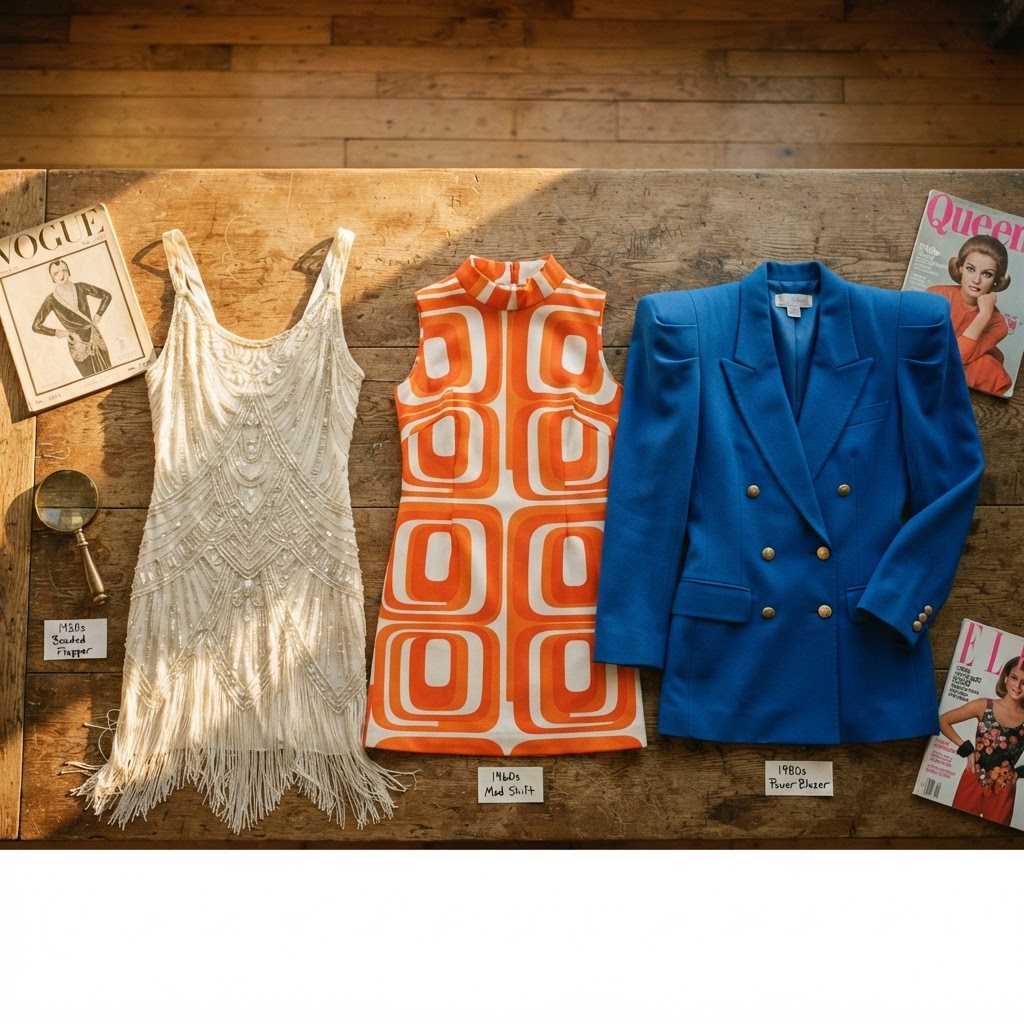
Walk into any thrift store, scroll through any resale marketplace, or flip through the pages of a fashion magazine and you'll encounter three words used almost interchangeably: vintage, antique, and retro. But in the world of fashion collecting and historical dress, these terms carry very specific meanings. Mixing them up can lead to confusion, mismatched expectations, and — if you're shopping for investment pieces — costly mistakes. Whether you're hunting for a beaded 1920s flapper dress or a neon 1980s power suit, knowing the difference will make you a sharper, more confident shopper.
What Does "Vintage" Actually Mean?
The word vintage is perhaps the most misused term in the fashion lexicon. Borrowed from the wine industry — where it refers to the year a grape was harvested — vintage in fashion broadly means clothing that is at least 20 years old and representative of the era in which it was made. So as of 2025, anything produced in 2005 or earlier can technically be called vintage.
But the definition doesn't stop at age. A truly vintage piece must reflect the aesthetic, construction techniques, and cultural moment of its time. A generic white T-shirt from 2003 is old, but it isn't necessarily vintage in spirit. A Y2K-era rhinestone-studded baby tee that screams early-aughts pop culture? That's vintage through and through.
Within the broader vintage category, collectors often speak in decades: 1920s vintage, 1950s vintage, 1970s vintage. Each decade carries its own silhouettes, fabrics, and cultural context. The bias-cut silk of the 1930s is worlds apart from the mod geometric prints of the 1960s, even though both qualify as vintage today.
The 20-Year Rule in Practice
The 20-year threshold is widely accepted among dealers, auction houses, and platforms like Ensemble, though some purists push the boundary to 25 or even 30 years, arguing that true vintage requires a greater temporal distance to be meaningful. The important takeaway: vintage is not a synonym for "old." It implies authenticity, era-specificity, and a connection to a particular fashion moment in history.
What Makes Something "Antique"?
If vintage is the teenager of the pre-loved fashion world, antique is the grandparent. The general rule, borrowed from the antiques trade, is that a piece must be at least 100 years old to be considered a true antique. In 2025, that means clothing and accessories made before 1925.
Antique fashion is an entirely different collecting category. We're talking about Victorian mourning dress, Edwardian lace blouses, Belle Époque corsets, and the very earliest flapper-era pieces from the 1920s. These garments are as much historical artifacts as they are wearable fashion, and they come with serious considerations around preservation, handling, and authentication.
Antique Fashion and Fragility
One of the most important distinctions between antique and vintage clothing is condition and wearability. Fabrics from the late 19th and early 20th centuries — silk charmeuse, fine wool, hand-tatted lace — were not designed to last 100+ years without careful storage. Many antique pieces are best suited for display, museum collections, or costume research rather than everyday wear. When antique pieces do enter the marketplace, they command significant prices and require expert authentication.
For shoppers at Ensemble, the overlap between antique and vintage occurs in those earliest decades of our catalog — the 1920s pieces that are either approaching or crossing the century mark. These are treasures that deserve both reverence and careful handling.
So What Is "Retro"?
Here's where things get fun — and a little more flexible. Retro does not refer to the actual age of a garment. Instead, it describes new or contemporary clothing designed to evoke the style of a previous era. That '50s-style swing dress you bought last summer from a modern retailer? Retro. The brand-new high-waisted trousers that look like they were lifted from a 1970s Sears catalog? Also retro.
Retro is about aesthetic homage, not historical authenticity. It's the fashion industry's way of cycling through the past for inspiration, reinterpreting old silhouettes with modern fabrics, sizing standards, and manufacturing techniques. Retro pieces are easier to care for, more size-inclusive, and generally more affordable than their genuine vintage counterparts.
Retro vs. Vintage: Why It Matters When You Shop
This distinction is crucial for shoppers. If you buy a retro piece thinking it's vintage, you may be overpaying for something that lacks the craftsmanship, historical provenance, or collectible value of an authentic period garment. Conversely, if you're shopping for wearability and affordability and you accidentally pass up a great retro piece because you were fixated on "real" vintage, you might miss out on something perfect for your wardrobe.
The telltale signs of retro versus vintage include labeling (a modern care label with fiber content percentages is a dead giveaway), stitching density, zipper type (metal zippers vs. nylon coil), seam finishing, and fabric composition. Authentic vintage garments often show unique construction details that mass manufacturing has since abandoned.
A Quick Reference Guide
To keep things simple, here's how to remember the three terms:
- Vintage: Authentic clothing that is 20+ years old and representative of its era. Think 1920s beaded gowns through early-2000s denim.
- Antique: Authentic clothing that is 100+ years old. Pre-1925 garments with significant historical and monetary value.
- Retro: New clothing designed to look like it came from a past decade. Inspired by history, but manufactured today.
How These Labels Shape the Market
Understanding these definitions isn't just academic — it has real implications for pricing, investment value, and authenticity. The vintage and antique markets operate on provenance and rarity. A verified 1930s Elsa Schiaparelli jacket is worth exponentially more than a modern jacket inspired by her work, even if they look nearly identical at first glance.
For collectors building a wardrobe with intention, the labels also carry cultural and emotional weight. Wearing a genuine 1960s Courreges shift dress means you're wearing a piece of fashion history — something that existed during the Civil Rights Movement, the Space Race, the British Invasion. That authenticity tells a story that no reproduction can fully replicate.
Retro fashion, meanwhile, serves a different but equally valid purpose: it makes the aesthetics of the past accessible to a wider audience. Not everyone can afford — or wants to preserve — a true vintage piece. Retro democratizes historical style.
Dating a Piece When You're Unsure
If you encounter a garment and you're not sure where it falls on the spectrum, there are several dating techniques seasoned collectors use:
- Check the label: Union labels, country of origin markings, and care instruction symbols all help date a piece. Labels reading "Made in USA" with a union bug suggest pre-1970s. The addition of fiber content percentages on labels became required in the U.S. in 1971.
- Examine the zipper: Metal zippers were standard until the late 1960s. Nylon coil zippers became dominant in the 1970s onward.
- Look at the silhouette: Each decade has hallmark shapes — the dropped waist of the 1920s, the nipped-in waist of the 1950s, the exaggerated shoulders of the 1980s.
- Feel the fabric: Natural fibers dominated pre-1960s fashion. The rise of polyester and synthetic blends is a strong indicator of 1960s and later manufacturing.
Conclusion: Shop Smarter with Ensemble
Whether you're drawn to the romance of a genuine 1940s wool crepe suit, the bold optimism of a 1980s power blazer, or the effortless cool of a Y2K-era slip dress, knowing your terminology is the first step to shopping with confidence and intention. Vintage, antique, and retro each represent a different relationship with fashion history — and all three have a place in a thoughtfully curated wardrobe.
At Ensemble, every piece in our marketplace is carefully authenticated and accurately described, so you always know exactly what you're getting. We believe that the stories woven into historical clothing deserve to be told honestly — and worn proudly. Explore our curated collections spanning the 1920s through the 2010s, and find the piece of fashion history that speaks to you.