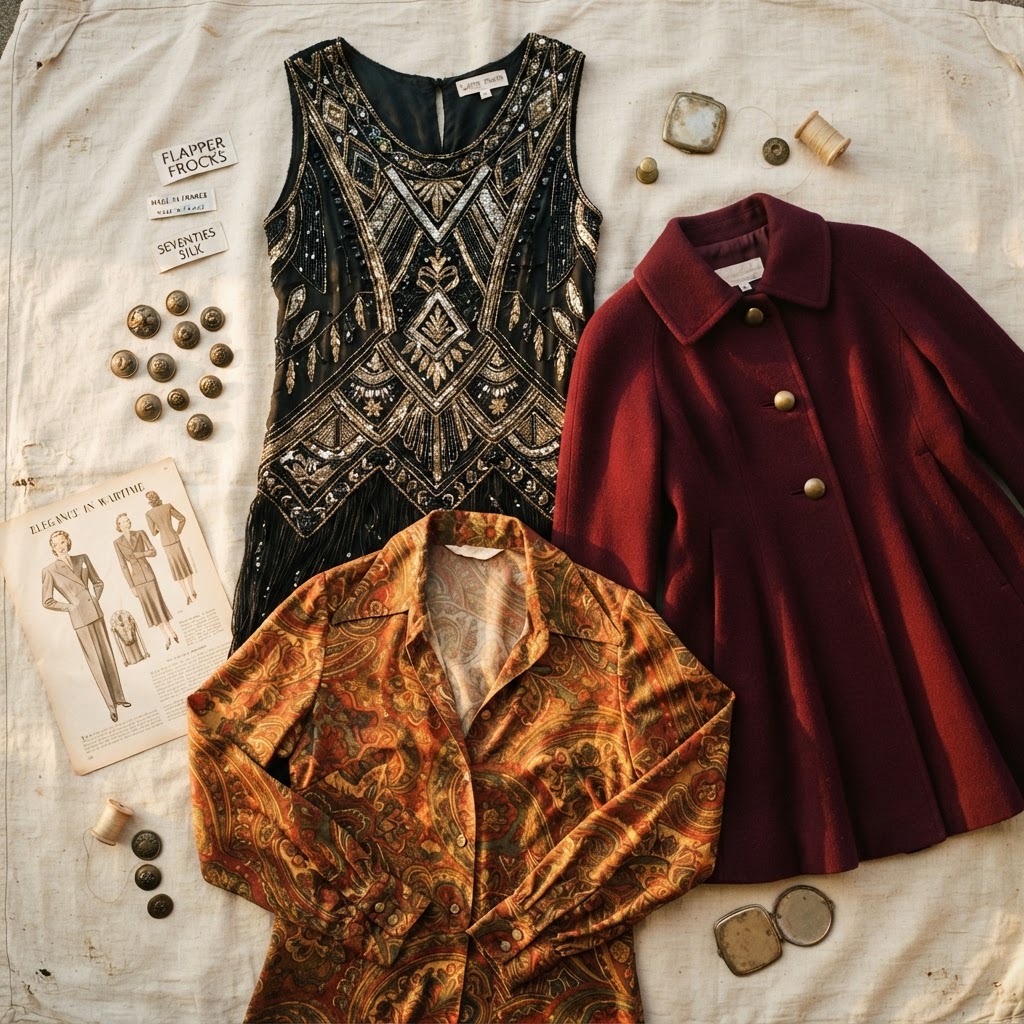
Vintage, Antique, or Retro? The Ultimate Guide to Fashion Terminology Explained
If you've ever called a '90s windbreaker 'antique' or described a new polka-dot dress as 'vintage,' you're not alone — but there's a real difference between these terms that every fashion lover should know. Understanding the distinction can help you shop smarter, style better, and appreciate the rich history behind the clothes you wear. Let's break it all down.
Why Terminology Matters in Fashion
Walk into any thrift store, scroll through any resale marketplace, or flip through a fashion magazine, and you'll encounter the words vintage, antique, and retro used almost interchangeably. But in the world of fashion collecting and historical dress, these terms carry very specific meanings — and mixing them up can lead to confusion, mismatched expectations, and even costly mistakes when you're shopping for authenticated pieces.
Whether you're a seasoned collector hunting for a 1940s silk bias-cut gown or a first-time buyer eyeing a breezy '70s peasant blouse, knowing the difference between these three categories will transform the way you approach fashion history. Think of it as learning a language — once you're fluent, the entire world of pre-loved clothing opens up in vivid detail.
What Does "Vintage" Actually Mean?
Vintage fashion is probably the most widely used — and widely misused — term in the secondhand clothing world. Technically speaking, a garment is considered vintage if it is at least 20 years old but no more than 100 years old. This means that as of 2024, anything produced between approximately 1924 and 2004 could technically fall under the vintage umbrella.
However, most serious collectors and reputable dealers tend to reserve the term for clothing that is at least 25 to 30 years old, ensuring the piece genuinely reflects the design aesthetics, construction techniques, and cultural context of a specific era. A true vintage piece isn't just old — it's a wearable artifact that tells the story of its time.
What makes vintage clothing so compelling is its authenticity. These are garments that were actually worn, actually sold, and actually produced during the decade they represent. The silhouette of a 1960s mod shift dress, the structured tailoring of a 1950s wool coat, or the disco-era shimmer of a 1970s halter top — each piece carries the genuine DNA of its era, right down to the zipper hardware, the stitching technique, and the fabric composition.
Key characteristics of vintage clothing include:
- Original labels from defunct or legacy brands
- Period-accurate construction, such as hand-stitching, boning, or early synthetic fabrics
- Era-specific silhouettes that reflect the fashion ideals of the time
- Signs of authentic age, including slight fading, patina on hardware, or vintage dry-cleaning tags
What Makes Something "Antique"?
If vintage is the broad category, antique fashion is its elder statesman. A garment is generally classified as antique when it is 100 years old or more. This standard is borrowed from the broader antiques trade, where the century mark is the widely accepted threshold for furniture, jewelry, and decorative arts alike.
In practical terms, antique clothing currently encompasses pieces made before 1924 — think Edwardian lace blouses, Victorian mourning gowns, early 1920s beaded flapper dresses, and hand-embroidered folk garments from the 19th century. These are extraordinarily rare finds, and their condition, provenance, and preservation become paramount concerns.
Antique garments are less commonly worn and more frequently collected, conserved, or displayed. The fabrics used — natural silks, fine wools, hand-woven cottons — can be exceptionally fragile after a century or more of existence. Specialized storage, careful handling, and sometimes professional restoration are required to maintain their integrity.
That said, there is a special magic in antique fashion. Holding a 1910s tea gown or examining the hand-sewn seams of an Edwardian shirtwaist connects you directly to the hands that made it and the person who wore it — a tangible thread through time that no reproduction can replicate.
So What Is "Retro" Fashion?
Here's where things get particularly interesting — and where most of the confusion in everyday fashion conversation originates. Retro fashion is not defined by age at all. Instead, retro refers to new clothing that is intentionally designed to evoke or imitate the style of a past era.
That '50s-style swing dress you bought at a modern boutique last summer? Retro. The wide-leg trousers designed to channel 1970s bohemia but manufactured in 2022? Retro. The brand-new letterman jacket cut to look like it walked off a 1980s high school campus? Retro.
Retro fashion is driven by nostalgia and trend cycles. Fashion has always looked backward for inspiration, and there's nothing wrong with a beautifully crafted modern garment that channels the glamour of old Hollywood or the rebellious energy of punk. But it's crucial to understand that retro pieces carry none of the historical authenticity of true vintage or antique clothing.
Retro can be:
- A fast fashion Halloween costume in a 1920s flapper style
- A high-end designer collection inspired by 1960s space-age fashion
- A small-batch indie label lovingly reproducing 1940s wartime silhouettes
The quality varies enormously, but the defining factor remains constant: retro is new, made to look old.
The Gray Area: "Vintage-Inspired" and "Pre-Loved"
Beyond the big three, you'll also encounter terms like vintage-inspired (essentially synonymous with retro — modern garments nodding to past aesthetics) and pre-loved or secondhand (which simply means previously owned, regardless of age). A pre-loved garment from 2019 is neither vintage, antique, nor retro — it's just gently used.
Then there's the murky territory of "deadstock" — unworn, original merchandise from past decades that was never sold. A deadstock polyester blouse from 1978 with its original tags still attached is unquestionably vintage, even though it has technically never been worn. Deadstock pieces are prized for their pristine condition and are often some of the most exciting finds in the vintage marketplace.
Why This Matters When You Shop
Understanding these distinctions isn't just academic — it has real implications for your wardrobe and your wallet.
When you're browsing for authentic vintage, you want to look for verified construction details that match the stated era. Labels, fabric content tags (or the absence of them, since fabric content labeling wasn't required in the U.S. until 1960), zipper styles, and seam finishing techniques all serve as clues. A reputable seller will be transparent about a garment's approximate age and provenance.
When you're shopping for antique pieces, treat the transaction with the gravity of fine art acquisition. Ask about storage history, condition issues, and any restoration work that has been done. Antique textiles are investments as much as they are garments.
And when you're happily browsing retro styles, enjoy the aesthetic without paying vintage prices — and don't let anyone convince you a brand-new reproduction deserves a century-old price tag.
A Quick Reference Guide
| Term | Age | Origin | Key Feature | |----------|-------------|---------|-------------| | Vintage | 20–99 years | Authentic era | Original production | | Antique | 100+ years | Authentic era | Historical rarity | | Retro | New (any age) | Modern production | Era-inspired design |
Dress the Part — With Confidence
Fashion is one of the most democratic forms of history. Every decade leaves its mark in fabric, silhouette, and style, and the ability to wear that history — literally — is one of the great joys of vintage collecting. Whether you're drawn to the deco glamour of the 1920s, the rebellious edge of 1990s grunge, or anything in between, knowing your terminology means you can seek out exactly what you're looking for with clarity and confidence.
At Ensemble, we believe that every authentic garment from the 1920s through the 2010s deserves to find a new home and a new story. Our marketplace is dedicated to genuine vintage pieces — carefully described, accurately dated, and thoughtfully curated so that you always know exactly what you're getting. Because when it comes to fashion history, the real thing is always worth it.