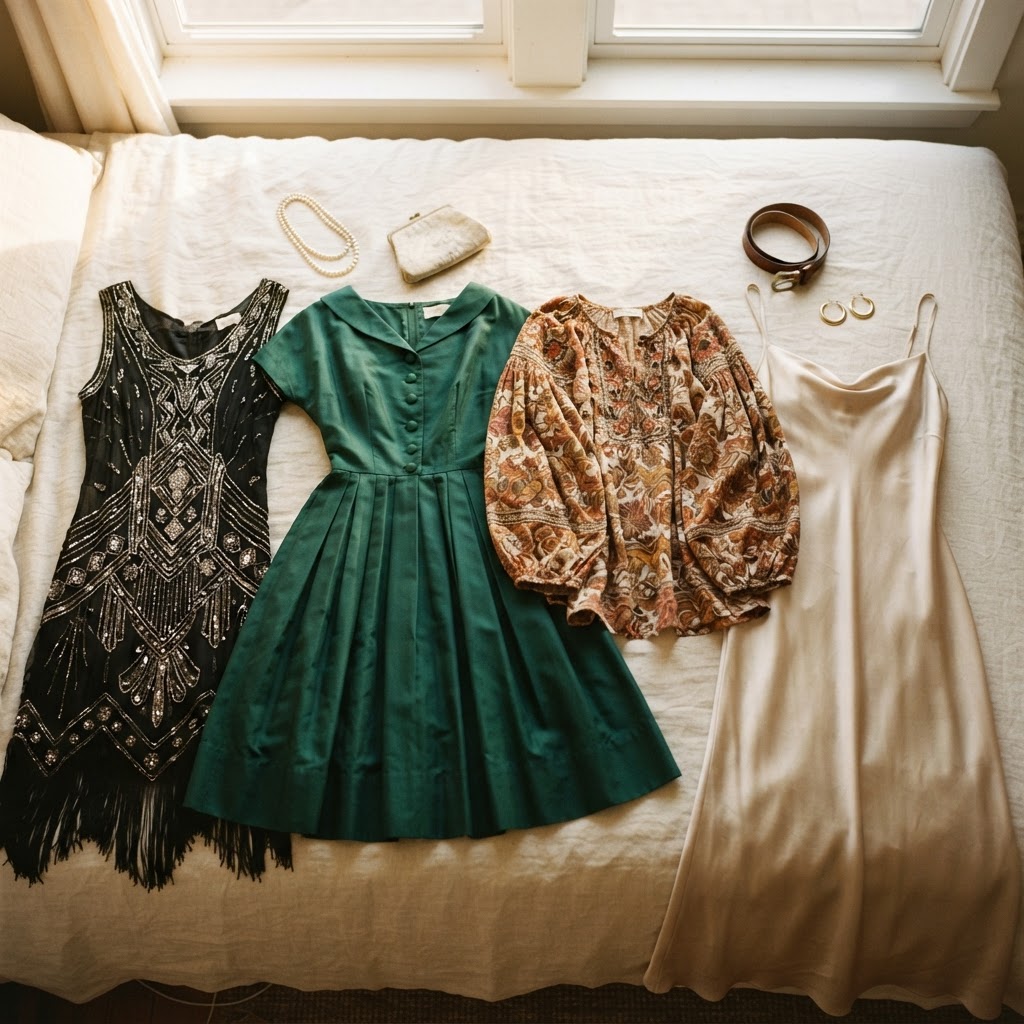
Vintage, Antique, or Retro? The Ultimate Guide to Fashion Terminology
If you've ever browsed a fashion marketplace and wondered whether that 1960s mod dress counts as vintage or antique, you're not alone. The world of pre-loved fashion has its own vocabulary, and understanding it can make you a smarter, more confident shopper. Let's break down exactly what these terms mean — and why it matters.
Why the Labels Matter
When you're shopping for pre-loved clothing, the words used to describe a piece aren't just marketing fluff — they carry real meaning. Knowing the difference between vintage, antique, and retro fashion helps you understand what you're actually buying, how rare it might be, and what you should reasonably expect to pay. Whether you're hunting for a flapper-era beaded gown or a neon windbreaker from the '80s, the right terminology is your roadmap.
Let's clear up the confusion once and for all.
What Does "Vintage" Actually Mean?
The word vintage is probably the most widely used — and most widely misused — term in pre-loved fashion. In the strictest sense, an item is considered vintage if it is at least 20 years old but less than 100 years old. That means, as of 2025, anything produced between approximately 1925 and 2005 can technically qualify.
However, most serious collectors and fashion historians apply a slightly stricter cultural standard. Truly celebrated vintage eras tend to cluster around decades with strong, recognizable aesthetic identities: the 1930s bias-cut silhouettes, the 1950s full-skirted elegance, the 1970s bohemian prints, and the 1990s minimalism, for example. The garment doesn't just need to be old — it needs to authentically represent the craftsmanship and design sensibility of its era.
Authenticity is the cornerstone of vintage fashion. A genuine vintage piece will typically show:
- Period-correct construction techniques (think hand-stitching, metal zippers, or union labels)
- Original hardware and closures that match the decade
- Natural wear consistent with age, including fading, slight shrinkage, or softening of fabric
When Ensemble lists a piece as vintage, it means exactly this: a genuine artifact of its time, not a modern imitation.
What Is Antique Fashion?
If vintage is the broad category, antique is the rarified upper tier. In the fashion world, as in the antiques trade more broadly, a garment is typically classified as antique if it is 100 years old or more. As of 2025, that means anything made in 1924 or earlier falls into antique territory.
Antique clothing is extraordinarily special. We're talking about Edwardian lace blouses, Victorian mourning dresses, 1920s hand-beaded flapper gowns, and early-century tailored coats constructed before the age of mass production. These pieces were often made-to-measure or produced in very small quantities, and they survive today in limited numbers.
Owning an antique garment comes with unique responsibilities. Because of their age, antique pieces are often more fragile than vintage items and may require specialized storage, careful dry cleaning, or even professional conservation. They are also generally more valuable, both monetarily and historically.
Shopping for antique fashion is less about building a wearable wardrobe and more about acquiring wearable history. Many collectors choose to display antique pieces rather than wear them, though some — particularly well-preserved 1920s pieces — can still be gently worn for special occasions.
So What Is "Retro" Fashion?
Here's where things get interesting — and where the most confusion tends to arise. Retro fashion is not old clothing. It is new clothing designed to look old.
The word retro (short for retrospective) describes modern garments that deliberately reference, imitate, or draw inspiration from the styles of a previous decade. That rockabilly-style swing dress you found at a chain retailer last season? Retro. The modern blouse printed with a 1970s-style floral pattern? Also retro.
Retro fashion serves an important cultural function — it makes the aesthetics of past eras accessible and affordable for people who love a particular look but can't find or afford the authentic originals. There's absolutely nothing wrong with wearing retro pieces; in fact, mixing retro with genuine vintage is a great way to build a nostalgic wardrobe without breaking the bank.
The critical distinction: retro should never be sold as vintage. A reputable marketplace will always be clear about whether a piece is an authentic period garment or a modern reproduction. When in doubt, ask questions about the garment's label, construction, and provenance.
How to Tell the Difference When You're Shopping
Now that you understand the definitions, here are some practical tips for identifying what you're really looking at.
Check the Label
Care labels are one of the most reliable dating tools available. In the United States, care instruction labels were not legally required until 1971, so a garment without one is likely from before that era. The style of the font, the country of origin labeling ("Made in USA" vs. "Made in United States of America"), and the brand name can all help narrow down a date.
Examine the Zipper
Metal zippers were standard through the 1960s. If a dress has a nylon or plastic zipper, it's almost certainly from the 1960s or later. Early zippers were also typically installed at the side seam rather than the back — a telltale sign of pre-1960s construction.
Look at the Stitching and Construction
Handmade finishing, French seams, and padded shoulders that are sewn directly into the garment rather than removable all suggest pre-1970s manufacture. Mass-market construction shortcuts became more common as the decades progressed.
Study the Silhouette
Each decade has a recognizable silhouette. The nipped waist and full skirt of the 1950s, the boxy oversized shoulder of the 1980s, the slip-dress minimalism of the 1990s — once you know what to look for, the decade practically announces itself.
Ask About Provenance
A good seller should be able to tell you something about where a piece came from, even if it's just "purchased from an estate sale in Connecticut" or "acquired from a shop specializing in mid-century garments." Provenance adds credibility and peace of mind.
A Quick Reference Cheat Sheet
| Term | Age | Key Characteristic | |------|-----|--------------------| | Antique | 100+ years old | Rare, fragile, historically significant | | Vintage | 20–99 years old | Authentic period piece, era-specific design | | Retro | New (any age) | Modern item inspired by a past aesthetic |
Why It Matters for Your Wardrobe
Understanding these distinctions isn't just academic — it directly affects the choices you make as a buyer. If you're looking for something to wear regularly, a vintage piece from the 1980s or 1990s is likely more durable and easier to care for than a 1930s antique. If you're building a collection, knowing the difference between authentic vintage and retro reproduction means you won't overpay for a modern copy.
It also helps you appreciate what you own. There's something deeply meaningful about slipping into a dress that was sewn decades before you were born, that survived storage chests and estate sales and changing tastes to find its way to you. That's not just fashion — that's connection across time.
Shop with Confidence at Ensemble
At Ensemble, every listing is carefully described with accurate terminology because we believe informed shoppers are happy shoppers. Our curated marketplace covers authentic clothing from the 1920s through the 2010s, meaning you'll find everything from rare antique treasures to beloved Y2K staples — all verified, all honestly described, and all waiting for a new chapter in their story.
Whether you're a seasoned collector or just beginning your vintage journey, knowing your vocabulary is the first step toward building a wardrobe that's truly one of a kind. Browse our latest arrivals and let the decades speak for themselves.