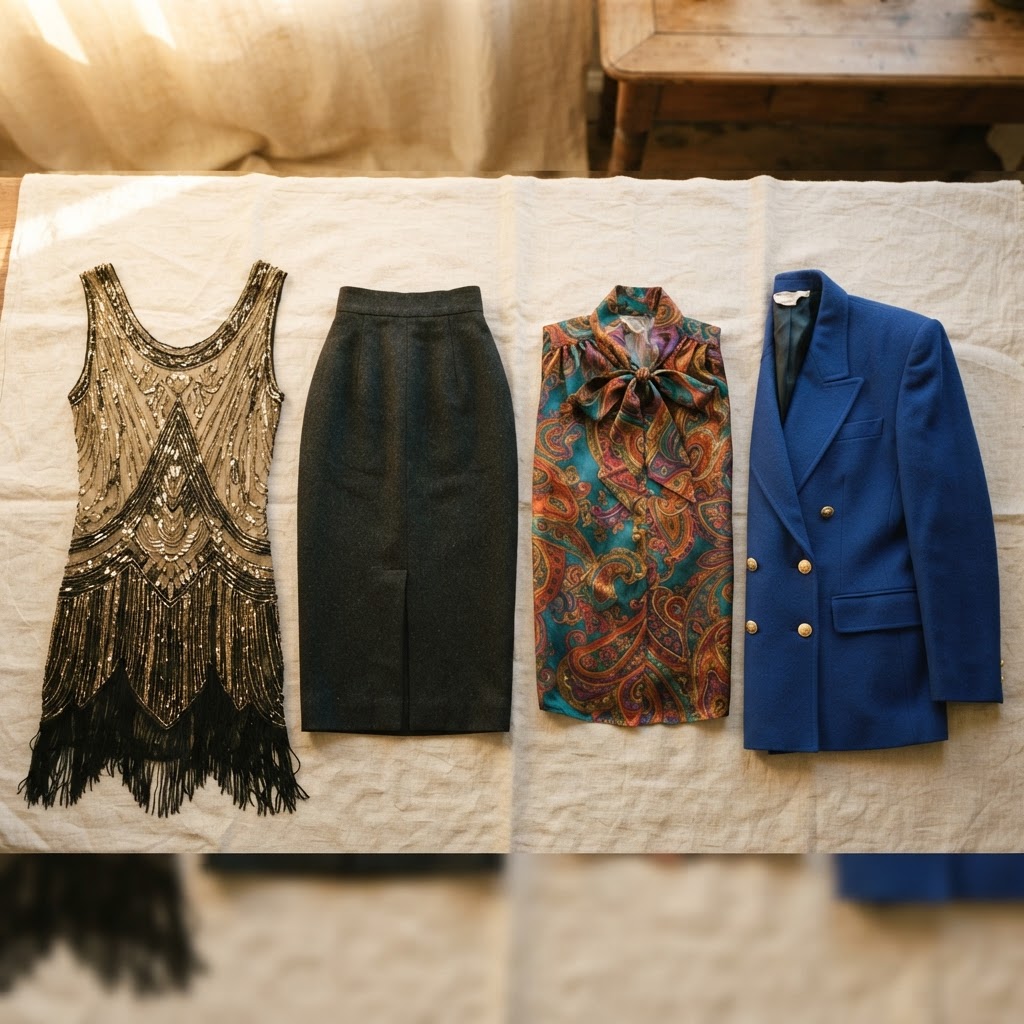
Vintage, Antique, or Retro? The Essential Guide to Fashion Terminology
If you've ever browsed a secondhand rack and wondered whether that sequined blazer counts as 'vintage' or just 'old,' you're not alone. The world of pre-owned fashion is rich with terminology that's often misused, misunderstood, and swapped interchangeably. Here's everything you need to know to shop — and speak — with confidence.
Why Terminology Matters in Fashion
When you're hunting for a perfectly worn leather jacket or a silk slip dress with history, the words used to describe clothing aren't just labels — they're a kind of shorthand that signals authenticity, era, and value. Toss around 'vintage' when you mean 'retro,' and you might end up paying a premium for a modern reproduction, or worse, dismissing a genuine treasure because the listing used the wrong word.
The fashion resale world has its own vocabulary, and mastering it transforms you from a casual browser into a savvy collector. Let's break down the three most commonly confused terms: vintage, antique, and retro.
What Does 'Vintage' Actually Mean?
The word vintage is perhaps the most overused and misapplied term in secondhand fashion. Originally borrowed from the wine industry — where it refers to the year a wine's grapes were harvested — vintage in fashion has come to mean clothing that is genuinely from a past era, typically between 20 and 100 years old.
So, as of 2025, a garment qualifies as vintage if it was made somewhere between 1925 and 2005. That wide window encompasses everything from 1940s utility dresses and 1970s bohemian maxi skirts to early 2000s low-rise denim. The key is authenticity: the item must have actually been produced during the era it represents, not merely inspired by it.
Within the vintage category, collectors and dealers often get more specific:
- True vintage typically refers to pieces from the 1920s through the 1970s.
- Modern vintage or recent vintage covers the 1980s through the early 2000s.
- Designer vintage refers to pieces made by recognized luxury or fashion houses during their historical periods — think a Halston jersey gown from 1972 or a Versace silk shirt from 1994.
One important nuance: age alone doesn't make something vintage. A poorly made fast-fashion top from 2003 is technically old enough to qualify by the timeline, but the vintage community generally also considers quality, construction, and cultural significance when assigning that label.
Understanding 'Antique' Fashion
If vintage covers the 20-to-100-year range, antique picks up where vintage leaves off. In most collector communities — from furniture to ceramics to clothing — an item is considered antique if it is 100 years old or older.
For fashion, this means garments made before approximately 1925. We're talking about Edwardian blouses, Victorian mourning gowns, Gilded Age corsets, and early 1920s flapper-era beaded dresses that sit right on the cusp of the antique threshold.
Antique clothing is extraordinarily rare in wearable condition. Fabrics from this era — silk taffeta, fine cotton lawn, delicate lace — were not built to survive a century of wear, washing, and storage. When pieces do survive, they're often found in museum collections, estate sales, or the hands of serious textile collectors.
Wearing antique clothing is a subject of ongoing debate in the fashion world. Purists argue that garments over 100 years old should be preserved rather than worn, given that the natural fibers are fragile and irreplaceable. Others believe that clothing was made to be worn, and that donning a 1910s lace blouse is the ultimate form of respect for the craft.
At Ensemble, when we source pieces from the 1920s — sitting right on the boundary between vintage and antique — we document their provenance carefully and always advise buyers on proper care and storage.
So Then, What Is 'Retro'?
Here's where many shoppers get confused: retro is not the same as vintage. Not even close.
Retro — short for retrospective — refers to new or modern items that are designed to look like they came from a past era. A midi dress made in 2024 with a 1970s-inspired print and silhouette? That's retro. A denim jacket manufactured last year with 1980s-style oversized shoulders and acid wash? Also retro.
Retro fashion is about aesthetic homage, not historical authenticity. It's the fashion industry looking backward for inspiration and producing something new in that spirit. This is entirely valid — and often beautifully executed — but it's a fundamentally different category from vintage.
The confusion arises because retailers, particularly fast-fashion brands, have co-opted the word 'vintage' to describe retro items. You'll see tags reading 'vintage-inspired' or 'vintage-style,' which is technically accurate but often misleading to shoppers who don't know the distinction.
Key differences at a glance:
| Term | Age | Authenticity | Example | |------|-----|-------------|----------| | Vintage | 20–100 years old | Genuine period piece | 1968 Pucci shift dress | | Antique | 100+ years old | Genuine historical artifact | 1910 Edwardian lace blouse | | Retro | New or recent | Modern reproduction of past style | 2023 '70s-inspired wrap dress |
Why These Distinctions Matter for Your Wardrobe and Wallet
Understanding these terms has real financial implications. True vintage and antique pieces carry value that retro items simply don't. A genuine 1950s full-skirt party dress in excellent condition might fetch hundreds of dollars from a knowledgeable collector. A retro dress made to look like it came from the 1950s? It might cost $40 at a chain retailer — and hold no long-term value.
For buyers, knowing the difference helps you:
- Avoid overpaying for modern reproductions mislabeled as vintage
- Recognize genuine value when you spot it at an estate sale or thrift shop
- Make informed investments if you're building a collection
- Ask the right questions when buying from resellers and marketplace platforms
For sellers, using accurate terminology builds trust with buyers and positions your pieces correctly in the market. Calling a retro item 'vintage' might get a quick sale, but it damages your reputation with serious collectors.
How to Authenticate a Vintage Piece
So how do you know if something is genuinely vintage? Several clues can help:
Check the label. Garment labels are one of the most reliable dating tools. Union labels, country-of-origin text (e.g., 'Made in USA' vs. 'Made in China'), and specific brand typography all changed over decades. Researching label history for specific brands can tell you within a few years when a piece was manufactured.
Examine the construction. Pre-1960s garments were often made with French seams, hand-stitching, and metal zippers. Nylon and plastic zippers became standard in the 1960s. Overlock stitching (the kind used in modern manufacturing) became widespread in the 1970s and '80s.
Feel the fabric. Older garments were made from natural fibers — wool, silk, cotton, linen — because synthetics weren't widely available until the mid-20th century. Heavy polyester is a hallmark of the 1970s; earlier pieces rarely contain it.
Look at the silhouette. Each decade had a distinctive silhouette. Nipped waists and full skirts signal the 1950s. Wide lapels and flared trousers say 1970s. Exaggerated shoulder pads scream 1980s. Knowing your fashion history helps you spot anachronisms in mislabeled pieces.
Embracing the Full Spectrum at Ensemble
At Ensemble, we believe that every decade from the 1920s through the 2010s produced clothing worth celebrating. Our marketplace is built on a foundation of authenticity and transparency — every piece is carefully described with its correct era, construction details, and condition notes, so you always know exactly what you're getting.
Whether you're seeking a 1930s bias-cut evening gown (antique-adjacent and breathtaking), a 1960s mod mini dress (classic vintage), or a perfectly preserved 1990s logomania windbreaker (modern vintage on the rise), Ensemble is the place where fashion history comes to life — one genuine garment at a time.
Now that you know the language, you're ready to shop like a pro. Welcome to the world of real fashion history.