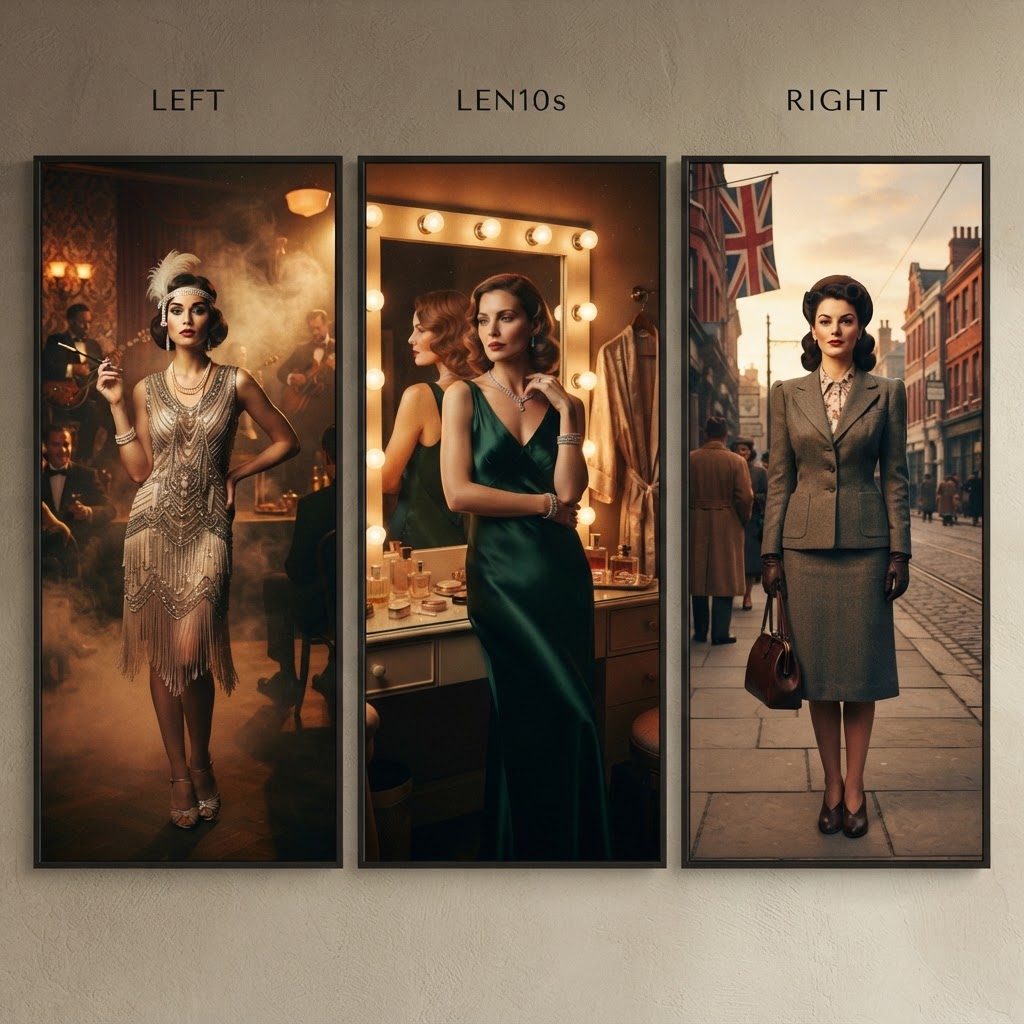
Threads of Time: What 1920s–1940s Fashion Reveals About Identity, Power, and Resilience
From the liberated silhouettes of the Jazz Age to the utility-driven wardrobes of World War II, the fashions of the 1920s through 1940s were never just clothing — they were cultural statements stitched in silk, wool, and defiance. Understanding these decades unlocks a deeper appreciation for the garments themselves and the seismic social shifts they represent. Whether you're a collector, a stylist, or simply a curious soul, these vintage pieces carry stories that still resonate today.
The Roaring Twenties: Fashion as Liberation
The 1920s didn't just change hemlines — they rewrote the rules of what it meant to be a woman, a modern citizen, and a free individual. After the devastation of World War I and the suffocating formality of the Edwardian era, an entire generation exhaled. And that exhale looked like dropped waists, bobbed hair, and beaded dresses that shimmered under the glow of jazz clubs and speakeasies.
The flapper aesthetic — characterized by loose, tubular silhouettes, knee-length or above-the-knee hemlines, and an almost androgynous rejection of the corseted hourglass — was a radical act. Women weren't just wearing new clothes; they were physically shedding the constraints that had shaped female bodies for generations. Corsets disappeared. Movement returned. The silhouette itself became a manifesto.
Designers like Coco Chanel championed comfort and practicality as elegance, borrowing from menswear to create jersey suits and relaxed separates that women could actually live in. Meanwhile, the influence of the Harlem Renaissance brought African American artistry and culture into the mainstream consciousness, with jazz music, dance, and the vibrant nightlife culture of Harlem shaping trends across racial and class lines — even as systemic inequality persisted. Understanding 1920s fashion means understanding this tension: liberation for some, invisibility for others.
For collectors today, an authentic 1920s beaded evening gown or silk charmeuse slip dress is more than a striking artifact. It is a physical remnant of a moment when the world was being renegotiated.
The Dirty Thirties: Glamour as Survival
If the twenties were about freedom, the 1930s were about endurance. The Great Depression descended like a curtain over the Western world, collapsing economies and dismantling livelihoods. And yet — perhaps because of this — fashion responded not with austerity, but with escapist glamour.
Hollywood became the great style laboratory of the decade. Stars like Marlene Dietrich, Katharine Hepburn, and Jean Harlow projected a heightened, cinematic beauty that gave audiences something to aspire to when reality offered very little. The bias cut, perfected by designer Madeleine Vionnet, became the defining technique of the era — draping fabric diagonally across the grain so that it clung to the body in liquid, sculptural waves. These gowns required extraordinary craftsmanship and expensive silk crepe or satin, and they looked like nothing else before or since.
But the thirties also produced something more democratic: the rise of ready-to-wear fashion. As couture became inaccessible to most, department stores and home sewing patterns brought style within reach of the working class. Women adapted, repaired, and reimagined their wardrobes with remarkable creativity. A house dress from 1935 might seem humble compared to a Hollywood gown, but it carries equal cultural weight — it is evidence of resilience, of making beauty from scarcity.
The color palette of the thirties — deep burgundies, forest greens, navy, and ivory — and the emphasis on fluid, elongated silhouettes remain profoundly influential in fashion today. Designers return to bias-cut construction repeatedly, recognizing that it flatters the body in a way that feels simultaneously timeless and intimate.
The Fabulous Forties: Utility, Ingenuity, and the Seeds of Modern Fashion
World War II transformed fashion into something frankly utilitarian — and in doing so, accidentally modernized it forever. With fabric rationed across the United States, Britain, and Europe, designers and everyday wearers alike were forced to innovate under constraint. The results were, in many ways, ahead of their time.
Wartime restrictions mandated shorter skirts, limited pleats, and restricted the use of wool and silk. The L-85 regulations in the United States dictated precise measurements for everything from sleeve length to pocket count. What emerged was a leaner, more architectural silhouette: squared shoulders, nipped waists, A-line or straight skirts that fell just below the knee. It was sharp. It was practical. And it laid the groundwork for the structured elegance that Christian Dior would famously amplify — and complicate — with his 1947 New Look.
The forties also saw women entering the workforce in unprecedented numbers as men went to war. Women's suiting evolved rapidly, borrowing from menswear while maintaining femininity. The trouser suit became practical workwear for women in factories and offices, normalizing pants in female wardrobes in ways that would have been scandalous a decade earlier.
And then there was resourcefulness as art. Women dyed old curtains into skirts, converted men's suits into women's jackets, and painted seams onto their bare legs with eyebrow pencil to simulate stockings when nylons were unavailable. This creativity under pressure is one of the most compelling chapters in fashion history — a reminder that style is not a luxury of abundance but a fundamental human impulse.
Authentic 1940s pieces — a tailored wool jacket with those iconic padded shoulders, a rayon day dress in a bold wartime print — offer wearers a tangible connection to this remarkable era of transformation.
What These Decades Tell Us Today
Looking back at the arc from 1920 to 1949, several powerful themes emerge that feel urgently relevant to contemporary life.
First, fashion has always been political. The flapper's dropped waist was as much a statement as a modern protest T-shirt. The decision of a 1940s woman to wear trousers to her factory job challenged gender norms as surely as any contemporary conversation about dress codes. When we wear vintage clothing from these decades, we participate in a longer dialogue about freedom, identity, and the body.
Second, constraint breeds creativity. The Depression-era seamstress working from a Butterick pattern and the wartime wife unpicking an old coat to make a child's jacket were not diminished by their limitations — they were elevated by them. In an era of fast fashion and disposable clothing, there is something profoundly instructive about this relationship between scarcity and ingenuity.
Third, quality endures. The reason authentic pieces from these decades still exist — still wearable, still beautiful — is because they were constructed with exceptional care. Bias-cut seams, hand-rolled hems, natural fibers, and meticulous tailoring were the standard, not the exception. Holding a 1930s evening gown or a 1940s wool crepe suit, you feel the difference immediately. These were clothes made to last, made to matter.
Finally, these decades remind us that fashion is memory. Every vintage garment is a primary source document — evidence of who wore it, what they faced, what they hoped for. Collecting and wearing these pieces is an act of preservation and homage.
Discover Your Own Chapter of History at Ensemble
At Ensemble, we believe that the most meaningful wardrobe is one that carries history alongside you. Our carefully curated collection of authenticated vintage pieces from the 1920s through the 2010s ensures that every garment you find has been thoughtfully selected for its quality, provenance, and cultural significance. Whether you're seeking a shimmering twenties beaded drop-waist dress, a thirties bias-cut silk evening gown, or a sharply tailored forties suit with those unmistakable squared shoulders, Ensemble connects you with clothing that tells a real story.
Browse our 1920s–1940s collection today and find the piece that speaks to you — not just as fashion, but as history you can wear.