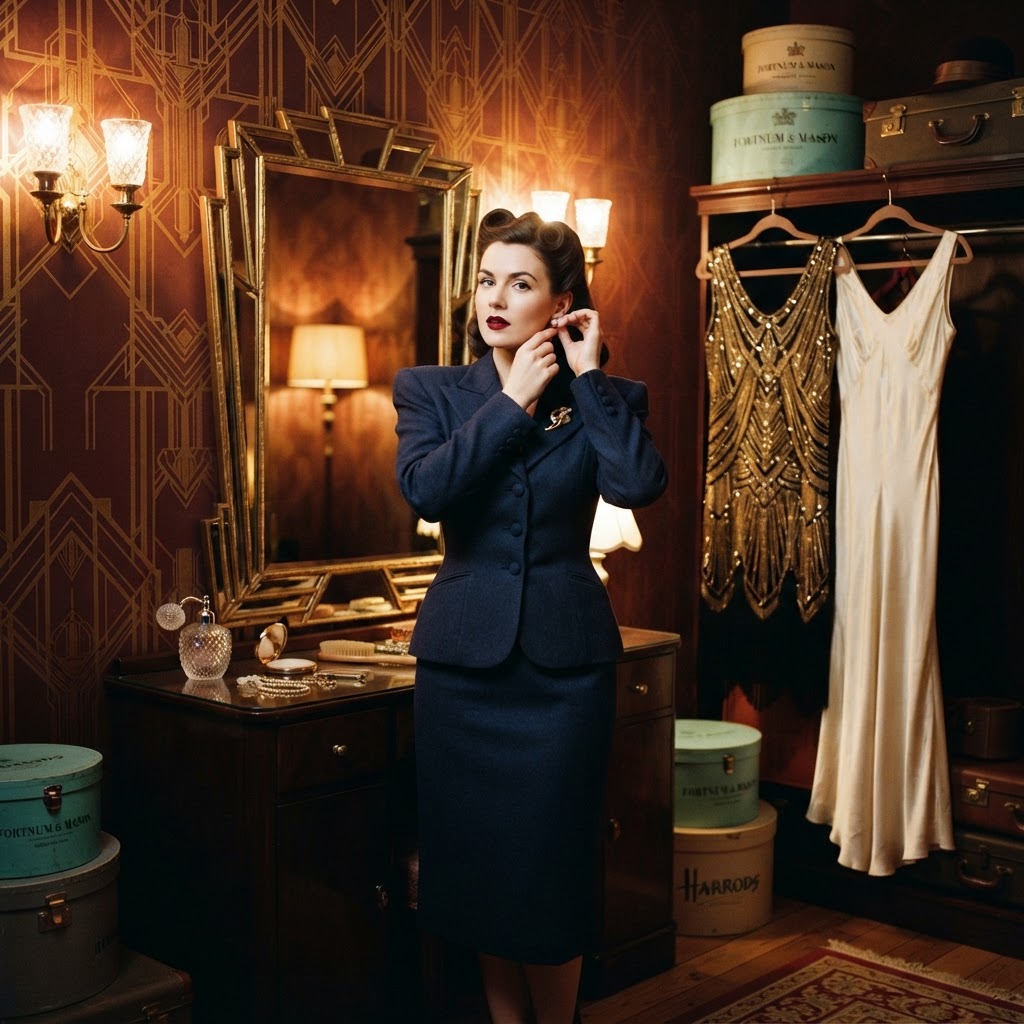
Threads of Time: The Cultural Significance of 1920s–1940s Fashion and What It Tells Us Today
From the daring dropped waists of the Jazz Age to the resourceful silhouettes of wartime America, the fashion of the 1920s through 1940s tells a story far deeper than hemlines and hat brims. These decades witnessed seismic cultural shifts — women's liberation, economic collapse, global war — and clothing was the canvas on which society processed it all. Understanding what people wore during these transformative years isn't just a history lesson; it's a mirror held up to our own moment.
The Roaring Twenties: When Fashion Became a Revolution
The 1920s didn't just change what women wore — it changed what women were allowed to be. Fresh off the passage of the 19th Amendment in 1920, American women entered the decade with a new political voice and an appetite to match it aesthetically. The flapper silhouette — characterized by dropped waistlines, knee-skimming hemlines, and a deliberately boyish, unstructured form — was nothing short of a visual manifesto.
For centuries, women's fashion had emphasized the hourglass: corsets cinched waists, bustles exaggerated hips, and every garment seemed designed to announce fertility and domesticity. The flapper dress rejected all of this. It was loose, liberating, and intentionally androgynous. To wear one was to say, loudly and without apology, that a woman's body was her own.
Beaded evening gowns, cloche hats, and T-strap heels weren't merely aesthetic choices — they were cultural statements. The woman wearing them was likely dancing the Charleston in a speakeasy, smoking cigarettes in public, or cutting her hair into a daring bob that scandalized her elders. Fashion and feminism were, for perhaps the first time in modern history, moving in explicit lockstep.
Accessories in this era deserve their own chapter. Long rope pearls, art deco brooches, and heavily embellished headbands reflected the influence of Modernism sweeping through architecture, painting, and music simultaneously. The geometric, symmetrical designs of Art Deco didn't live only in the Chrysler Building — they lived on the bodies of women navigating a rapidly modernizing world.
What does this tell us today? It tells us that fashion has always been political. Every time a trend emerges that challenges conventional notions of gender, propriety, or class, it carries an echo of those flappers who first dared to show their knees.
The 1930s: Depression-Era Elegance and the Art of Making Do
If the 1920s were about excess and exuberance, the 1930s were a masterclass in restraint — and yet, paradoxically, in a certain kind of quiet glamour. The stock market crash of 1929 didn't kill fashion; it refined it. With less money circulating, garments became more carefully constructed, more thoughtfully designed, and more deeply meaningful.
The bias-cut gown, pioneered by the legendary designer Madeleine Vionnet and popularized by Hollywood, became the defining silhouette of the decade. Cut diagonally across the fabric grain, these gowns clung to the natural curves of the body in a way that felt simultaneously elegant and subversive. After the gender-ambiguous lines of the 1920s, the 1930s reintroduced femininity — but on entirely different terms. This was femininity as sophistication, not submission.
Hollywood played an outsized role in 1930s fashion. As the Great Depression ground down everyday life, silver screen sirens like Jean Harlow, Marlene Dietrich, and Katharine Hepburn became style icons for millions of women who couldn't afford their wardrobes but could copy their lines with a home sewing machine. The wide-legged trouser worn by Hepburn was particularly revolutionary — here was a woman in traditionally male clothing, exuding authority rather than apology.
For everyday Americans, the 1930s taught the value of quality over quantity. Garments were mended, remade, and re-worn until they couldn't be anymore. This ethos of careful stewardship is one the vintage fashion world holds sacred — and one that speaks with unusual urgency to contemporary consumers drowning in fast fashion.
The 1940s: Utility, Sacrifice, and Sartorial Solidarity
World War II reshaped virtually every aspect of civilian life, and fashion was no exception. In both the United States and Britain, wartime rationing imposed strict limitations on fabric use, leading to the emergence of the utility suit and streamlined silhouettes that eliminated unnecessary pleats, pockets, and ornamentation. The War Production Board in America issued Regulation L-85, which restricted the amount of fabric that could be used in women's clothing. Hemlines rose. Shoulders squared. Simplicity became patriotic.
And yet, within these constraints, something remarkable happened. Women didn't abandon style — they innovated within limitation. Platform shoes became popular partly because leather was rationed but cork and wood were not. Turbans and headscarves flourished as stylish solutions for women working in factories who needed to keep their hair contained. Victory rolls — those iconic upswept hairstyles — were both practical and aesthetically bold.
The women's suit came into its own during the 1940s. With millions of women entering the workforce to fill roles vacated by men sent overseas, tailored separates offered a sense of authority and professionalism that the fashion industry quickly codified into mainstream style. The broad-shouldered silhouette of the 1940s woman wasn't accidental — it was a visual representation of a society recalibrating who was allowed to hold power.
Military influence was everywhere: epaulettes, brass buttons, khaki and olive tones, and structured military-style coats all crossed from the battlefield into civilian wardrobes. Wearing these elements wasn't a fashion statement in the frivolous sense — it was an act of solidarity with loved ones overseas.
What strikes us most powerfully about 1940s fashion today is its intentionality. Every choice was considered. Every garment meant something. In an era defined by scarcity and sacrifice, clothing carried an emotional and moral weight that is difficult to imagine in our age of $5 fast-fashion tops.
Why These Decades Still Matter — and What They Teach Modern Shoppers
The fashion of the 1920s through 1940s offers several profound lessons for contemporary clothing consumers.
First, clothing has always been a form of communication. The flapper dress, the bias-cut gown, the utility suit — each was a response to the specific pressures and possibilities of its cultural moment. When you wear a piece of vintage clothing from these decades, you're not just wearing fabric; you're wearing a conversation that someone had with their world.
Second, quality endures. Garments from these decades that have survived into the present did so because they were built to last. The construction techniques, the natural fabrics — wool, silk, cotton — and the careful tailoring invested in even everyday garments stand in stark contrast to the disposable nature of modern fast fashion.
Third, creativity flourishes under constraint. The ingenuity of 1930s home sewers and 1940s utility dressers reminds us that limitation sparks innovation. The growing movement toward sustainable fashion draws a direct line from wartime make-do-and-mend culture to the modern vintage and secondhand marketplace.
Fourth, fashion is cyclical but never simply repetitive. Every decade since the 1920s has revisited these silhouettes — the 1970s revived Art Deco, the 1990s reinterpreted 1940s tailoring, and contemporary designers continue to draw from this well. Understanding the originals gives you a sharper eye for what's authentic and what's homage.
Building Your Vintage Wardrobe: What to Look For
If you're drawn to pieces from the 1920s–1940s, a few practical notes will help you shop with confidence.
For 1920s pieces, look for original glass beading (plastic wasn't widely used yet), silk or rayon construction, and the characteristic dropped-waist cut. Condition is crucial — beading is fragile and re-stringing is an art form.
For 1930s pieces, bias-cut garments should drape fluidly and feel substantial. Check seams carefully, as the bias cut puts unusual stress on stitching over time. Look for Art Deco hardware on bags and shoes as a period-authentic detail.
For 1940s pieces, examine buttons closely — wartime garments often used Bakelite or casein buttons rather than metal. Utility labels in British garments (the CC41 label) are prized among serious collectors as proof of period authenticity.
Conclusion: Wearing History Forward
The decades between the flappers and the Victory rolls were among the most turbulent and transformative in modern history. The people who lived through them expressed their fears, their hopes, their politics, and their resilience through what they put on their bodies every single day. When we choose to wear vintage clothing from these eras, we participate in that conversation across time.
At Ensemble, our carefully curated marketplace exists precisely to honor that continuity. Whether you're searching for an authentic 1920s beaded drop-waist dress, a sharply tailored 1940s wool suit, or any piece from the extraordinary century of fashion in between, Ensemble connects you with garments that carry real history — and the knowledgeable sellers who can help you understand it. Browse our collection today and discover what the past has been waiting to tell you.