The Best Vintage Fashion Pieces for Men: A Decade-by-Decade Guide
Whether you're a seasoned collector or just dipping your toe into the world of vintage menswear, knowing what to look for—and when it was made—can transform a thrift haul into a genuine wardrobe statement. From the dapper suits of the 1920s to the streetwear-influenced silhouettes of the 2000s, men's fashion has cycled through some truly iconic eras. This guide breaks down the standout pieces from each decade so you can shop smarter, dress sharper, and wear history on your sleeve.
The Best Vintage Fashion Pieces for Men: A Decade-by-Decade Guide
Vintage menswear is more than a trend—it's a living archive of craftsmanship, culture, and self-expression. Each decade produced garments that reflected the social mood of their time, and many of those pieces remain just as relevant, wearable, and striking today as the day they were made. Whether you're building a capsule wardrobe with genuine character or hunting for a single statement piece, here's what to look for, decade by decade.
The 1920s: The Golden Age of the Suit
The 1920s were defined by prosperity, jazz, and an almost theatrical approach to men's dressing. The three-piece lounge suit reigned supreme, cut close to the body with high-waisted trousers and a distinctive suppressed waist on the jacket. Look for suits in wool flannel or tweed with peak lapels and double-breasted waistcoats—these details signal authentic period craftsmanship.
Beyond suiting, the Oxford bag trouser—an enormously wide-legged pant originally worn by Oxford University students—became a cultural flashpoint. If you can find a true 1920s example, it's one of the most conversation-starting pieces in any vintage collection. Pair with a collarless shirt and two-tone spectator shoes to complete the look.
The 1930s: Depression-Era Elegance
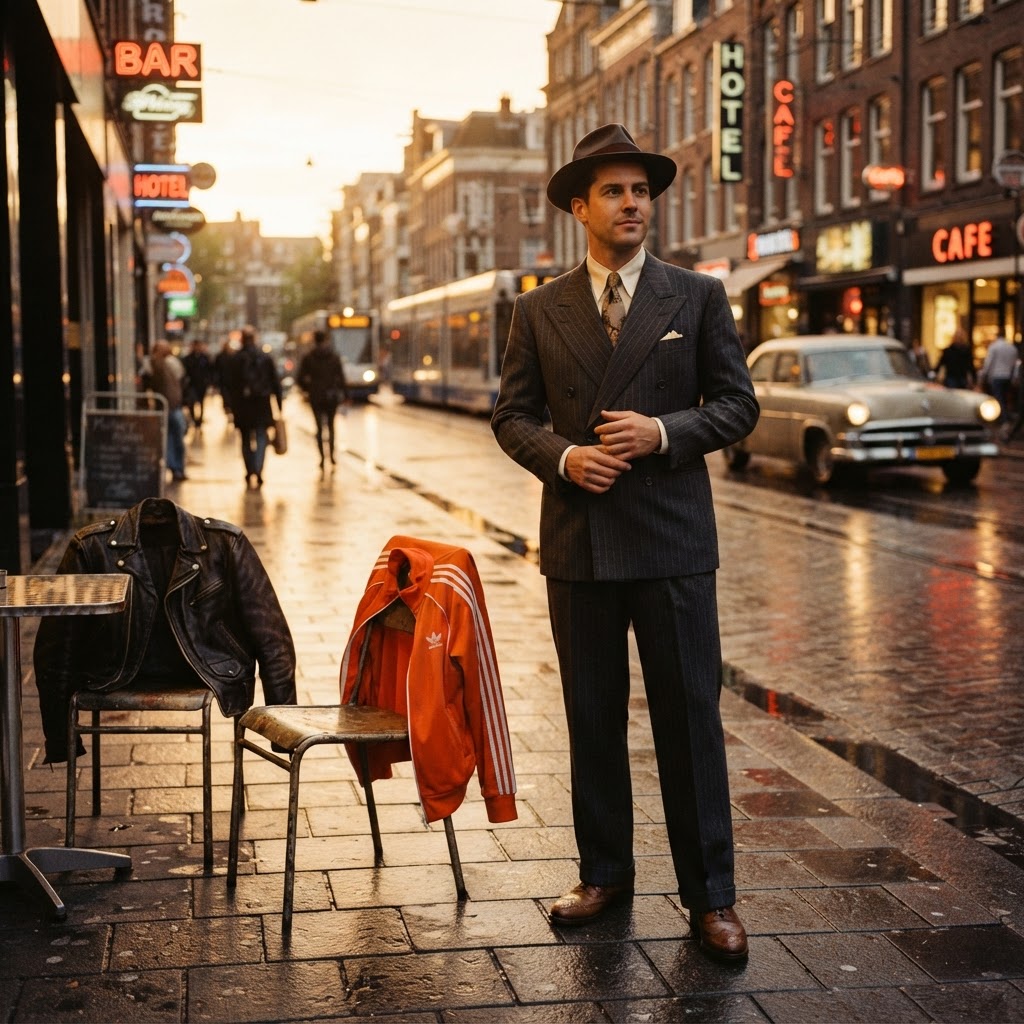
Despite economic hardship, the 1930s produced some of the most beautifully constructed menswear in history. Tailors doubled down on quality and longevity, and it shows. The double-breasted suit hit its peak here, with wider lapels, padded shoulders, and high-rise pleated trousers that created a commanding, almost cinematic silhouette.
One of the most coveted 1930s finds is the gabardine trouser—lightweight, durable, and possessing a subtle sheen that photographs beautifully. Vintage camel hair overcoats from this era are also exceptional investment pieces. Look for hand-stitched buttonholes and full canvas construction as hallmarks of authentic period tailoring.
The 1940s: Military Influence and Utility
World War II left its mark on men's fashion in the most direct way possible. Fabric rationing led to slimmer cuts, single-breasted jackets, and minimal ornamentation. The military chino trouser, originally issued to U.S. Army officers, crossed over into civilian life and never left.
Authentic 1940s HBT (herringbone twill) workwear jackets and Army-issue field shirts are among the most sought-after vintage finds today. The rugged construction and utilitarian design have aged extraordinarily well. For something dressier, hunt for a 1940s gabardine Western shirt—a distinctly American crossover piece that blends country style with wartime practicality.
The 1950s: The Rise of Casual Cool
The postwar economic boom gave men permission to relax, and 1950s menswear reflected a country exhaling. This is the decade that gave us the leather motorcycle jacket, immortalized by Marlon Brando, and the Ivy League button-down Oxford shirt, which became the uniform of a generation of East Coast intellectuals.
For collectors, 1950s loop collar bowling shirts in rayon are endlessly wearable and surprisingly versatile. Slim-cut denim jeans from this era—particularly early Levi's 501s with a Big E red tab—are the holy grail of vintage denim. The selvedge construction and deep indigo fade of original 1950s denim is impossible to replicate authentically.
The 1960s: Mod Revolution and Counterculture
The 1960s fractured men's fashion into two distinct camps: the sharp, tailored Mod aesthetic pioneered on Carnaby Street, and the loose, expressive garments of the emerging counterculture. Both produced iconic pieces worth seeking out.
From the Mod side, look for slim-cut two-button suits in bold checks or Prince of Wales plaid, Chelsea boots, and turtleneck sweaters worn in place of shirts. From the counterculture, embroidered denim jackets, ethnic-print shirts, and military surplus pieces tell a completely different but equally compelling story. The 1960s also produced some of the finest madras cotton shirts—a preppy summer staple that remains a warm-weather essential.
The 1970s: Maximalism and Self-Expression
If any decade was built for bold dressing, it was the 1970s. This era gave us wide-lapel leisure suits in earth tones and polyester blends, flared denim, platform shoes, and the safari jacket—a belted, chest-pocketed statement that walked the line between practical and theatrical.
Authentic 1970s collegiate varsity jackets in wool and leather are perennial favorites that have never gone out of style. Vintage 1970s sportswear—particularly pieces from early Nike, Adidas, and Champion—now commands serious collector interest. A crisp 1970s track jacket in original condition is both a fashion piece and a piece of athletic history.
The 1980s: Power Dressing and Streetwear Roots
The 1980s were loud, ambitious, and unafraid. Oversized blazers with enormous shoulder pads defined corporate power dressing, while early hip-hop culture was simultaneously laying the groundwork for modern streetwear. Both threads are worth exploring.
For the boardroom aesthetic, look for double-breasted wool suits in bold pinstripes or window-pane checks. For streetwear history, early 1980s tracksuits, bomber jackets, and collegiate sweatshirts from this period are essential. Some of the most sought-after 1980s pieces are vintage band and concert tees—single-stitch construction and a faded, paper-thin feel are signs of genuine age.
The 1990s: Grunge, Minimalism, and the Birth of Hype
The 1990s pulled in opposite directions simultaneously. On one end, minimalist tailoring in neutral tones—championed by designers like Helmut Lang and Calvin Klein—stripped menswear down to its essentials. On the other, grunge and hip-hop created a maximalist street aesthetic built on flannel shirts, baggy carpenter jeans, hoodies, and oversized graphic tees.
Vintage 1990s Ralph Lauren Polo knitwear and rugby shirts are incredibly wearable today. Early Supreme, Stüssy, and A Bathing Ape pieces from this decade have become serious collectibles. And a deadstock pair of 1990s New Balance 990s or Nike Air Max 95s in original condition? That's a grail find by any measure.
The 2000s: Y2K Aesthetic and Early Luxury Streetwear
Once dismissed, the 2000s are now firmly in vintage territory and enjoying a major cultural reappraisal. Low-rise denim, velour tracksuits, fitted baseball caps, and trucker hats are back in circulation—and not just ironically. Early Von Dutch, Ed Hardy, and Diesel pieces are being recontextualized as artifacts of a genuinely distinct cultural moment.
More enduringly, the 2000s saw the rise of luxury streetwear collaborations that now command extraordinary prices at auction. Early LV x Supreme (before that collaboration even existed in its famous 2017 form), Dior Homme under Hedi Slimane, and the razor-sharp skinny suiting silhouette of the mid-2000s all deserve a second look from discerning collectors.
Finding Your Era at Ensemble
Every decade tells a story, and every vintage piece is a chapter. Whether you're drawn to the architectural elegance of a 1930s double-breasted suit or the nostalgic energy of a 1990s hip-hop tee, the best vintage menswear connects you to a moment in time while keeping you entirely relevant today.
At Ensemble, every listing is authenticated and curated to ensure you're getting the real thing—not a reproduction, not a