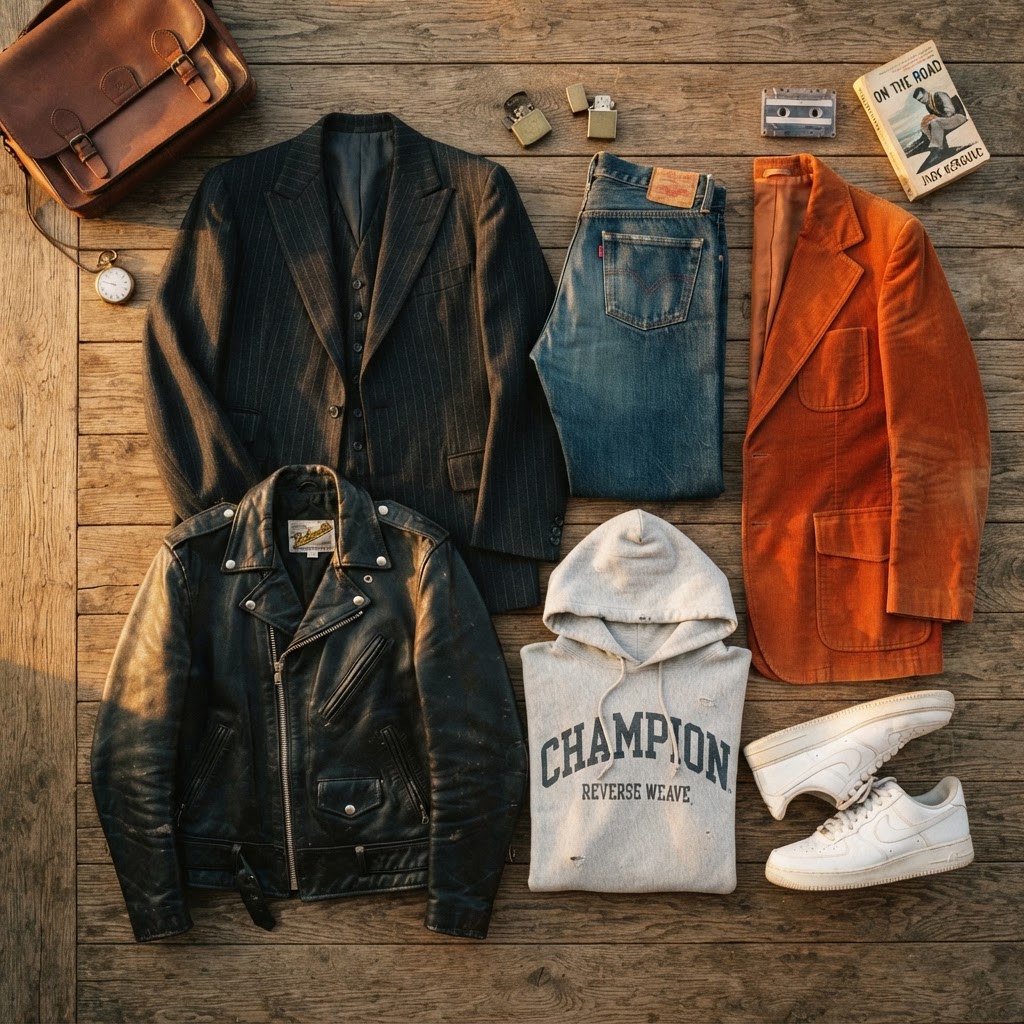
The Best Vintage Fashion Pieces for Men: A Decade-by-Decade Guide
From the dapper double-breasted suits of the 1920s to the ironic graphic tees of the 2000s, men's vintage fashion is a goldmine of timeless style. Whether you're a seasoned collector or just dipping your toes into the world of pre-owned clothing, knowing what to look for — and why — makes all the difference. This decade-by-decade guide will walk you through the most coveted men's vintage pieces, helping you build a wardrobe with real history and undeniable character.
Why Men's Vintage Fashion Is Having a Moment
In an era dominated by fast fashion and algorithmic trends, more men than ever are turning to vintage clothing as a way to stand out, invest in quality, and wear something with an actual story. Vintage menswear isn't just about nostalgia — it's about craftsmanship, individuality, and the quiet confidence that comes from wearing something truly unique. Whether you're drawn to the elegance of mid-century tailoring or the relaxed cool of 1990s streetwear, there's a decade waiting for you.
Let's take a tour through the twentieth century and into the twenty-first, highlighting the standout pieces every style-conscious man should know about.
The 1920s: The Golden Age of the Dandy
The Roaring Twenties gave us some of the most refined menswear ever constructed. The three-piece wool suit is the crown jewel of this era — cut slim through the chest with wide lapels, high-waisted trousers, and a matching waistcoat. Look for suits in herringbone, chalk stripe, and houndstooth patterns, ideally in navy, charcoal, or camel.
Other key pieces include Oxford bags (wide-leg trousers), flat caps, and two-tone spectator shoes. Accessories were everything in the twenties — a genuine period pocket square or Art Deco cufflinks can elevate any modern outfit instantly.
What to look for: Hand-stitched lapels, natural fiber construction (wool, linen, cotton), and interior tailor's labels from British or American makers.
The 1930s: Depression-Era Elegance
Despite economic hardship, the 1930s produced some of the most beautifully constructed menswear in history. The silhouette broadened — wide padded shoulders, tapered waists, and high-rise pleated trousers defined the look. The double-breasted suit reached its artistic peak in this decade.
Look out for gabardine trousers, polo shirts (then a genuine sporting item), and the earliest versions of the leather bomber jacket, originally designed for aviators. A genuine 1930s camel overcoat with structured shoulders is among the most coveted vintage finds on the market today.
What to look for: Solid metal buttons, heavy wool construction, and that characteristic high trouser rise — often sitting two to three inches above the navel.
The 1940s: Utility Meets Style
World War II changed everything, including fashion. Fabric rationing led to simplified suits with single-breasted cuts, no cuffs on trousers, and fewer pockets. Yet the period also gave us some of the most enduring militaria-inspired clothing ever made.
The M-65 field jacket, chino trousers (developed for military use), and work shirts in chambray and denim all have roots in 1940s utility wear. Post-war, the Ivy League look began to take shape — Oxford button-down shirts, repp stripe ties, and loafers became hallmarks of American collegiate style.
What to look for: Deadstock military surplus pieces, early Levi's and Lee denim, and pre-1950 workwear from brands like Hercules and Big Mac.
The 1950s: The Birth of Cool
The 1950s split men's fashion into two distinct tribes: the conformist and the rebel. On one side, you had the clean-cut Ivy League look — crew-neck sweaters, khakis, and penny loafers. On the other, the greaser aesthetic of leather jackets, selvedge denim, and white T-shirts.
Both are highly collectible today. A genuine 1950s Levi's 501 selvedge denim jacket or a horsehide motorcycle jacket by Schott or Beck can fetch serious money — and turn serious heads. The Hawaiian shirt also exploded in this era, and authentic rayon examples from the period are among the most vibrant and beautiful shirts ever made.
What to look for: Big E Levi's tags, chain-stitched seams, and the distinctive slub texture of authentic 1950s rayon.
The 1960s: Mod, Mad Men, and Beyond
The 1960s produced two enormous style movements in menswear. The early decade gave us the Mad Men look — slim Continental suits, narrow ties, and turtleneck sweaters. By the mid-to-late sixties, Mod fashion had taken over, with bold geometric prints, Nehru collars, and Chelsea boots.
Key pieces to hunt for include slim-cut Italian suits, Mod-era print shirts (the more psychedelic, the better), and Beatle boots — the iconic Cuban-heeled ankle boot popularized by the Fab Four. Wool turtlenecks from this era, especially in bold colors, are endlessly wearable today.
What to look for: Early Made in England labels, Carnaby Street-era pieces, and any clothing connected to the British Invasion aesthetic.
The 1970s: The Decade Fashion Forgot (But Shouldn't Have)
Dismissed for decades as garish excess, 1970s menswear is now one of the hottest categories in vintage. Wide-lapel suits in earth tones, flared denim, platform shoes, and printed polyester shirts are all back in a big way — and authentic period examples have a charm that modern reproductions simply can't replicate.
Beyond the disco aesthetic, the 1970s also produced exceptional workwear and sportswear: vintage Adidas tracksuits, terrycloth polo shirts, and the earliest running shoes are all highly sought after. A genuine 1970s corduroy blazer in rust or mustard might be the most versatile vintage piece a man can own.
What to look for: Original Adidas and Puma sportswear with trefoil logos, genuine Made in USA denim flares, and wide-wale corduroy in period colors.
The 1980s: Power Dressing and Street Style
The 1980s were loud, ambitious, and surprisingly collectible. Power suits with enormous shoulders dominated boardrooms, while the rise of hip-hop culture gave birth to a completely new visual language in streetwear. Varsity jackets, nylon tracksuits, and early Nike and Adidas sneakers all became cultural artifacts.
For the more refined collector, 1980s Ralph Lauren Polo, early Tommy Hilfiger, and Giorgio Armani pieces represent the decade's more sophisticated side. A vintage Members Only jacket may be ironic, but it's also genuinely iconic.
What to look for: Early designer labels with their original tags, deadstock athletic wear, and shoulder-padded blazers that read as sculptural art today.
The 1990s: Grunge, Minimalism, and Streetwear
The 1990s are now fully vintage — and demand is soaring. Oversized flannel shirts, baggy carpenter jeans, windbreakers, and logo-heavy hoodies from this decade are among the fastest-moving items in the resale market. Brands like Tommy Hilfiger, FUBU, Champion, and Stüssy defined the era's visual identity.
For the minimalist, 1990s Calvin Klein and Helmut Lang pieces offer clean, architectural cuts that feel completely contemporary. A genuine 1990s Stone Island jacket or a vintage Arc'teryx shell represents the technical outerwear movement at its origin.
What to look for: Single-stitch T-shirts (a hallmark of pre-2000s manufacturing), early Supreme box logo pieces, and any authentic 1990s sportswear with its original screen-printed graphics intact.
The 2000s: Y2K Revival
Love it or loathe it, Y2K fashion is now a legitimate vintage category. Low-rise jeans, trucker hats, graphic tees, and velour tracksuits are all being rediscovered by a new generation. Early Dior Homme under Hedi Slimane — with its razor-slim silhouette and rock-and-roll energy — represents the decade's high-fashion peak.
Deadstock early 2000s skatewear from brands like Circa, Etnies, and DC Shoes is increasingly collectible, as is early Supreme, BAPE, and Bathing Ape streetwear from the era.
What to look for: Intact original tags, early logo iterations from streetwear brands, and any pre-2005 luxury pieces that reflect the decade's maximalist aesthetic.
The 2010s: The Rise of the Sneakerhead and the Heritage Revival
The 2010s saw two parallel movements define men's fashion: the sneaker culture explosion, with limited-edition collaborations between Nike, Adidas, and high-fashion houses, and the heritage revival, which brought workwear brands like Red Wing, Filson, and Barbour back to prominence.
Raw selvedge denim, waxed canvas jackets, and Red Wing Iron Rangers became the uniform of a certain kind of style-conscious man. Meanwhile, Supreme x Louis Vuitton, Off-White, and Yeezy drops became cultural events. Early editions of these collaborations are already commanding vintage premiums.
What to look for: Unworn original-box sneakers from key collaborations, early Off-White and Virgil Abloh pieces, and heritage workwear in excellent condition.
Build Your Vintage Wardrobe with Ensemble
The beauty of men's vintage fashion is that every decade offers something different — a different philosophy of what it means to dress well, a different relationship between clothing and identity. The best vintage wardrobes are curated across eras, mixing a 1940s chino with a 1980s bomber, or a 1960s turtleneck with contemporary trousers.
At Ensemble, we've built a marketplace dedicated to authentic vintage clothing from the 1920s through the 2010s, with every piece verified for era and condition. Whether you're hunting for a specific decade or simply browsing for inspiration, our collection makes it easy to find pieces with genuine provenance and lasting style. Your next favorite garment is already out there — it just needs to find you.