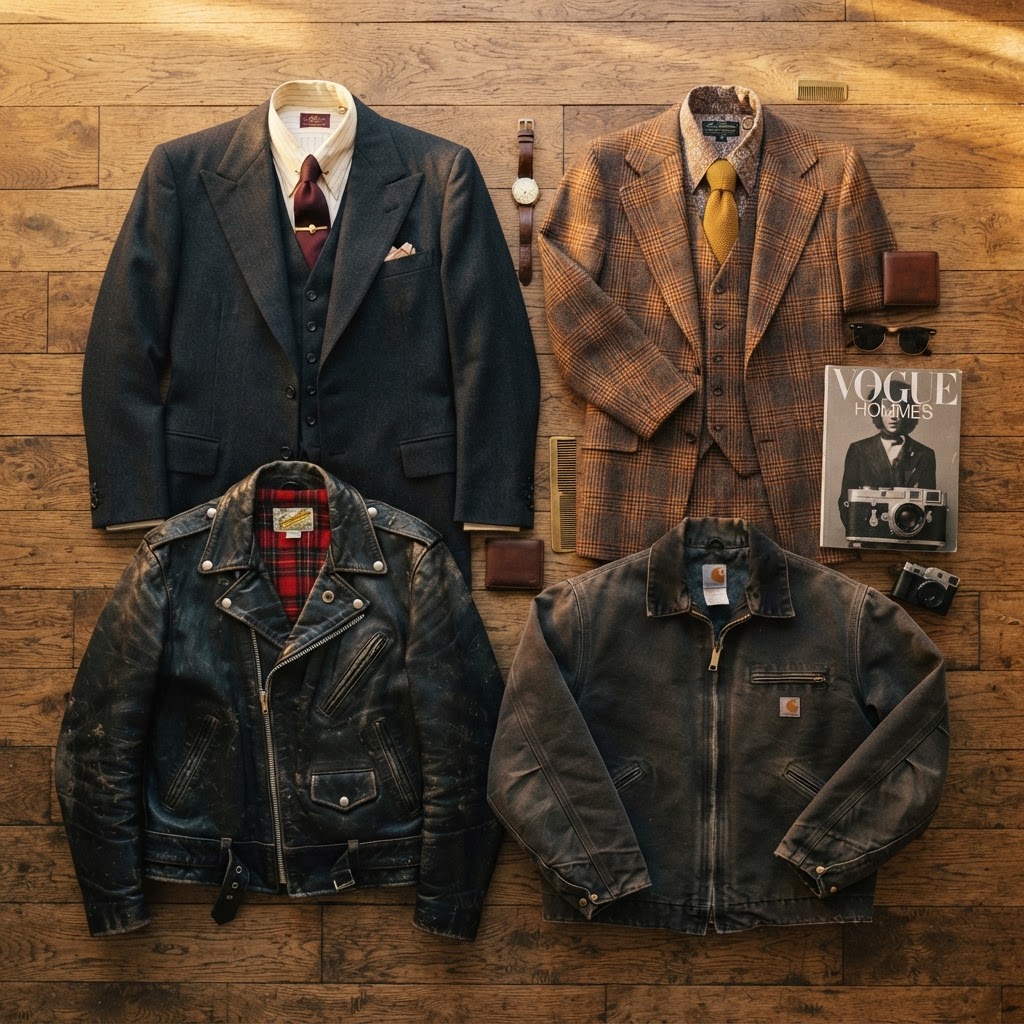
The Best Vintage Fashion Pieces for Men: A Decade-by-Decade Guide
From the dapper double-breasted suits of the 1920s to the streetwear staples of the 2000s, men's vintage fashion is a treasure trove of timeless style. Whether you're building a wardrobe with genuine character or hunting for that one perfect statement piece, knowing what to look for — and when it was made — is half the battle. This decade-by-decade guide breaks down the essential vintage menswear pieces every collector and style-conscious shopper should know.
Introduction: Why Vintage Menswear Matters
There's something undeniably powerful about wearing a piece of clothing that has already lived a life. Men's vintage fashion isn't just about nostalgia — it's about quality, craftsmanship, and a visual language that modern fast fashion simply can't replicate. Each decade from the 1920s onward produced silhouettes, fabrics, and details that tell the story of their time. Understanding those details helps you shop smarter, dress better, and build a wardrobe that's genuinely one of a kind.
The 1920s: The Golden Age of Tailoring
The 1920s was the decade that defined modern menswear in many ways. The lounge suit replaced fussier Victorian-era clothing, and the silhouette became straighter, more relaxed, and more wearable. The pieces to seek out from this era include high-waisted wool trousers with wide legs (often called Oxford Bags), double-breasted waistcoats, and Norfolk jackets — boxy, belted, and unmistakably of their time.
Fabric quality from the 1920s is extraordinary. Wool, tweed, and flannel were cut from tight, durable weaves that have outlasted nearly a century. If you find an authentic 1920s piece in good condition, it's almost certainly better-made than anything produced today at a comparable price point. Look for patch pockets, fish-mouth lapels, and mother-of-pearl buttons as hallmarks of the era.
The 1930s: Depression-Era Elegance
Despite — or perhaps because of — the economic hardship of the Great Depression, the 1930s produced some of the most elegant menswear in history. Suits became more structured, shoulders were padded, and the overall silhouette took on a strong, athletic quality. The peak lapel suit is the defining garment of this decade, and a well-preserved 1930s example is a grail item for serious collectors.
Also worth hunting: wide-brim felt fedoras, two-tone Oxford shoes (the classic spectator shoe), and silk neckties with geometric Art Deco patterns. The 1930s man dressed with intention, and that spirit comes through in every seam.
The 1940s: Military Influence and Utility
World War II transformed menswear almost overnight. Fabric rationing led to slimmer lapels, fewer pleats, and stripped-down detailing. But out of those restrictions came some of the most iconic garments in men's fashion history. The M-1943 field jacket, the A-2 leather bomber jacket, and the Navy peacoat all trace their roots to 1940s military surplus.
For civilian pieces, look for single-breasted suits with minimal ornamentation, work shirts in chambray or herringbone, and high-quality leather belts and boots that reflect the utilitarian values of the era. The 1940s is also when denim workwear — already established — began gaining cultural cachet beyond the job site.
The 1950s: The Birth of Cool
The 1950s split men's fashion into two distinct worlds: the conformist mainstream and the rebellious subculture. On one side, you had the Ivy League look — slim chinos, OCBD shirts, loafers, and navy blazers. On the other, you had the greaser aesthetic: black leather motorcycle jackets, slim-cut denim, and Cuban-heeled boots.
Both are worth collecting. The Schott Perfecto motorcycle jacket was introduced in 1928 but became iconic in the 1950s, and an original example is among the most coveted pieces in vintage menswear. For a cleaner look, seek out sack suits with natural shoulders, knit ties, and Bass Weejun loafers — the foundations of a style that still resonates today.
The 1960s: Mod, Mad Men, and Beyond
The 1960s were a decade of experimentation, and menswear reflected that energy. Early in the decade, the Mad Men aesthetic prevailed: slim-cut suits, narrow lapels, white dress shirts, and understated accessories. By the late 1960s, everything had shifted toward the Mod movement — bold patterns, bright colors, Nehru collars, and Chelsea boots.
Key pieces to look for: slim two-button suits in mohair or sharkskin, Harrington jackets, turtleneck sweaters, and printed shirts with bold geometric or floral patterns. The 1960s also saw the rise of the Levi's 501 as a cultural icon — an original pair from this era, identifiable by its Big E red tab, is a serious collector's item.
The 1970s: Wide Everything
The 1970s embraced maximalism in a way no other decade quite matched. Wide lapels, flared trousers, platform shoes, and bold prints defined the era. While some of this looks dated to modern eyes, much of it has cyclically come back into fashion — and for good reason. The tailoring of the 1970s, particularly in three-piece leisure suits and safari jackets, is surprisingly wearable with the right styling.
Also from this decade: vintage collegiate athletic wear — crewneck sweatshirts, varsity jackets, and nylon track suits — which have become highly sought-after in streetwear circles. Look for Champion reverse weave sweatshirts and early Nike or Adidas athletic gear from the late 1970s for pieces that command serious premiums today.
The 1980s: Power Dressing and Subculture Style
The 1980s produced menswear at both its most excessive and its most culturally rich. Power suits with enormous shoulder pads, double-breasted blazers, and pleated trousers defined the boardroom. Meanwhile, subcultures — punk, hip-hop, skate — were generating some of the most influential menswear of the century.
Early Ralph Lauren Polo, Stone Island jackets, vintage Levi's 501s in stonewash, and Air Jordan sneakers are among the most collectible pieces from this decade. If you're after the power dressing angle, look for Armani suits from the mid-1980s — the originals have a drape and fabric quality that modern iterations can't match.
The 1990s: Minimalism and Streetwear Emerge
The 1990s marked a decisive turn toward casual dressing and the beginning of streetwear as a dominant force in men's fashion. Grunge brought flannel shirts, distressed denim, and Carhartt work jackets into the cultural mainstream. Hip-hop fashion elevated oversized silhouettes, Timberland boots, and branded sportswear to high-fashion status.
For collectors, the 1990s is fertile ground. Vintage Tommy Hilfiger, early Supreme, JNCO jeans, Carhartt Detroit jackets, and vintage GORE-TEX outerwear are all highly desirable. The decade also produced some exceptional minimalist tailoring — look for pieces by Helmut Lang or early Prada menswear for understated luxury that still looks modern.
The 2000s: Y2K and the Rise of Logomania
The early 2000s aesthetic has had a remarkable resurgence in recent years. Oversized graphic tees, low-rise baggy denim, velour tracksuits, and chunky sneakers are all back in circulation — and original pieces from this era are increasingly valuable. Von Dutch trucker hats, Ed Hardy tees, and early Juicy Couture (yes, the men's line existed) are now bona fide collector's items.
For a more refined take on 2000s menswear, look for early Dior Homme under Hedi Slimane — the ultra-slim suits and skinny lapels he introduced are some of the most historically significant menswear designs of the era.
Conclusion: Build Your Collection at Ensemble
Vintage menswear rewards the curious and the patient. Each decade has its own visual grammar, its own quality benchmarks, and its own hidden gems waiting to be discovered. Whether you're drawn to the razor-sharp tailoring of the 1930s or the streetwear energy of the 1990s, there's a vintage piece out there that speaks to your personal style — you just have to know where to look.
At Ensemble, we curate authentic vintage menswear from the 1920s through the 2010s, with every piece verified for era accuracy and condition. Browse our decade-by-decade collections and find the piece that adds a chapter of history to your wardrobe.