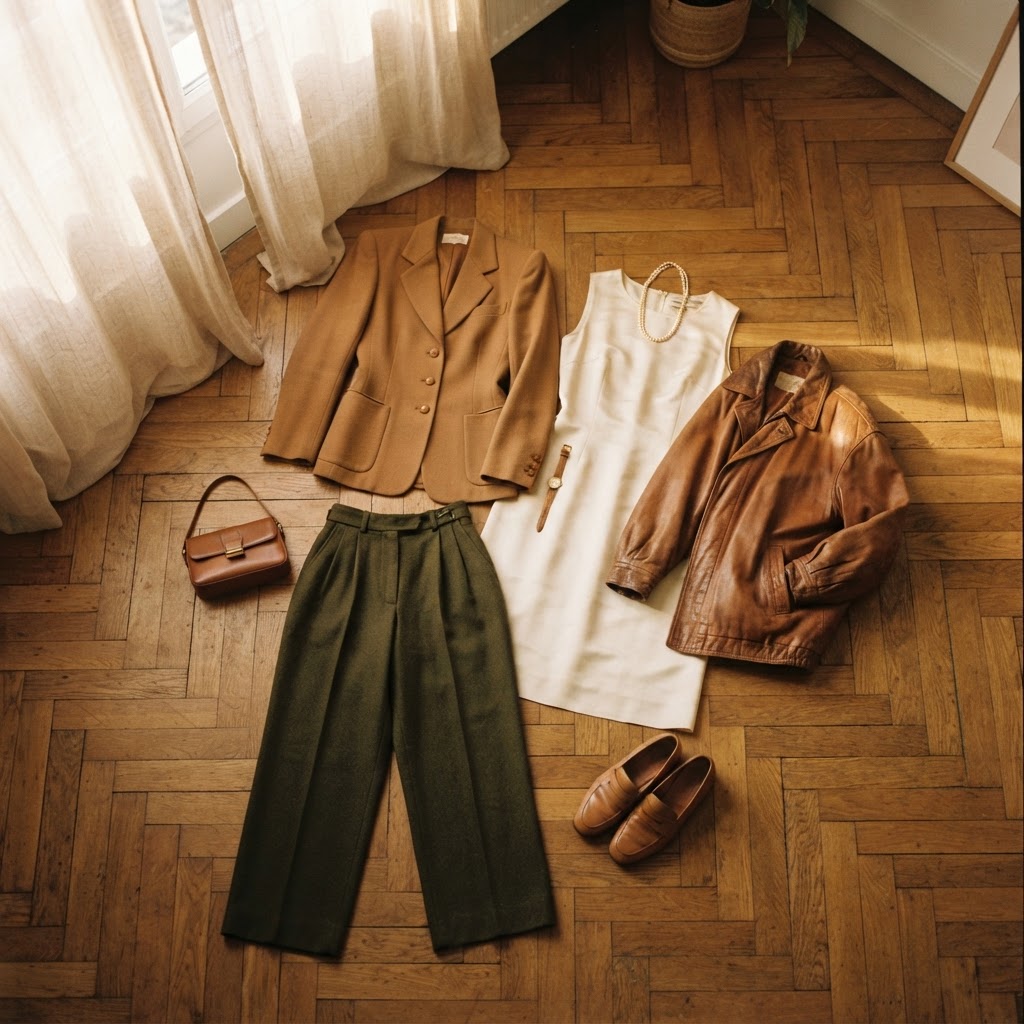
The Art of Building a Timeless Capsule Wardrobe with Authentic Vintage Pieces
In a world of fast fashion and fleeting trends, the capsule wardrobe has emerged as the ultimate act of intentional dressing. But what if you could build yours entirely from authentic vintage pieces — garments with real history, unmatched craftsmanship, and stories sewn into every seam? Here's how to curate a vintage capsule wardrobe that transcends decades and defines your personal style forever.
What Is a Capsule Wardrobe, and Why Does Vintage Make It Better?
The concept of the capsule wardrobe was popularized in the 1970s by London boutique owner Susie Faux, who advocated for a small collection of timeless, high-quality essentials that could be mixed and matched endlessly. The idea was later amplified by Donna Karan's iconic "Seven Easy Pieces" collection in 1985. The philosophy is simple: own less, wear more, and invest in pieces that last.
Authentic vintage clothing elevates this concept to an entirely new level. When you build a capsule wardrobe from genuine vintage pieces — sourced from the 1920s through the 2010s — you're not just curating a closet. You're assembling a living archive. Each garment carries the construction quality of its era, the cultural fingerprint of its decade, and a one-of-a-kind character that no modern reproduction can replicate.
Laying the Foundation: Choosing Your Anchor Decades
The first step in building a vintage capsule wardrobe is deciding which decades resonate most deeply with your aesthetic sensibility and lifestyle. You don't need to commit to a single era — in fact, the most compelling vintage wardrobes are those that blend across decades with a cohesive personal thread.
Consider these era-defining essentials:
- 1930s–1940s: Bias-cut silk blouses, wide-leg trousers, structured wool blazers, and swing coats. These pieces bring an air of old Hollywood glamour and extraordinary tailoring to any wardrobe.
- 1950s–1960s: A-line skirts, shift dresses, structured handbags, and clean-lined trench coats. These decades offer unparalleled silhouette clarity — clothes that know exactly what they want to be.
- 1970s: High-waisted denim, peasant blouses, suede fringe jackets, and wrap dresses. The 70s deliver earthy warmth and effortless bohemian energy.
- 1980s–1990s: Power blazers, minimalist slip dresses, leather jackets, and tailored trousers. These decades oscillate between bold maximalism and cool, understated minimalism — both incredibly wearable today.
- 2000s–2010s: Vintage from these more recent decades is rapidly gaining collector status. Think early Y2K staples, mid-aughts denim, and indie-era statement pieces that are already nostalgia-coded.
Choose two or three anchor decades that feel like you, and use them as the backbone of your collection.
The Essential Vintage Capsule: 10 Pieces to Start
While every capsule wardrobe should be personal, there are ten foundational vintage archetypes that work across body types, occasions, and style identities:
- A tailored blazer — from the 1940s or 1980s, depending on your preference for soft structure or sharp power dressing.
- High-waisted trousers — a 1940s or 1970s pair in a neutral wool or linen delivers incredible versatility.
- A day dress — a 1950s or 1960s cotton or silk day dress is the workhorse of any vintage wardrobe.
- A silk blouse — seek out 1930s or 1970s examples for the most luxurious drape and hand-feel.
- A leather or suede jacket — 1970s and 1980s options offer the best quality-to-character ratio.
- A structured coat — whether a 1940s wool topper or a 1960s mod statement coat, outerwear is where vintage truly shines.
- Quality denim — 1980s or 1990s high-waisted jeans in raw or lightly washed indigo are endlessly wearable.
- A knitwear piece — a 1960s or 1970s ribbed turtleneck or cardigan adds texture and warmth without bulk.
- A printed or embroidered statement piece — this is your personality card, whether it's a 1950s novelty print skirt or a 1990s embroidered bomber.
- Classic leather shoes or boots — vintage footwear from the 1960s through the 1980s often features Goodyear-welted construction that outlasts almost anything made today.
Authenticating and Caring for Your Vintage Investment
Building a capsule wardrobe with authentic vintage pieces requires a degree of informed discernment. Learning to authenticate vintage garments is part of the joy — and part of protecting your investment.
Key authentication markers include union labels, care label language (pre-1971 garments in the US were not legally required to have care labels), zipper styles (metal teeth versus nylon coil), and fabric composition. Natural fibers — wool, silk, cotton, linen — dominate pre-1970s garments and are a hallmark of authentic vintage quality.
Once you've sourced your pieces, proper care is non-negotiable. Store garments in breathable cotton bags, never plastic. Use padded or cedar hangers for structured pieces. For delicate silks and wools, hand-washing with pH-neutral soap or professional wet cleaning is preferable to dry cleaning, which can damage natural fibers over time. Treat vintage clothing with the reverence it deserves — these garments have already outlasted the average modern piece by decades.
The Art of Mixing Vintage Across Decades
One of the most liberating aspects of a vintage capsule wardrobe is the freedom to mix eras. Fashion history is not linear, and the most stylish people have always borrowed freely across time.
Try pairing a 1940s bias-cut blouse with 1990s wide-leg trousers and contemporary white sneakers. Layer a 1960s mod shift dress under a 1980s oversized blazer. Style a 1970s suede fringe jacket over a 1950s floral dress. These combinations create something entirely new — a personal aesthetic that is rooted in history but entirely your own.
The key to successful cross-decade dressing is tonal coherence. When you're mixing eras, let color and texture do the harmonizing work. A palette built around warm neutrals, deep jewel tones, or crisp monochromes will make even the most eclectic vintage mix feel intentional and polished.
Sustainability and the Deeper Value of Vintage
Building a vintage capsule wardrobe is one of the most genuinely sustainable fashion choices you can make. Every authentic vintage piece you acquire is a garment rescued from potential waste, a story preserved, and a small act of resistance against the disposable culture of fast fashion.
Beyond environmental impact, there is a profound cultural value in wearing authentic vintage clothing. When you put on a 1940s gabardine suit or a 1970s Halston-era wrap dress, you are participating in a continuum of human creativity and craftsmanship. You are wearing something that was made to last — and has.
This is not nostalgia for nostalgia's sake. It is a recognition that quality, intention, and beauty are timeless design values, and that some of the finest expressions of those values are already waiting for you in the archives of the past.
Conclusion: Start Your Vintage Capsule at Ensemble
Building an authentic vintage capsule wardrobe is a journey, not a checklist. It rewards patience, curiosity, and a willingness to let pieces find you as much as you find them. It is, ultimately, one of the most personal and pleasurable forms of self-expression available to any style-conscious person today.
At Ensemble, we believe that the best wardrobe is one built with intention — and that the most extraordinary garments are the ones that have already lived a life before yours. Our marketplace offers carefully authenticated vintage clothing from the 1920s through the 2010s, curated for quality, provenance, and enduring style. Whether you're beginning your first capsule or deepening an existing collection, Ensemble is your partner in building something truly timeless. Browse our collections today and find the vintage pieces that belong in your story.