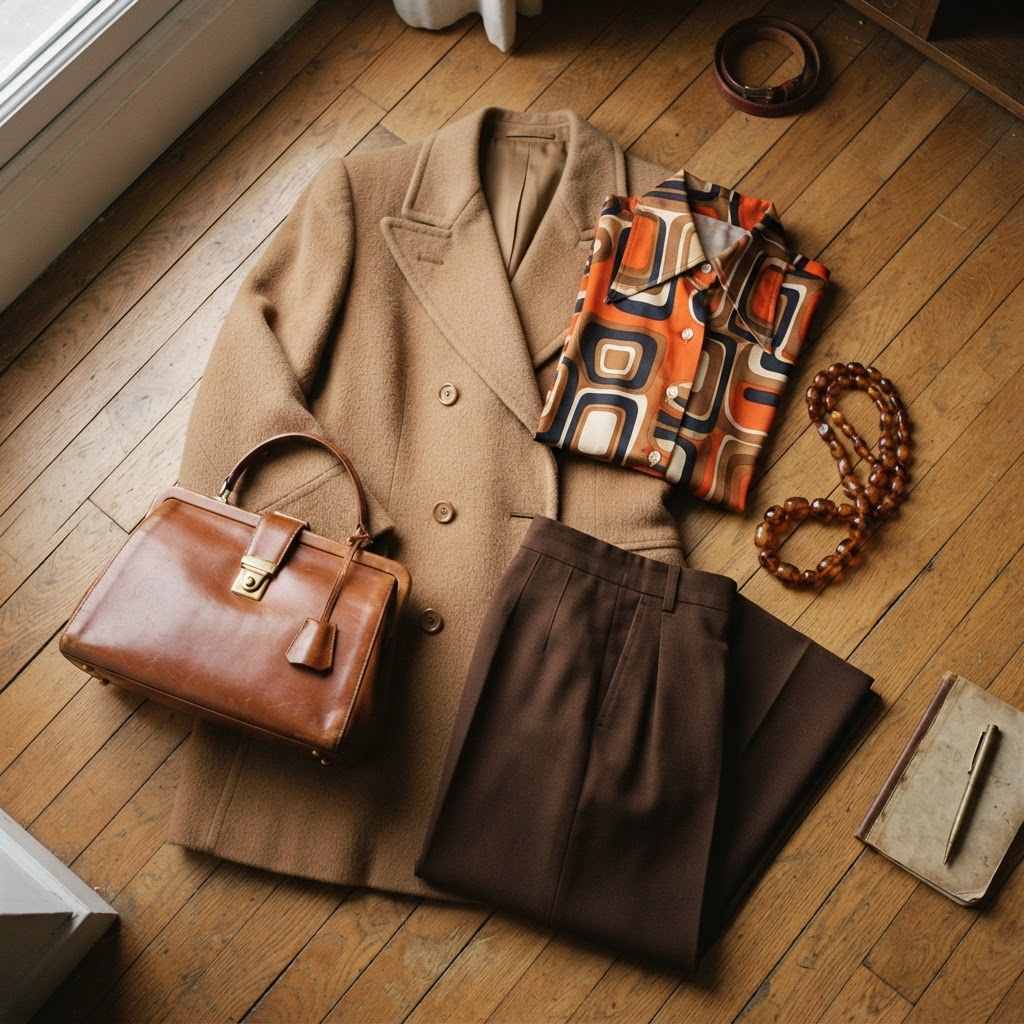
The Art of Building a Timeless Capsule Wardrobe with Authentic Vintage Pieces
A capsule wardrobe isn't just a modern minimalist trend — it's a philosophy that vintage fashion has quietly championed for over a century. By curating a small collection of authentic, high-quality pieces from across the decades, you can build a wardrobe that is deeply personal, sustainably minded, and endlessly versatile. Here's how to do it right, one era at a time.
What Is a Capsule Wardrobe, Really?
The term capsule wardrobe was coined by London boutique owner Susie Faux in the 1970s and later popularized by Donna Karan in the 1980s. The concept is simple: a tightly edited collection of timeless, interchangeable pieces that form the backbone of your personal style. No excess, no noise — just clothing that works hard and looks good doing it.
But here's the secret that fast fashion doesn't want you to know: the best capsule wardrobes aren't built from brand-new basics. They're built from authentic vintage pieces — garments that have already proven their staying power by surviving decades of changing trends. When a 1940s wool blazer or a 1970s silk blouse has lasted this long, you can be fairly confident it will outlast whatever is currently hanging on the racks at your nearest mall.
Why Vintage Pieces Are the Ideal Capsule Foundation
Authentic vintage clothing carries something that modern fast fashion simply cannot replicate: provenance and craftsmanship. A dress sewn in 1962 was constructed with a different standard of care. Seams were finished. Linings were added. Buttons were sewn with thread that could survive a decade of weekly wear. The fabrics — natural wool, silk charmeuse, cotton broadcloth — age beautifully rather than pilling after three washes.
Beyond construction, vintage pieces offer visual individuality. When you anchor your capsule wardrobe in authentic pieces from the 1930s through the 1990s, you are building something that cannot be replicated by anyone else. Your 1950s full-circle skirt exists in its exact colorway once. Your 1980s camel overcoat is not being sold to 10,000 other shoppers this season.
Finally, there is the matter of sustainability. The most environmentally responsible garment is always the one that already exists. Choosing vintage over new reduces textile waste, sidesteps exploitative manufacturing chains, and extends the life of objects that took real resources to produce.
Identifying Your Anchor Decades
A successful vintage capsule wardrobe doesn't mean wearing head-to-toe 1940s every day. It means identifying which two or three decades speak most loudly to your aesthetic and sourcing key pieces from each. Consider these pairings:
- 1920s + 1970s: Art Deco beading and fluid bias cuts pair surprisingly well with 1970s bohemian silhouettes. Both decades celebrated femininity through movement and ornamentation.
- 1940s + 1990s: The structured tailoring of wartime 1940s workwear — boxy shoulders, high-waisted trousers — echoes directly in the minimalist suiting that dominated 1990s runways under designers like Calvin Klein and Jil Sander.
- 1960s + 1980s: Mod geometry from the 1960s and power-shouldered boldness from the 1980s create a wardrobe that is unapologetically graphic and confident.
Once you've identified your anchor decades, you can begin selecting your hero pieces.
The Core Pieces of a Vintage Capsule Wardrobe
Regardless of which decades you gravitate toward, every strong capsule wardrobe needs the same fundamental categories filled. Here's how vintage delivers on each:
The Coat: A well-made vintage coat is arguably the single best investment in vintage dressing. A 1940s double-breasted wool military coat, a 1960s mod A-line in camel, or a 1970s shearling all perform the same function: they anchor every outfit and immediately communicate a point of view.
The Trouser: High-waisted trousers have appeared in virtually every decade from the 1930s onward, which makes them one of the most cross-compatible vintage pieces available. Look for natural fiber construction — wool gabardine, linen, or heavyweight cotton — for longevity and drape.
The Blouse or Shirt: A 1930s silk crepe blouse, a 1950s cotton poplin button-down, or a 1970s peasant blouse in natural linen can serve as the quiet workhorse of an entire wardrobe. These pieces mix forward and backward across decades with ease.
The Dress: Choose one occasion dress and one day dress from your anchor decades. These two pieces will cover a surprising range of your social calendar and can be layered, belted, and accessorized differently across seasons.
The Jacket or Blazer: Few things sharpen a vintage outfit like authentic tailoring. A 1980s oversized blazer brings structure to a floral 1930s dress. A 1960s Chanel-style bouclé jacket elevates simple trousers into something that reads as deliberate and chic.
Accessories: Vintage accessories deserve their own conversation, but briefly: bakelite jewelry from the 1930s and 1940s, silk scarves from the 1950s and 1960s, and leather belts and bags from the 1970s and 1980s are the punctuation marks that make a vintage capsule wardrobe feel fully realized rather than costumed.
How to Shop for Vintage Capsule Pieces Intentionally
The enemy of a capsule wardrobe is impulse buying, and vintage shopping can be particularly seductive. Here are a few guiding principles:
Buy condition, not just era. A stunning 1950s gown with significant damage is not a capsule piece — it's a project. Unless you have the tailoring skills or resources to restore it, prioritize pieces in excellent or very good vintage condition.
Prioritize fit over fantasy. Vintage sizing runs differently across every decade. A labeled size 14 from 1955 bears almost no relationship to a modern size 14. Always check actual measurements, not labels. A piece that fits beautifully will be worn constantly; a piece that almost fits will hang in your closet indefinitely.
Think in outfits, not pieces. Before purchasing any vintage item for your capsule, mentally style it with at least three things you already own. If you can't construct three distinct outfits around it, it may not be a true capsule piece for your wardrobe — no matter how beautiful it is in isolation.
Learn your construction markers. Dating vintage pieces accurately helps you shop more confidently. Metal zippers suggest pre-1960s. Care labels became required in the United States in 1971. Synthetic blend fabrics became far more common in the late 1960s and 1970s. These small details help you verify that you're getting what you're paying for.
Caring for Your Vintage Capsule
Building a vintage capsule wardrobe is only half the equation. The other half is preservation. Natural fibers need to breathe — avoid plastic dry-cleaning bags and store wool pieces with cedar rather than mothballs. Silk should be hand-washed in cold water or professionally cleaned, never machine dried. Use padded hangers for structured garments and fold knits rather than hanging them to prevent distortion.
With basic care, the authentic vintage pieces in your capsule wardrobe will outlast anything you could buy new today — and they'll appreciate in both personal and monetary value as the years pass.
Conclusion: Build Something That Lasts
A capsule wardrobe built on authentic vintage pieces is more than a styling strategy. It is a commitment to intentionality — a declaration that you would rather own ten extraordinary things than a hundred forgettable ones. It is also, quietly, one of the most radical acts available to a fashion lover in an era of disposability.
At Ensemble, we've spent years sourcing and authenticating clothing from the 1920s through the 2010s precisely because we believe that the right vintage piece doesn't just complete an outfit — it completes a wardrobe philosophy. Whether you're beginning your capsule from scratch or refining a collection you've built over years, our marketplace is designed to help you find pieces worthy of the long game. Browse by decade, by category, or by era — and start building something that will still be extraordinary thirty years from now.