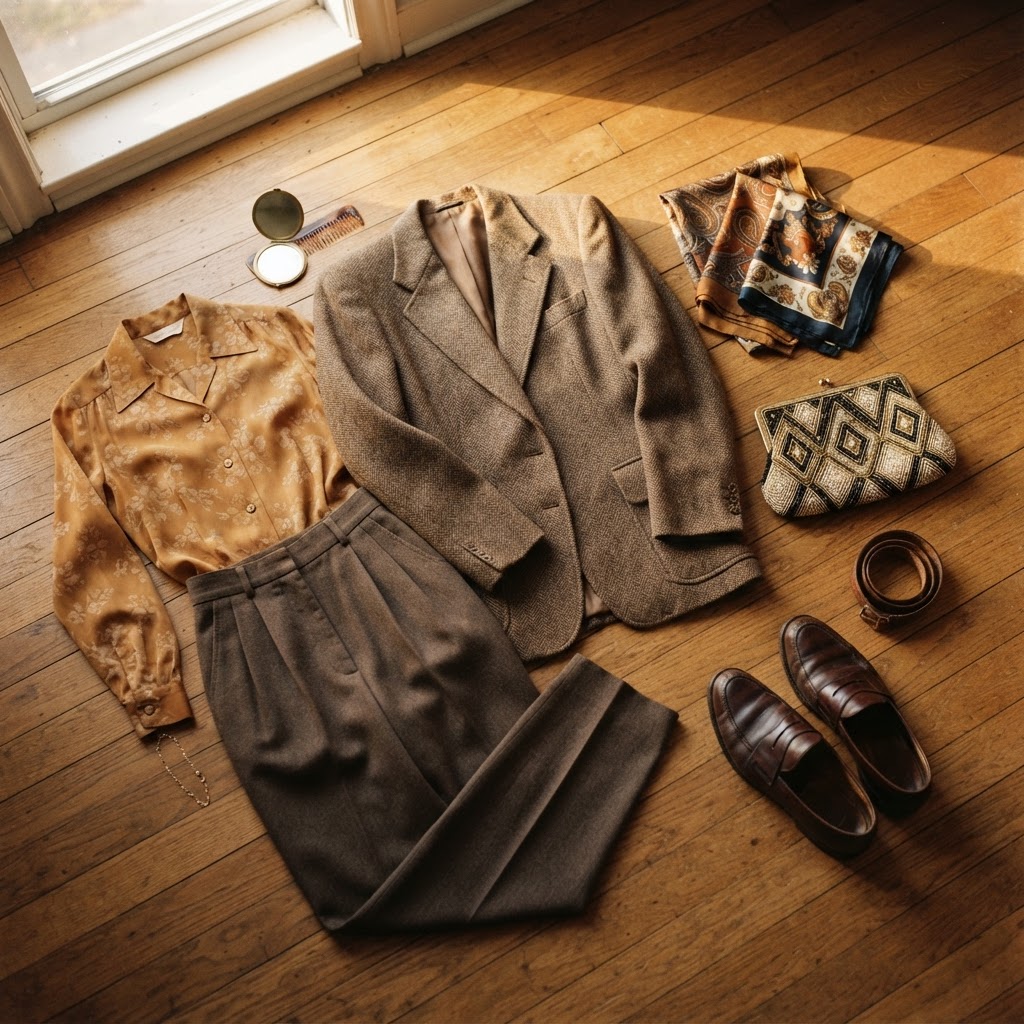
The Art of Building a Capsule Wardrobe with Authentic Vintage Pieces
A capsule wardrobe isn't just a modern minimalist trend — it's a philosophy that vintage fashion has embodied for decades. By curating a small, intentional collection of authentic pieces from the past, you can dress with more personality, sustainability, and style than any fast-fashion haul could ever offer. Here's how to build yours the right way.
What Is a Vintage Capsule Wardrobe?
The concept of a capsule wardrobe — a tightly edited collection of versatile, timeless pieces — was popularized by London boutique owner Susie Faux in the 1970s. The idea is simple: own fewer things, but make each item count. When you apply this philosophy to authentic vintage clothing, the results are extraordinary. Instead of disposable trends, you're investing in garments that have already proven their staying power across decades.
A vintage capsule wardrobe typically consists of 20 to 40 pieces that work together seamlessly. Every item earns its place by being versatile, well-made, and genuinely expressive of your personal aesthetic. The difference between a vintage capsule and a random thrift haul is intentionality — each piece is chosen with purpose.
Why Vintage Is Perfect for Capsule Dressing
Modern fast fashion is engineered to fall apart and fall out of style. Vintage clothing, by contrast, was built in an era when garments were meant to last. A 1940s wool blazer was constructed with hand-stitched seams and quality suiting fabric. A 1970s silk blouse was cut with a generosity of fabric and attention to drape that most contemporary versions simply can't match.
When you choose authentic vintage pieces, you're also making a sustainable choice. No new resources are consumed. No factory waste is generated. You're participating in a circular economy that values craftsmanship over consumption — and you're doing it in style.
Beyond ethics and durability, vintage offers something irreplaceable: character. The subtle patina of a well-loved leather bag, the perfect fade of a pair of 1980s Levi's, the unique button detailing on a 1960s shift dress — these are qualities that cannot be manufactured on demand.
Step One: Define Your Aesthetic Anchor Decade
Before you start curating, ask yourself: which era resonates most deeply with your personal style? Your answer doesn't have to be rigid — many of the best vintage wardrobes draw from multiple decades — but having an anchor decade gives your collection visual cohesion.
Are you drawn to the structured elegance of the 1940s and 1950s, with their nipped waists and full skirts? Perhaps the relaxed bohemian spirit of the 1970s speaks to you, with its earthy tones and flowing silhouettes. Maybe you love the bold graphic energy of the 1980s or the minimalist cool of 1990s grunge and slip dresses.
Choosing an anchor decade doesn't mean you'll only wear pieces from that era. It means you have a gravitational center — a visual language that ties your wardrobe together.
Step Two: Build Your Foundation Pieces First
Every capsule wardrobe, vintage or otherwise, needs foundation pieces — items that are neutral, versatile, and easy to style with everything else. In a vintage context, these might include:
- A well-cut vintage trench coat (the 1960s and 1970s produced some of the finest examples)
- High-waisted trousers in a neutral tone, ideal from the 1940s or 1980s
- A classic white or cream blouse — look for interesting collar details or pintucking from the 1930s through 1960s
- A versatile knit or cardigan, perhaps from a 1950s twin set
- Dark-wash or classic blue denim from the 1970s through 1990s
- A simple sheath or A-line dress in black, navy, or camel
These are the workhorses of your wardrobe. They show up in almost every outfit and form the backbone of your daily dressing.
Step Three: Add Statement Pieces with Intention
Once your foundations are in place, it's time to bring in statement pieces — the items that make your wardrobe unmistakably yours. This is where vintage truly shines. Think of a beaded 1920s evening jacket layered over a simple modern slip. Or a psychedelic 1960s printed midi dress worn with clean white sneakers. Or a structured 1980s power blazer in an unexpected jewel tone.
The key rule: no more than one statement per outfit. Let each special piece breathe and command attention. When every item is shouting, nothing gets heard.
A good vintage capsule wardrobe typically includes three to five statement pieces. These are the items people will remember and comment on. Choose them carefully, and make sure each one genuinely thrills you when you put it on.
Step Four: Curate Your Accessories
In vintage dressing, accessories are often the secret weapon. A single great bag, a pair of classic pumps, or a silk scarf can completely transform a look. Because vintage accessories are often more affordable than vintage clothing, they're also an excellent entry point for new collectors.
For your capsule, consider:
- One great vintage leather bag — a 1970s saddlebag, a 1990s structured tote, or a 1960s boxy handbag
- Two to three pairs of shoes that span casual and formal occasions
- A collection of scarves — 1950s and 1960s printed silk scarves are endlessly versatile
- Vintage jewelry in metals and stones that complement your palette
- A belt or two for cinching and defining silhouettes
Remember: in a capsule wardrobe, accessories don't just decorate — they multiply. The right scarf can make five outfits feel like fifteen.
Step Five: Ensure Cohesion Through Color
One of the most common mistakes in building a vintage wardrobe is falling in love with individual pieces without considering how they work together. A cohesive color palette is the secret to a wardrobe that functions as a system rather than a collection of isolated moments.
Choose two to three neutral base tones (black, ivory, camel, navy, olive) and two to three accent colors that you love and that appear throughout your collection. When shopping for new additions, ask yourself: does this color work with at least three other things I already own? If the answer is no, think carefully before committing.
Vintage clothing from different eras can have wonderfully distinctive color stories — the dusty pastels of the 1950s, the earth tones of the 1970s, the saturated brights of the 1980s. Leaning into a decade's signature palette can actually make cross-era dressing easier, because the colors naturally harmonize.
Caring for Your Vintage Capsule
Authentic vintage clothing requires thoughtful care. Always check fiber content before washing — many vintage garments are wool, silk, or rayon and require hand washing or dry cleaning. Store knits folded, never hung. Use padded hangers for structured jackets and dresses to preserve their shape. Keep leather goods conditioned and stored away from direct sunlight.
Proper care isn't just about preservation — it's about respect. These garments have survived decades already. With the right attention, they'll outlast anything you could buy new today.
Conclusion: Build Something That Lasts
A vintage capsule wardrobe is more than a styling exercise. It's a commitment to dressing with intention, honoring craftsmanship, and rejecting the throwaway culture that dominates modern fashion. Every piece you choose is a small act of preservation — a decision to keep something beautiful alive in the world.
At Ensemble, we believe that the best wardrobe is one built slowly, thoughtfully, and with genuine love for the garments it contains. Whether you're searching for a flawless 1930s bias-cut gown, the perfect 1990s leather jacket, or a crisp 1960s mod shift dress, our curated marketplace connects you with authenticated vintage pieces from every decade. Start building your capsule today — one extraordinary piece at a time.