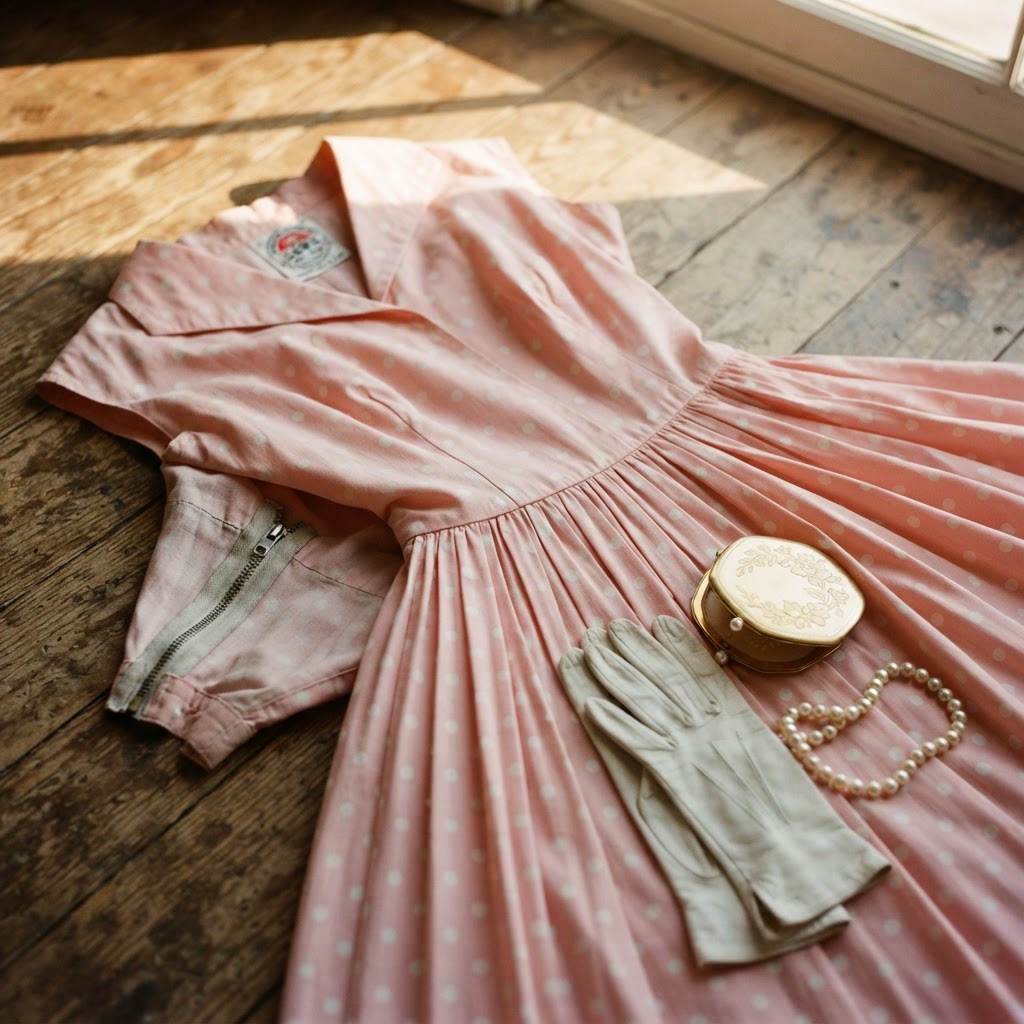
Real Deal or Reproduction? How to Spot Authentic 1950s Vintage Clothing Like a Pro
The 1950s aesthetic is everywhere right now — full circle skirts, structured bodices, and pastel twin sets dominate runways and Instagram feeds alike. But with the surge in popularity comes a flood of modern reproductions masquerading as the real thing. Here's how to tell a genuine mid-century treasure from a convincing copy.
Why the 1950s Are Having a Moment (Again)
From the rockabilly revival to cottagecore's love affair with tea-length skirts, 1950s fashion has never really left us. But in 2024 and beyond, the demand for authentic mid-century pieces has reached a fever pitch — and so has the market for reproductions. Brands like Stop Staring, Collectif, and Bernie Dexter do a beautiful job of capturing the spirit of the era, but their garments are not vintage. Knowing the difference matters, both for your wallet and for the integrity of your wardrobe.
Whether you're a seasoned collector or just beginning your vintage journey, these identification techniques will help you shop with confidence.
1. Start With the Label
The garment label is your first and most powerful clue. In the 1950s, labeling practices were very different from today.
- No country of origin required until 1971: U.S. law didn't mandate country-of-origin labels until 1971. If a label reads "Made in China," "Made in India," or even "Made in USA" in that specific phrasing, it's almost certainly post-1970s. Genuine 1950s American-made garments often have no country of origin at all, or may read "Union Made" with a ILGWU (International Ladies' Garment Workers' Union) or ACWA label.
- No RN or WPL numbers on early pieces: Wool Products Label Act (WPL) numbers were used starting in the 1940s, and RN (Registered Number) labels became common in the 1950s–60s. A very low WPL number (under 5000) can help date a piece to the late 1940s or very early 1950s.
- Font and printing style: 1950s labels typically feature looping script fonts, rayon ribbon construction, and chain-stitched edges. Modern reproduction labels often look cleaner, more uniform, and are printed on woven polyester ribbon.
2. Examine the Fabric
Fabric composition is one of the most telling indicators of a garment's true age.
- Natural fibers dominated: Wool, cotton, silk, and rayon were the workhorses of 1950s fashion. Nylon had been introduced but was primarily used for hosiery and some blouses. If a garment is made of polyester, it's almost certainly from the 1970s or later — polyester fabric wasn't widely used in clothing until the late 1960s.
- Early synthetics feel different: 1950s rayon has a distinctive fluid drape and a slightly heavier hand than modern rayon blends. It may also show characteristic "shatter" — tiny breaks along fold lines from age.
- Look for fabric content labels: Mandatory fiber content labeling in the U.S. didn't come into effect until the Textile Fiber Products Identification Act of 1960. A garment with no fiber content label could easily pre-date 1960, supporting a 1950s origin. A garment with a fiber content label is from 1960 at the earliest.
3. Inspect the Construction
How a garment is put together tells you a great deal about when it was made. The 1950s were an era of exceptional craftsmanship, even in mass-market clothing.
- Seam finishing: Look inside the garment. 1950s pieces often feature pinked seams (zigzag-cut edges), bound seams with rayon tape, or hand-overcast stitching. Modern reproductions and contemporary garments almost universally use serged (overlocked) seams — a technique that became standard in the 1960s and dominant by the 1970s.
- Zippers: This is a big one. Metal zippers — particularly those made by Talon or Conmar — are a hallmark of authentic 1950s garments. These will be found at the side seam or back, never the center-front invisible zip. Nylon coil zippers weren't widely adopted until the late 1960s. If your circle skirt has a nylon zip, it's not from the '50s.
- Hand-finishing: Check the hem. Many 1950s garments feature hand-stitched blind hems, hand-sewn hook-and-eye closures, and hand-tacked interfacing. This level of finish is rarely replicated in modern reproductions at accessible price points.
- Boning and structure: 1950s strapless gowns and structured bodices frequently used spiral steel boning or featherbone — both of which feel distinctly different from the plastic boning used today.
4. Study the Silhouette and Sizing
Sizing is perhaps the most practical reality check for 1950s authenticity.
- Vintage sizing runs small: A 1950s size 14 corresponds roughly to a modern size 8 or 10. If you're seeing a "size 14" garment with a 36-inch bust, that's a significant red flag that it may be a reproduction using modern size conventions.
- Waist emphasis: The New Look silhouette — full skirt, nipped waist, rounded shoulder — defined the decade. Authentic pieces will reflect this through boning, petersham waistbands, and built-in crinoline channels rather than simply mimicking the shape through cut alone.
- Bust darts and construction: 1950s bodices frequently feature prominent bust darts, sometimes double darts, and the waist seam sits at the natural waist — not the dropped or raised waist seen in other eras.
5. Look for the Signs of Genuine Age
Authentic vintage clothing carries the quiet evidence of a life lived.
- Fading and wear patterns: Genuine age produces uneven fading, particularly under arms and along fold lines. Reproductions may be artificially distressed but rarely replicate the organic irregularity of 60+ years of use and washing.
- Underarm shields: Many 1950s dresses were sold with dress shields — crescent-shaped fabric inserts designed to protect the garment from perspiration. Finding these intact (or evidence of where they were attached) is a strong authenticity marker.
- Smell: Vintage garments often carry a distinctive musty, cedar, or mothball scent from decades of storage. While not definitive on its own, the absence of any aged scent in a purportedly decades-old garment is worth noting.
- Moth damage on wool: Small, irregular holes in wool garments are common in genuine vintage pieces. Reproductions in wool are unlikely to show this kind of authentic wear.
6. Research the Maker
If your garment has a maker's label, research it. Many beloved 1950s labels — Lilli Ann, Harvey Berin, Ceil Chapman, Suzy Perette — are well-documented and their authentic pieces are sought after by collectors. Online resources like the Vintage Fashion Guild Label Resource are invaluable for cross-referencing label styles and dating them accurately.
Conversely, if a label looks suspiciously crisp and new on what's described as a 60-year-old garment, trust your instincts.
Conclusion: Shop Smarter With Ensemble
The hunt for authentic 1950s vintage is one of fashion's great pleasures — but it rewards the informed shopper. By checking labels, examining fabric and construction, understanding sizing conventions, and looking for genuine signs of age, you can build a collection that truly reflects the craftsmanship and style of the mid-century era.
At Ensemble, every listing in our 1950s category is vetted by vintage specialists who apply exactly these standards. We believe authentic vintage deserves authentic curation. Whether you're searching for a Lilli Ann suit, a full-skirted party dress, or a structured wiggle dress, our marketplace connects you with sellers who know — and love — the real thing. Shop the decade with confidence at Ensemble, where every piece tells a true story.