Real Deal or Repro? How to Identify Authentic 1950s Vintage Clothing vs. Modern Reproductions
The poodle skirts, swing dresses, and sharply tailored suits of the 1950s have never gone out of style — which means the market is flooded with modern reproductions designed to look the part. Before you invest in a piece of mid-century magic, here's everything you need to know to tell the genuine article from a clever imitation.
The 1950s represent one of the most romanticized decades in fashion history. Full skirts, nipped waists, circle dresses, and rockabilly separates carry an undeniable charm that keeps collectors, vintage enthusiasts, and costume hunters coming back for more. But that popularity has a downside: the reproduction market is enormous, and modern repros are getting better every year. Knowing how to spot the real thing takes patience, practice, and a close eye for detail. Here's your guide to authenticating 1950s vintage clothing with confidence.
Start With the Label
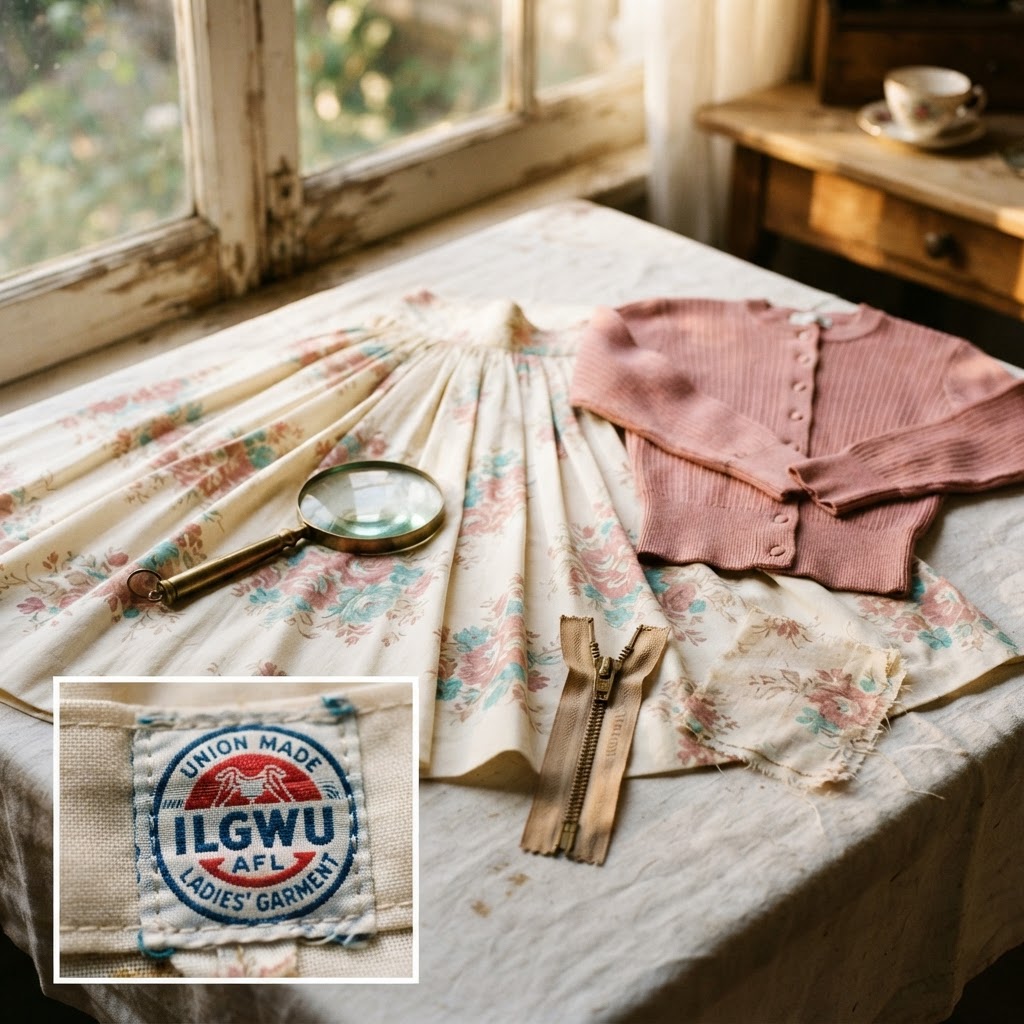
The garment label is your first and most powerful clue. Union labels were extremely common on American-made clothing throughout the 1950s. Look for the ILGWU (International Ladies' Garment Workers' Union) label, which features a distinctive logo and often includes a two-digit date code. A date code beginning with a number between 51 and 59 is a strong indicator of authenticity. The ACWA (Amalgamated Clothing Workers of America) label appears frequently on menswear and tailored pieces.
Beyond union labels, pay attention to care instruction labels — or rather, their absence. The U.S. Federal Trade Commission didn't require permanent care labels until 1971. An authentic 1950s piece will have no sewn-in washing instructions whatsoever. If you see a label that reads "Machine Wash Cold" or "Dry Clean Only" stitched into a seam, you're almost certainly looking at a reproduction or a much later garment.
Also examine the font and printing style on any brand labels. Mid-century labels were often woven in simple serif or script fonts and may show slight fading, fraying at the edges, or discoloration from age. Crisp, perfectly printed labels with modern graphic aesthetics are a red flag.
Examine the Fabric
Fabric technology has changed dramatically since the 1950s, and the materials of the era have a distinctive look and feel. Rayon, nylon, acetate, and early polyester were all popular, but they behave differently from their modern equivalents. 1950s nylon, for example, has a particular drape and slight sheen that differs from contemporary nylon fabrics.
Cotton in the 1950s was often heavier and less uniform than modern cotton. It may feel slightly rougher or stiffer, particularly if it hasn't been washed frequently. Authentic 1950s cotton circle skirts often have a satisfying weight and body to them.
Look for natural aging signs in the fabric itself: slight yellowing along fold lines, minor fading particularly at seams and hemlines, and a softness that comes only from decades of gentle wear and washing. Modern reproductions may be artificially distressed but rarely replicate the uneven, organic quality of true age.
Inspect the Construction and Sewing Techniques
This is where authentication really gets interesting. Garment construction techniques evolved significantly across the decades, and 1950s clothing has very specific hallmarks.
Check the zipper. The 1950s saw the widespread adoption of metal zippers, and the brand name matters. Look for zippers marked Talon, Conmar, or Waldes Kwik — these were the dominant American zipper manufacturers of the era. Many 1950s dresses used side or back metal zippers rather than invisible zippers, which weren't popularized until the 1990s. If a dress has a modern nylon coil or invisible zipper, it's almost certainly not from the decade.
Examine the seam finishes on the inside of the garment. 1950s clothing was frequently finished with pinked edges (a zigzag-cut raw edge) or Hong Kong seam bindings rather than the overlocked or serged edges you see on modern clothing. Hand-finishing was still common, particularly on higher-end pieces, so look for small, even hand stitches in hems and facings.
Boning and structure in bodices and dresses were also characteristic of the 1950s silhouette. Authentic pieces often feature spiral steel or flat boning sewn directly into the bodice lining, along with built-in bra cups made from stiff netting or horsehair canvas. Modern reproductions sometimes skip this internal architecture entirely, or use plastic boning that sits very differently on the body.
Study the Silhouette and Design Details
The 1950s silhouette was defined by a nipped waist, full skirt or pencil skirt, and structured bust. While reproductions capture the general shape, authentic pieces often have subtleties that betray their origins.
Collar and neckline shapes followed very specific trends: Peter Pan collars, sweetheart necklines, and boat necks were all quintessentially 1950s. However, the scale and proportion of these details on authentic garments often differs from modern interpretations — collars tend to be slightly larger, necklines cut with less dramatic depth.
Look at pocket placement and style. Patch pockets with rounded corners, small welt pockets, and decorative button-flap pockets were common. The stitching on pockets was often done in contrasting thread or with decorative topstitching that reflects the craftsmanship standards of the era.
Hem length is another clue. Authentic 1950s day dresses typically fall just below the knee, roughly 14 to 17 inches from the floor. Many modern reproductions hem their skirts slightly shorter to appeal to contemporary tastes.
Look for Signs of Age and Wear
Authentic vintage clothing carries the evidence of its life. Underarm discoloration from aluminum-based deodorants of the era produces a very specific yellowish staining that differs from modern sweat stains. Moth damage on wool pieces, slight pilling on nylon blouses, and tiny mending repairs done by hand are all signs of genuine age.
Feel the lining of any structured garment. 1950s linings were often made from slippery rayon or acetate taffeta that crinkles and makes a soft rustling sound. The lining itself may show its own aging — slight brittleness, small tears at stress points, or a subtle musty scent that no amount of gentle airing ever quite removes.
Be cautious of pieces that look too perfect. A 1950s dress with no wear, no fading, no interior evidence of use, and stiff-bright fabric should raise questions unless it's a documented deadstock find.
Common Reproduction Red Flags
To summarize the most important warning signs when shopping for authentic 1950s pieces:
- Care labels of any kind sewn into the garment
- Nylon coil or invisible zippers instead of metal Talon or Conmar zippers
- Overlocked or serged seam finishes on the interior
- Synthetic boning (plastic rather than steel) in structured bodices
- Labels printed in modern fonts or with contemporary graphic design
- Fabric that feels uniformly soft and new without any natural aging
- Hemlines significantly above the knee on day dresses
- Price tags or barcodes attached anywhere to the garment
Building Your Eye Over Time
The best authenticators in the vintage world will tell you the same thing: handle as many pieces as possible. Visit estate sales, dig through museum textile collections, and examine pieces you know to be authentic before spending serious money. Your hands and eyes will develop an instinct for the weight, texture, and smell of genuine mid-century clothing that no checklist can fully replace.
Joining collector communities, following vintage fashion historians on social media, and consulting reference books like Vintage Fashion: Collecting and Wearing Designer Classics can accelerate your learning enormously. The more context you build around the decade — its designers, its manufacturers, its social history — the more confidently you'll shop.
Shop with Confidence at Ensemble
At Ensemble, we share your passion for authentic mid-century style. Every 1950s piece in our marketplace is carefully evaluated by our team of vintage specialists using exactly the criteria outlined above. We believe that authentic vintage clothing deserves to be worn, loved, and passed on — not confused with a reproduction. Whether you're searching for a genuine Ceil Chapman cocktail dress or a perfectly preserved rockabilly swing skirt, Ensemble is your trusted source for verified vintage from the 1920s through the 2010s. Browse our curated 1950s collection today and wear a piece of history with complete confidence.