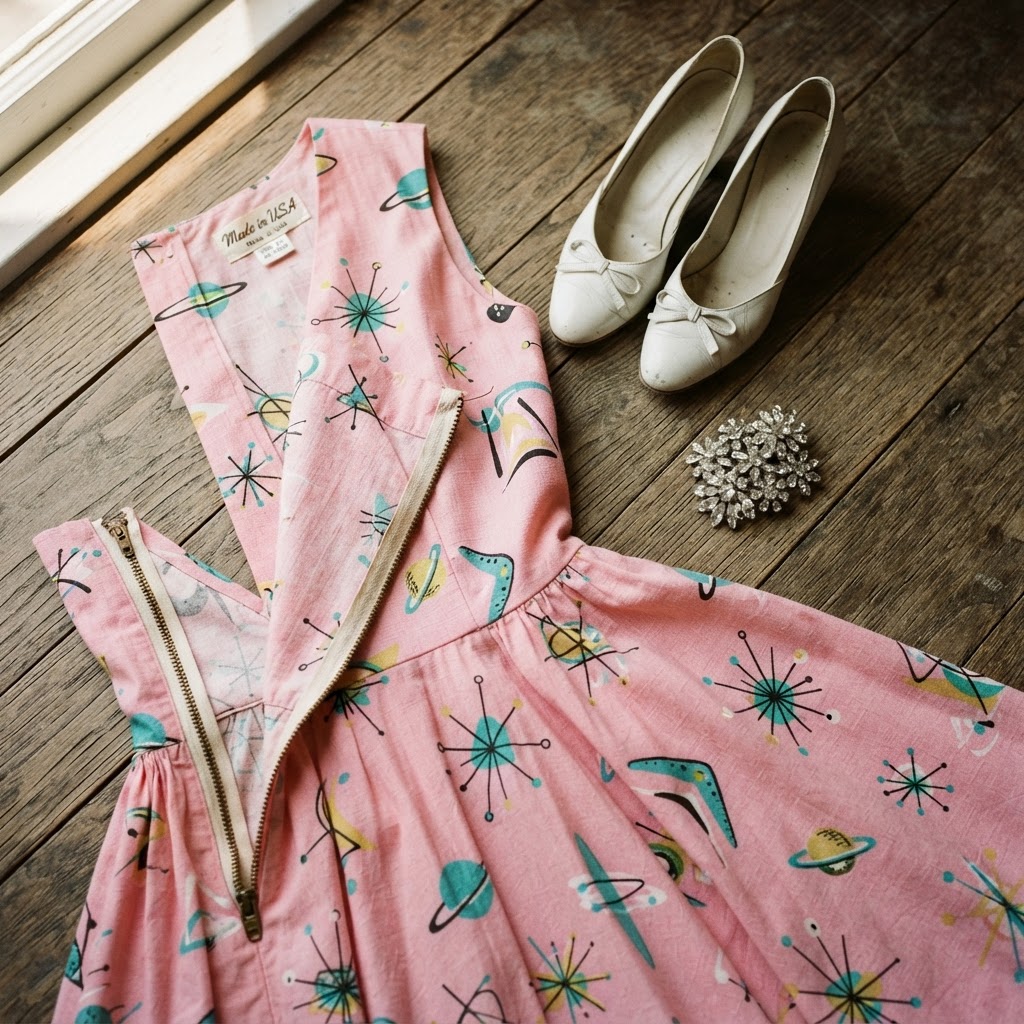
Real Deal or Repro? How to Identify Authentic 1950s Vintage Clothing vs. Modern Reproductions
The 1950s aesthetic has never gone out of style — but not everything that looks mid-century actually is. Whether you're building a serious collection or hunting for a statement piece, knowing how to tell genuine 1950s vintage from a modern reproduction can save you money and keep your wardrobe historically honest. Here's everything you need to know before you buy.
Why the 1950s Are So Easy to Fake
The 1950s remain one of the most romanticized decades in fashion history. Full circle skirts, structured bodices, wiggle dresses, and pastel twin sets have inspired countless modern designers to recreate the look — sometimes with remarkable accuracy. Brands like Stop Stitch, Collectif, and Hell Bunny produce beautiful reproduction clothing that openly celebrates the era, but on the secondary market, these pieces occasionally get mislabeled, mispriced, or simply misunderstood. Learning to read the evidence stitched into a garment is the best skill any vintage lover can develop.
Start with the Label
The care label is your first and most powerful clue. In the United States, the Federal Trade Commission did not require care instruction labels on clothing until 1971. This means any garment with a sewn-in care label listing washing instructions is, at the very earliest, from the very late 1960s — and almost certainly not a true 1950s piece. Authentic 1950s clothing will have no care label at all, or at most a simple fabric content label, which became required in the U.S. in 1960.
Pay close attention to the brand label itself. Genuine 1950s labels were typically woven in rayon or silk, often with elegant script fonts, and frequently included "Made in USA" or a country of origin without the word "of" (e.g., "Made in Japan" rather than "Made in the country of Japan" — the latter phrasing was required after 1971). If you see a label that reads "Made in China," "100% Polyester," or includes a washing machine symbol, you are holding a reproduction or a later piece.
Fabric Tells the Truth
The fiber content of a garment is one of the most reliable dating tools available. The 1950s were dominated by natural and early synthetic fabrics: cotton, wool, silk, rayon, and the newly popular nylon. True polyester — as a woven apparel fabric — was not widely used in mainstream clothing until the mid-to-late 1960s and exploded in the 1970s. If a garment is labeled or feels like polyester, it is almost certainly not from the 1950s.
Authentic 1950s fabrics have a particular hand-feel. Cotton from this era tends to be crisper and heavier than modern cotton. Rayon has a distinctive cool, almost liquid drape. Wool is denser and often slightly scratchy compared to today's softer merino blends. Reproduction fabrics, even when they mimic vintage prints, often feel lighter, stretchier, or more uniform — a telltale sign of modern textile manufacturing.
Look also at printed patterns. Novelty prints — atomic starbursts, abstract shapes, conversational prints featuring everyday objects — were enormously popular in the 1950s. Authentic examples show slight color registration imperfections and a matte, ink-soaked quality. Modern reproductions tend to have sharper, cleaner prints with more vibrant, consistent color saturation.
Construction Details Matter Enormously
The way a garment is sewn reveals its era more reliably than almost any other factor. Here's what to look for:
Zippers: Authentic 1950s dresses and skirts feature metal zippers, almost exclusively. Nylon coil zippers (the kind with interlocking plastic teeth) were not common in women's clothing until the 1960s. On 1950s garments, the zipper will often be found at the left side seam rather than the center back — a placement detail that reproductions frequently get wrong. Look for zipper brands like Talon, Conmar, or Gripper stamped on the zipper pull.
Seam finishing: Before sergers became standard in home and industrial sewing, seams were finished with pinked edges, Hong Kong seam binding, or left unfinished on sturdier fabrics. The clean, overlocked seam edges you see inside virtually all modern clothing were not common in 1950s garments.
Boning and structure: 1950s bodices, particularly in formal and cocktail wear, often contain boning made from metal or early plastic, along with built-in stiff interfacing cut from buckram or crinolines sewn inside the skirt. Modern reproductions sometimes use boning, but it tends to be flexible modern plastic or spiral steel inserted in casing rather than the flat, rigid materials of the original era.
Hemming: Hand-rolled or hand-stitched hems are common in authentic 1950s clothing, particularly in finer garments. Look for the slight unevenness of hand stitching on the inside hem allowance.
Sizing Is a Dead Giveaway
Perhaps the single most disorienting discovery for new vintage shoppers: 1950s sizing bears almost no relationship to modern sizing. A dress labeled Size 14 from 1955 will typically fit a modern Size 6 or 8. Manufacturers used a sizing system based on different body measurements than today's standards, and vanity sizing had not yet entered the picture.
If you find a garment labeled Size 10 or 12 that fits a contemporary medium or large frame without alteration, treat that as a flag worth investigating further. Reproduction brands, even those making "vintage-style" clothing, use modern sizing — so a reproduction Size 14 will actually fit a modern Size 14.
Always measure the garment itself rather than relying on the tag. Bust, waist, and hip measurements taken directly from the fabric will tell you far more than any label.
Wear, Patina, and the Smell Test
Genuine vintage clothing carries physical evidence of age that is extremely difficult to convincingly fake at scale. Look for:
- Fading and sun damage along fold lines and shoulders
- Perspiration staining (yellowish discoloration) under the arms, even on otherwise pristine pieces
- Wear at stress points — button holes slightly stretched, fabric thinned at the collar, lining cracked or split
- The smell: Old fabric has a characteristic musty, slightly sweet odor that is distinct from the chemical smell of new fabric or the artificial "vintage" fragrance some sellers use
None of these signs alone confirms authenticity, but together they build a compelling case. A dress that smells like new fabric, has perfectly sharp seams, and a bright unworn lining is almost certainly not 70 years old.
When to Trust a Seller — and When to Ask Questions
Authentic vintage marketplaces with knowledgeable curators will provide detailed provenance information: measurements, label photos, close-up shots of zippers and seams, and honest descriptions of condition. If a listing describes a garment as "1950s style" or "1950s inspired," that is a seller being transparent about selling a reproduction. Be warier of listings that simply say "vintage 1950s" without supporting photographic evidence of the details described above.
Always ask for additional photos of the label, zipper, and seams before purchasing. A reputable seller will be happy to provide them. If a seller cannot or will not show you the label, consider that a significant red flag.
Building Your Eye Over Time
The best way to develop confidence in authenticating 1950s clothing is simply to handle as much of it as possible. Visit museum costume collections, attend estate sales and dedicated vintage fairs, and study reference books like Vintage Fashion: Collecting and Wearing Designer Classics or the encyclopedic online resources at the Vintage Fashion Guild. The more authentic pieces you touch, examine, and try on, the more instinctive your recognition becomes.
Find the Real Thing at Ensemble
At Ensemble, every piece listed in our 1950s collection is vetted by specialists who know the difference between a genuine Ceil Chapman cocktail dress and a modern homage. We photograph labels, zippers, and construction details for every listing, and our team is always available to answer authentication questions before you buy. When you shop with us, you're not just purchasing clothing — you're acquiring a verified piece of history. Explore our curated 1950s collection today and wear the decade with complete confidence.