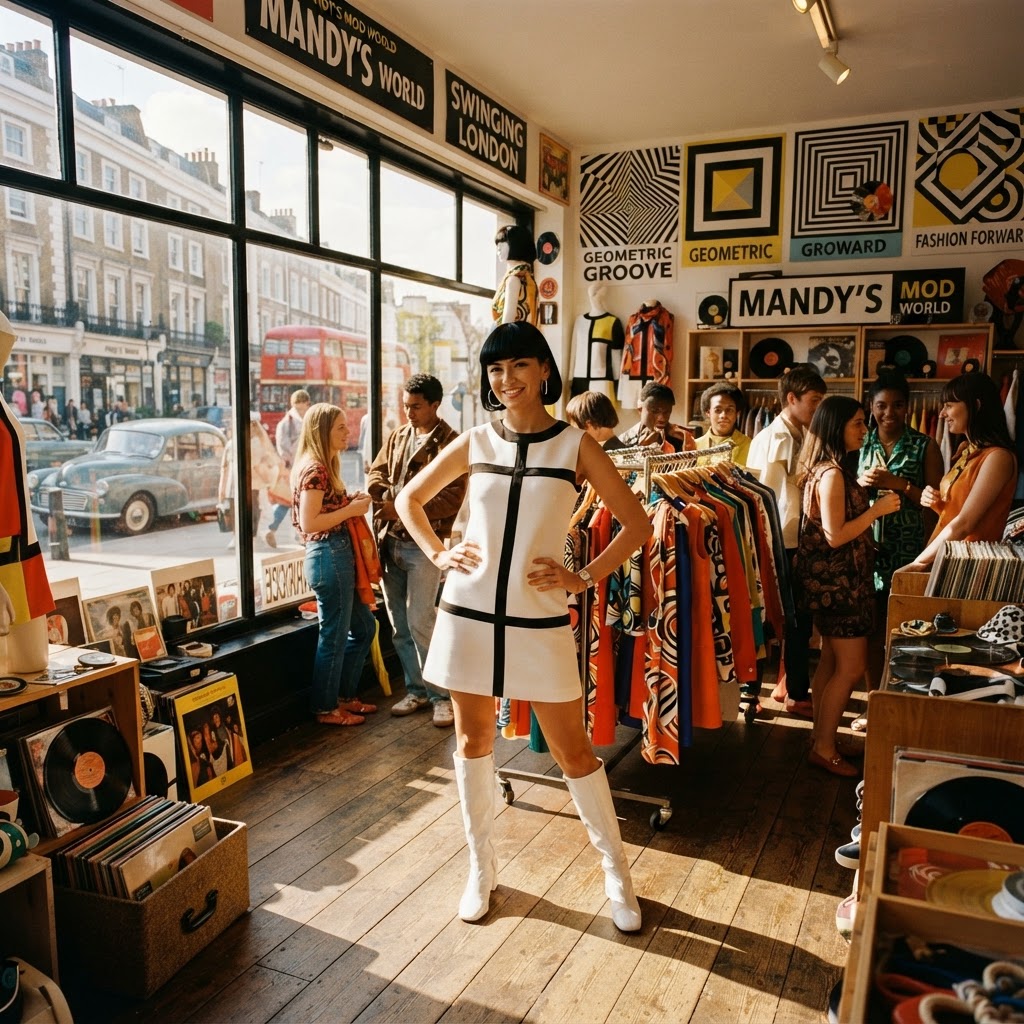
Mod About It: The Story Behind 1960s Mod Fashion and Its Timeless Influence
Few style movements have left as vivid a mark on fashion history as the mod revolution of the 1960s. Born on the streets of London and amplified by pop culture, mod fashion broke every rule — and rewrote them entirely. Whether you're a seasoned vintage collector or just discovering the era, understanding mod's origins will transform the way you shop for and wear these iconic pieces.
The Birth of a Movement: London's Swinging Sixties
To understand mod fashion, you have to understand the world it erupted from. Post-war Britain in the late 1950s was a country catching its breath — rebuilding, restoring, and quietly simmering with the energy of a younger generation that had no interest in their parents' conservative aesthetic. By the early 1960s, that energy had a name: mod, short for "modernist."
The epicenter was Carnaby Street in London's West End and the boutiques lining the King's Road in Chelsea. These weren't department stores or haute couture houses — they were small, daring, independent shops that catered to young people hungry for something entirely new. Designers like Mary Quant, who is widely credited with popularizing the miniskirt, and André Courrèges helped define a visual language that was geometric, bold, and unapologetically youthful.
Mod wasn't just a fashion trend. It was a cultural statement. It said: the old world belongs to them. This one belongs to us.
Defining the Look: What Made Mod, Mod
The mod aesthetic is instantly recognizable, even decades later. Its key elements remain some of the most iconic visual signatures in fashion history.
Silhouette and Shape were everything. Forget the nipped waists and full skirts of the 1950s. Mod fashion embraced a shift silhouette — straight, boxy cuts that fell just above or well above the knee. The body was not to be sculpted; it was to be framed, almost architecturally. Dresses were often sleeveless, with simple rounded or keyhole necklines.
Color and Pattern did the heavy lifting. Op-art-inspired prints — bold black-and-white geometric patterns, checkerboards, and concentric circles — dominated the scene. Artists like Bridget Riley influenced textile designers, and the result was clothing that practically vibrated off the body. When color entered the picture, it came in saturated, electric hues: tangerine, cobalt, acid yellow, and hot pink.
Fabric and Material leaned futuristic. Designers experimented with PVC, patent leather, and metallics, embracing synthetic materials that felt space-age and modern. The 1960s were, after all, the decade of the moon landing — and fashion was reaching for the stars too.
Accessories completed the vision. Go-go boots — white, low-heeled, and knee-high — became the era's defining footwear. Tights in bold colors or graphic patterns replaced the demure stockings of the previous decade. Oversized geometric earrings, wide belts, and the iconic Vidal Sassoon geometric bob hairstyle rounded out the look.
The Icons Who Defined the Era
No conversation about mod fashion is complete without its human faces. Twiggy, the impossibly slender model from North London, became the era's reigning muse. Her cropped hair, enormous lash-lined eyes, and androgynous frame perfectly embodied the mod ideal — playful, graphic, a little alien. She wasn't just wearing the clothes; she was the aesthetic made flesh.
Jean Shrimpton, another supermodel of the era, brought a slightly softer but equally influential interpretation to the look. Meanwhile, style icons like Edie Sedgwick carried mod sensibilities across the Atlantic to New York's Factory scene, cementing the movement's transatlantic reach.
On the menswear side, mod gave us slim-cut suits, narrow lapels, Chelsea boots, and a dandyish elegance that groups like The Beatles and The Kinks wore with effortless cool. Male mod dressers were as invested in their appearance as their female counterparts — a radical idea in its time.
Mod Goes Global: From Boutiques to Mainstream Culture
By the mid-1960s, mod had leapt far beyond London's boutiques. American department stores began carrying mod-inspired lines. Rudi Gernreich in Los Angeles pushed boundaries with topless swimwear and vinyl dresses. Mass-market brands rushed to capitalize on the craze, and suddenly girls from Ohio to Osaka were wearing miniskirts and white go-go boots.
Television and film turbo-charged the spread. Shows like Ready Steady Go! in the UK and films like Blow-Up (1966) put mod fashion on screens worldwide. The visual energy of the era was perfectly suited to the emerging medium of color television — those bold prints and saturated hues practically demanded to be seen.
By the late 1960s, mod began to splinter. Some corners moved toward the psychedelic, others toward a romantic bohemian aesthetic. But the seeds had been planted everywhere.
The Lasting Legacy: How Mod Echoes Through Decades of Fashion
Mod's influence is one of fashion history's most durable. It resurfaces, reliably and recognizably, in nearly every subsequent decade.
The 1980s borrowed mod's geometric boldness and love of graphic pattern, amplifying it through power dressing and new wave style. Designers like Gianni Versace echoed mod's op-art prints in their own maximalist vocabulary.
The 1990s saw a full-blown mod revival, fueled by Britpop culture. Bands like Oasis and Blur dressed in Fred Perry polos, parkas, and slim-cut trousers that directly referenced the original movement. The Union Jack dress worn by Geri Halliwell of the Spice Girls was essentially a mod gesture repackaged for a new generation.
In the 2000s and 2010s, mod references continued to appear on runways and in street style. Miuccia Prada has returned to geometric prints and shift silhouettes repeatedly. The minimalist strand of 2010s fashion owed a quiet debt to mod's clean lines and rejection of fuss.
Today, the influence lives on in everything from fast fashion knockoffs to the most considered high-fashion collections. Mod taught the fashion world that clothing could be simultaneously intellectual and fun, graphic and wearable, feminine and free.
How to Shop for Authentic 1960s Mod Pieces
If you're looking to build a genuine mod wardrobe, knowing what to look for is everything.
Look for authentic construction details. True 1960s pieces will show their age in the best ways: slightly lighter-weight fabrics than modern reproductions, metal zippers (often side or back-placed), and simpler internal construction without today's interfacing. Label research is invaluable — familiarize yourself with brands like Biba, Mary Quant, Paraphernalia, and Betsey Johnson's early work under Paraphernalia.
Prioritize condition and wearability. Mod pieces are meant to be worn, not just displayed. Look for items with minimal sun fading (a risk with those bold colors), intact seams, and functioning zippers. Minor repairs are acceptable; significant structural damage is not.
Don't overlook menswear. Authentic mod menswear — slim suits, Chelsea boots, knit turtlenecks — can be harder to find but is extraordinarily wearable today. The proportions align surprisingly well with contemporary slim-cut preferences.
Think about versatility. A genuine 1960s shift dress in a bold geometric print can anchor a mod-faithful look or be styled with modern separates for something more unexpected. The graphic quality of mod pieces means they hold their own against contemporary clothing with ease.
Conclusion: Find Your Mod Moment at Ensemble
Mod fashion was never just about hemlines and go-go boots. It was about a generation rewriting the visual language of its time — with confidence, creativity, and an absolute refusal to look backward. Sixty years on, that energy is still alive in every well-preserved shift dress and every pair of patent leather boots.
At Ensemble, we believe that authentic vintage is the best way to connect with fashion history — not as a museum exercise, but as a living, wearable practice. Our curated collection of 1960s mod pieces is sourced with care, verified for authenticity, and ready to bring that singular Swinging Sixties spirit into your wardrobe. Browse our 1960s collection today and discover the piece that speaks to your inner mod.