How to Spot Authentic 1950s Vintage Clothing vs. Modern Reproductions: A Complete Buyer's Guide
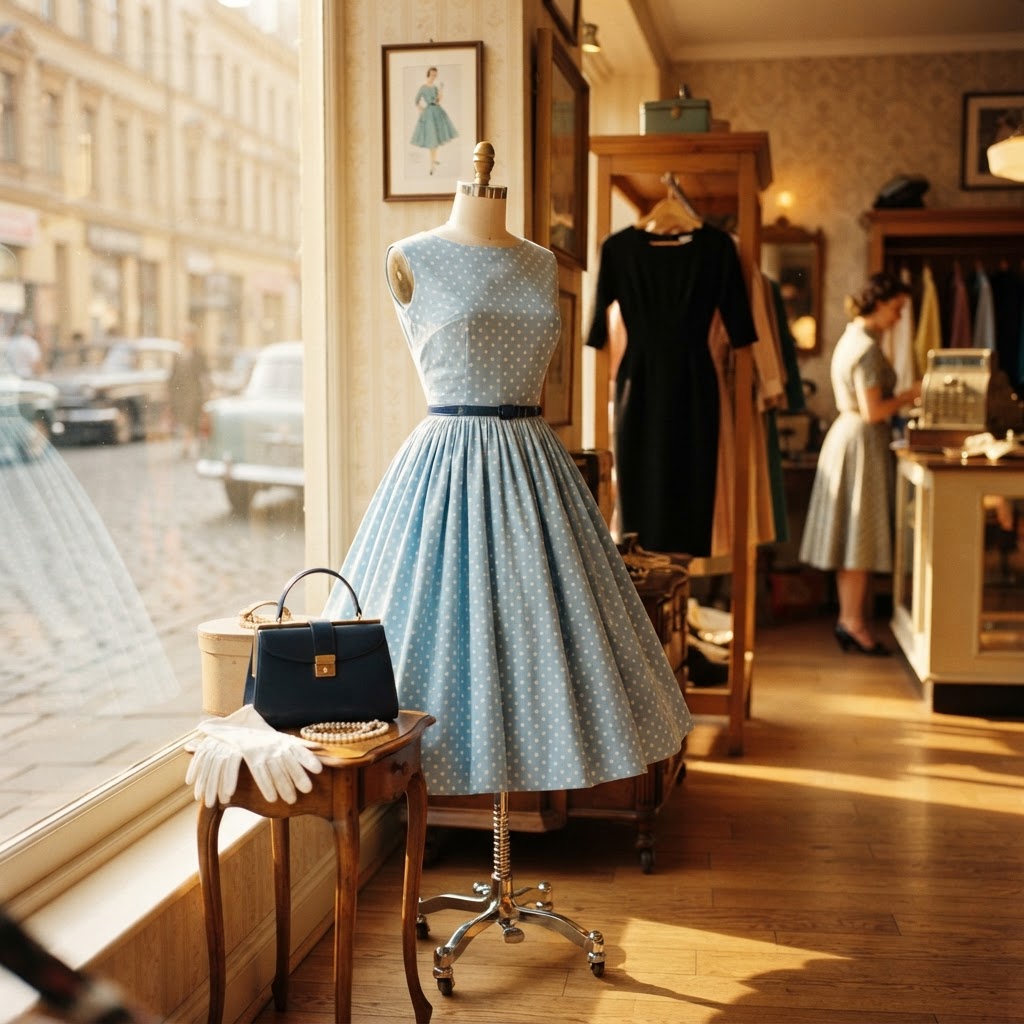
The 1950s produced some of the most iconic silhouettes in fashion history — full circle skirts, structured wiggle dresses, and collegiate letterman jackets that still turn heads today. But as demand for authentic mid-century pieces has surged, so has the market for convincing reproductions. Before you invest in that dreamy poodle skirt or atomic-print blouse, here's everything you need to know to tell the real thing from a modern copy.
Why Authenticity Matters in 1950s Vintage
The 1950s represent a golden era of American and European fashion — a postwar celebration of femininity, optimism, and bold textile experimentation. Authentic pieces from this decade carry genuine history in their fibers, and that history commands both emotional and monetary value. Modern reproductions, while sometimes beautifully made, simply cannot replicate the craftsmanship, materials, and construction techniques of the original era. Knowing the difference protects your wallet and ensures your collection tells a true story.
1. Start With the Label
One of the fastest ways to authenticate a 1950s garment is to examine its care label — or rather, notice its absence. The U.S. Federal Trade Commission did not require care instruction labels until 1971. This means any dress, blouse, or skirt claiming to be from the 1950s that features a sewn-in care label with washing instructions is almost certainly a reproduction or a later piece.
What you should find in an authentic 1950s garment:
- A union label, such as the ILGWU (International Ladies' Garment Workers' Union) or ACWA label. These are strong indicators of American-made authenticity. The ILGWU label changed designs over the decades, so cross-reference the specific logo style against known examples.
- A fabric content label may appear after 1960, but its absence is normal for truly early-decade pieces.
- Brand labels from department stores like Saks Fifth Avenue, Neiman Marcus, or regional chains with mid-century typography and printing styles.
- Labels made from woven rayon or satin ribbon, often with elegant script fonts, rather than the printed nylon or polyester labels common today.
If a label reads "Made in China," "100% Polyester," or includes a care symbol chart, walk away.
2. Examine the Fabric
The textile composition of a garment is one of the most reliable authentication tools available. The 1950s were defined by specific fabrics that had not yet been replaced by synthetics of later decades.
Authentic 1950s fabrics include:
- Cotton (often heavily starched and structured)
- Wool and wool blends for suits, coats, and skirts
- Rayon — widely used and often mistaken for silk
- Silk and silk taffeta for formalwear
- Early nylon — present but used sparingly, primarily in hosiery and lingerie
- Brocade and jacquard weaves for eveningwear
What to avoid: True polyester fabric was not commercially available until the early 1960s and didn't become widespread until the late 1960s and 1970s. If a "1950s" garment feels slippery in a distinctly synthetic way or has a telltale polyester sheen, it is not from the decade. Perform a burn test if you can obtain a loose thread — cotton and rayon burn cleanly with an ash, while polyester melts and beads.
Also look for novelty prints — atomic starbursts, boomerang shapes, abstract mid-century motifs. These prints were enormously popular in the 1950s, but modern reproductions often over-saturate the colors or use digital printing that lacks the slight registration imperfections of original screen-printing.
3. Inspect the Construction
Mid-century garment construction reflects hand-finishing techniques that were phased out as mass production accelerated through the 1960s and 1970s. Take the garment inside-out and look closely.
Signs of authentic 1950s construction:
- Metal zippers, specifically early Talon zippers or Conmar zippers — these were the dominant zipper brands of the era. The zipper teeth will be metal, not nylon or plastic coil.
- Hand-stitched hems — look for slightly uneven, individual stitches rather than the perfectly uniform machine topstitching of modern garments.
- Boning in bodices — often made from actual whalebone or early steel boning wrapped in fabric casing, not the flexible plastic boning used in modern reproductions.
- Generous seam allowances — 1950s dressmakers left wide seam allowances, often 5/8 to 1 inch, to allow for alterations.
- French seams or Hong Kong seam finishes on higher-end pieces, rather than the serged (overlocked) edges standard on nearly all garments today.
- Attached slips or crinoline underlayers in full-skirted dresses, often made from stiff net or tulle that has softened with age.
Modern reproductions frequently use invisible zippers, serged seams, and machine-stitched hems — telltale signs of contemporary production.
4. Assess the Silhouette and Fit
The 1950s had two dominant silhouettes: the full-skirted New Look (influenced by Dior's 1947 revolution) and the fitted wiggle or pencil silhouette. Both are characterized by an extremely defined waist and proportions that differ meaningfully from modern sizing.
Authentic 1950s pieces typically feature:
- Small waist measurements relative to the bust and hip — often 24 to 27 inches for women's pieces, reflecting the era's beauty ideals and foundation garment culture.
- Shorter torso proportions, as the average woman of the 1950s was shorter than today's consumer.
- Padded or structured shoulders that differ from the exaggerated power shoulders of the 1980s — 1950s shoulders are rounded and gently lifted.
- Modestly cut necklines on day dresses, with deeper cuts reserved for eveningwear.
If a garment's "vintage 1950s" proportions seem to run in modern U.S. size 8–12 without alteration, be skeptical. Authentic pieces almost always require adjustment for contemporary bodies.
5. Look for Signs of Age
Authentic vintage shows its years — and that's not a flaw, it's proof. Learn to distinguish natural aging from artificial distressing.
Genuine signs of age:
- Yellowing or oxidation at underarm areas or along fold lines
- Slight fading that is uneven and organic, not uniform
- Worn buttonholes with fraying consistent with decades of use
- Original buttons made from glass, early plastic (Lucite or Bakelite), shell, or metal — not the uniform resin buttons typical of modern manufacturing
- Moth damage or minor repairs stitched by hand
To test for Bakelite buttons, rub the button briskly and smell — authentic Bakelite produces a faint formaldehyde or camphor odor. You can also apply a drop of Simichrome polish on a cotton swab; a yellow residue confirms Bakelite.
6. Research the Seller and Provenance
Even with all the physical checks above, provenance matters. A reputable seller should be able to tell you where a piece was sourced — an estate sale, a regional auction, a private collection. Be wary of sellers who list dozens of identical "vintage" pieces at suspiciously low prices; this is often a sign of reproduction stock marketed as authentic.
Ask for:
- Multiple detailed photographs, including close-ups of labels, zippers, seams, and any wear or damage
- Measurements, not just size labels
- Honest condition descriptions
Conclusion: Shop With Confidence on Ensemble
Identifying authentic 1950s vintage clothing is part science, part trained eye — and the more pieces you handle, the sharper your instincts become. Labels, fabrics, construction details, silhouette, and age patina all tell a story that reproductions simply cannot fake convincingly when you know what to look for.
At Ensemble, every listing in our 1950s collection is vetted by vintage specialists who apply exactly these standards. Whether you're searching for a spectacular full-skirted party dress or a sharply tailored day suit, you can browse with confidence knowing that authenticity isn't just a promise — it's our foundation. Explore our curated 1950s shop today and find a piece of history worth wearing.