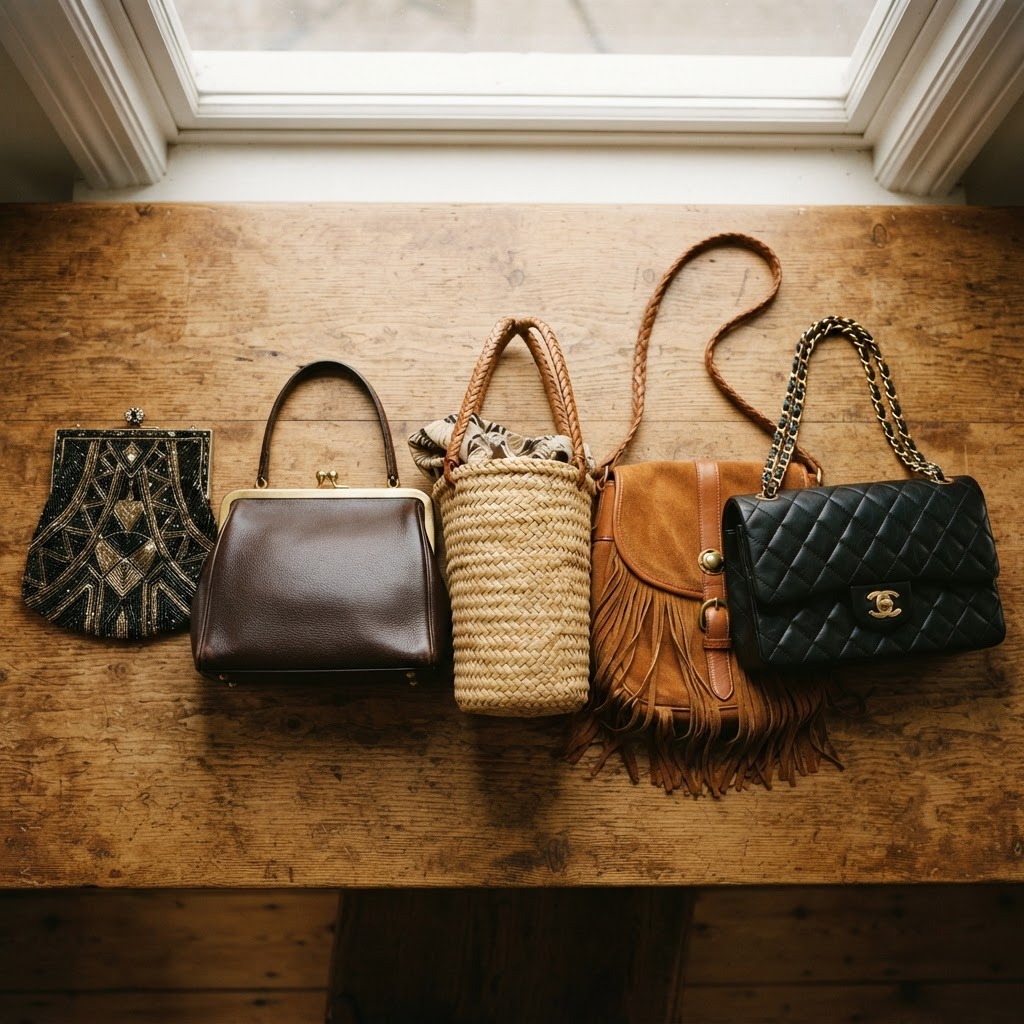
How to Spot an Authentic Vintage Handbag: The Ultimate Shopper's Guide
Vintage handbags are more than accessories — they're wearable history, each one carrying the craftsmanship and character of its era. But with the growing demand for authentic pieces, the market has never been more crowded with clever fakes and misattributed finds. Here's everything you need to know before you invest in your next vintage treasure.
There is something undeniably thrilling about holding a handbag that has lived through decades you only know from photographs. A structured 1960s Gucci bamboo tote, a quilted Chanel 2.55 from the 1980s, a beaded evening clutch from the Roaring Twenties — these pieces carry weight far beyond their materials. But authentic vintage handbags require a discerning eye. Whether you're a seasoned collector or a first-time buyer, knowing what to look for can mean the difference between a genuine investment and an expensive disappointment.
Start With the Hardware
One of the fastest ways to assess a handbag's authenticity and age is to examine its hardware. Genuine vintage pieces from the 1920s through the 1950s typically feature brass, sterling silver, or gold-filled closures — solid, weighty, and often hand-finished. Run your thumb across a clasp or frame; real metal has a satisfying heft that plated or pot-metal reproductions simply cannot replicate.
By the 1960s and 1970s, luxury houses began stamping their hardware with house signatures — look for clean, deeply engraved logos on zipper pulls, turn locks, and D-rings. On authentic pieces, this engraving is precise and consistent. On fakes, it tends to be shallow, slightly off-center, or smudged. Oxidation and patina are your friends here: genuine aged brass develops a warm, uneven tone that is nearly impossible to fake convincingly.
Read the Lining Like a Map
The interior of a vintage handbag tells you almost as much as the exterior. Lining materials changed significantly across decades, and knowing these shifts helps you date and authenticate a piece with confidence.
Handbags from the 1920s and 1930s were frequently lined in watered silk, moiré, or fine suede. By the postwar 1940s and into the 1950s, leather-lined interiors became a hallmark of quality craftsmanship. The psychedelic 1960s and 1970s brought bold printed fabric linings — geometric patterns, florals, and abstract designs that feel unmistakably of their era. If a bag claims to be from the 1960s but has a nondescript polyester lining, treat that as a red flag.
Also check the stitching along the lining seams. Hand-stitched linings, especially in pre-1950s pieces, will show slight irregularities — this is a sign of authenticity, not poor quality. Machine stitching from the mid-century onward should be even but not robotically uniform; modern replicas often betray themselves with overly perfect, computerized stitching.
Understand Maker's Marks and Labels
Provenance labels are crucial, but they require careful interpretation. Many buyers assume a clear, legible label is a good sign — but counterfeiters know this too. What you're really looking for is contextual consistency.
For designer pieces, research what a brand's label looked like in a specific decade. Chanel, for example, used different font styles and serial number formats across the decades. A bag claiming to be from the 1950s should not have a holographic authenticity sticker — those weren't introduced until the late 1980s. Louis Vuitton's date codes, Hermès's craftsman stamps, Gucci's Florence leather marks — each house has a detailed history of labeling conventions that serious collectors study carefully.
For non-designer vintage bags, look for country of origin labels. A bag marked "Made in West Germany" was produced before 1990. "Made in British Hong Kong" dates a piece before 1997. These geographic markers are invaluable dating tools that forgers frequently overlook or get wrong.
Examine the Leather (or Fabric) Closely
Authentic vintage leather ages in predictable, beautiful ways. Full-grain and top-grain leathers from quality makers will develop a patina — a deepening of color and a slight softening of texture — that feels organic and earned. Run your hand along the surface: genuine aged leather has a warmth and suppleness that bonded leather or vinyl reproductions lack entirely.
Look at the edges of straps and gussets. On quality vintage pieces, edges were hand-painted, burnished, or folded and stitched. Fraying, peeling, or a layered cross-section visible at a worn edge suggests lower-quality construction or, in some cases, a modern fake using bonded leather (which delaminate over time in a very distinctive, flaky way).
For fabric bags — particularly beaded evening bags from the 1920s and 1930s or the tapestry bags popular in the 1970s — examine the density and consistency of the work. Glass beads on genuine Art Deco pieces are hand-applied and may show slight irregularities; the patterns are intricate and the backing is typically silk or fine cotton. Machine-made reproductions have a flat, repetitive quality that lacks the depth of handcrafted originals.
Check the Construction and Silhouette
Every decade had its dominant silhouettes and construction techniques, and these are hard to replicate convincingly. The structured, box-frame minaudières of the 1930s and 1940s were built around rigid internal frames — open the bag and you'll feel the architecture. The slouchy hobos of the 1970s were cut generously from soft leathers with minimal internal structure. The boxy, logo-covered nylon bags of the 1990s have a very specific lightweight feel.
Pay attention to how the bag opens and closes. Vintage closures — kiss-lock frames, turn-lock clasps, hook-and-eye fastenings — were engineered to last. They should still function smoothly, with resistance that feels mechanical and intentional. Stiff, sticky, or wobbly closures on a bag that's otherwise in good condition can indicate a reproduction using inferior mechanisms.
Ask About Provenance and Request Documentation
When shopping for higher-value pieces, don't be shy about asking for provenance documentation. Original receipts, certificates of authenticity, prior appraisals, and even vintage photographs of the bag in use can dramatically strengthen a piece's story — and its resale value.
Reputable sellers should be able to explain where a piece came from and provide detailed photographs of hardware, labels, lining, and any areas of wear. If a seller is vague about origins or resistant to providing close-up images, consider that a warning sign. The vintage market rewards patience; the right piece, properly documented, is worth waiting for.
Know the Common Red Flags
To summarize, here are the most reliable red flags to watch for when evaluating a vintage handbag:
- Logos that are slightly off in font, spacing, or proportion
- Lining materials inconsistent with the claimed decade
- Hardware that feels light or hollow compared to authentic examples
- Date codes or labels that don't match the bag's supposed age
- Peeling edges suggesting bonded leather construction
- Overly uniform stitching with no variation
- Prices that seem too good for a designer piece in excellent condition
Trust your instincts. If something feels wrong — a smell that's too new, a texture that's too perfect, a lining that looks freshly printed — it probably is.
Shop With Confidence at Ensemble
Building a vintage handbag collection is one of the most rewarding pursuits in fashion, connecting you to the artisans, designers, and eras that shaped the way we carry our lives. At Ensemble, every handbag listed on our marketplace has been reviewed for authenticity and accurately described by decade, condition, and provenance. Whether you're hunting for a beaded 1920s minaudière, a structured 1950s Kelly-inspired frame bag, a leather patchwork beauty from the 1970s, or an iconic 1990s logomania piece, we're here to help you shop with confidence and wear with pride. Your next chapter of style is waiting.