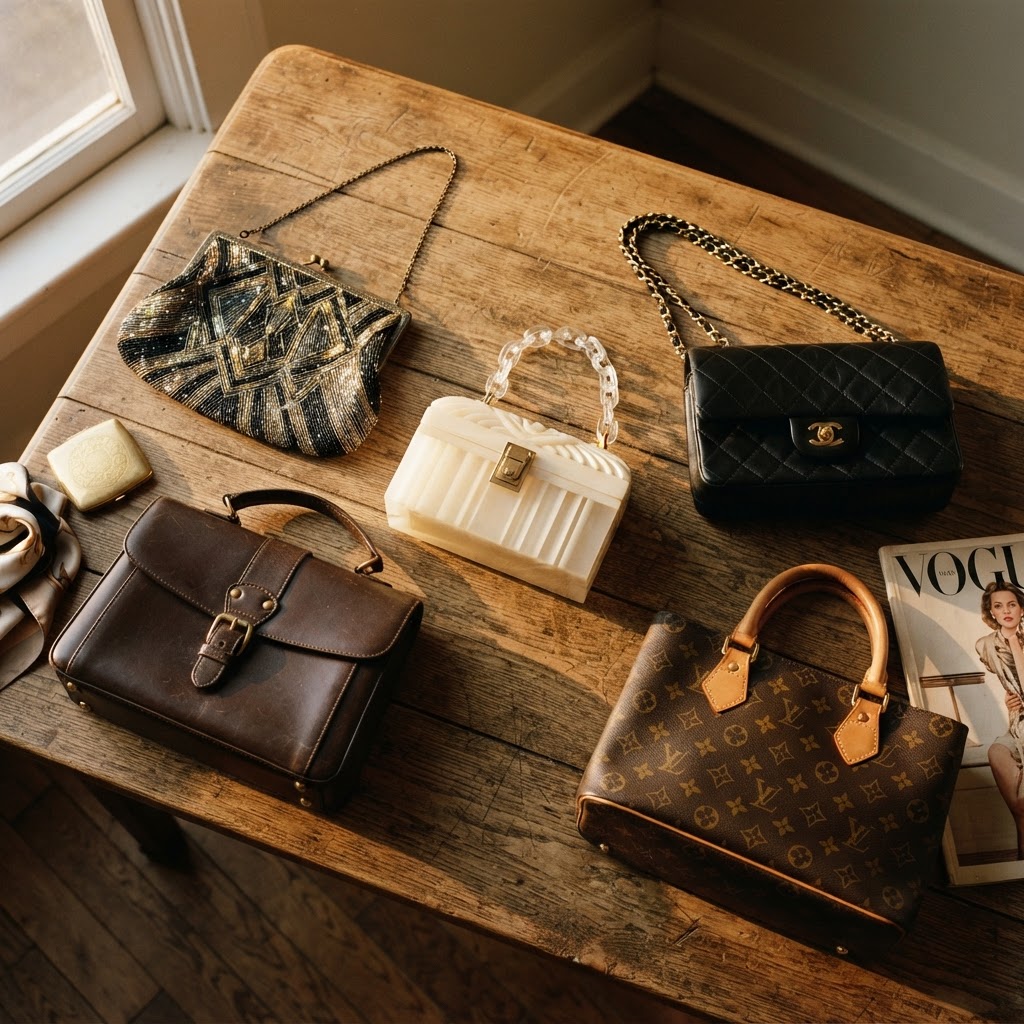
How to Spot an Authentic Vintage Handbag: The Ultimate Decade-by-Decade Shopping Guide
A vintage handbag is more than an accessory — it's a wearable piece of history. But with the market flooded with reproductions and mislabeled finds, knowing how to authenticate a bag before you buy can save you heartbreak and serious money. Here's everything you need to look for, from the roaring twenties all the way to the aughts.
There's a particular thrill that comes with holding a handbag that has lived a full life before you — a beaded evening clutch from a 1920s speakeasy, a structured Kelly-inspired satchel from the 1950s, or a quilted chain-strap bag that practically invented the 1980s power lunch. Vintage handbags are among the most coveted items in the secondhand fashion world, and for good reason. They were built to last, designed with intention, and crafted from materials that many modern bags simply can't match.
But authenticity matters — both for the story you're buying into and for the value of your investment. Whether you're a seasoned collector or a first-time buyer, here's your comprehensive guide to shopping for authentic vintage handbags, decade by decade.
Why Authentication Matters
The vintage handbag market is booming, which unfortunately means it's also rife with reproductions, fantasy pieces, and honest mislabelings. A bag described as "1940s" might actually be a 1990s revival piece. A "genuine leather" claim might not hold up under scrutiny. Learning to authenticate protects your wallet and ensures the story you're buying is the real one.
The 1920s–1930s: Beading, Frames, and Fine Craftsmanship
Bags from this era are among the rarest and most delicate you'll encounter. What to look for:
- Beadwork quality: Authentic 1920s evening bags feature hand-sewn glass or seed beads, often in elaborate Art Deco geometric patterns. Look for slight irregularities — these are signs of handwork, not flaws. Machine-perfect beading is a red flag.
- Frame construction: Most bags from this period used brass or sterling silver frames with intricate filigree or engraved detailing. Check for hallmarks stamped inside the frame.
- Fabric: Silk, satin, velvet, and petit point needlework were common. Fabric should show age-appropriate wear — slight fading or softening — but not disintegration.
- Closures: Look for kiss-lock or push-button closures with visible patina. Zippers were rare in the 1920s but became more common in the 1930s.
Authentic pieces from this era will often show their age gracefully. If a 1920s bag looks brand new, ask questions.
The 1940s–1950s: Structure, Elegance, and the Golden Age of Leather
Post-war optimism ushered in an era of structured, ladylike handbags. This is a golden era for collectors.
- Hardware: Look for solid brass or gold-tone hardware with weight and patina. Lightweight, hollow-feeling hardware suggests a later reproduction.
- Stitching: Hand-stitching or tight, even machine stitching in waxed thread is a hallmark of quality. Count stitches per inch — higher counts indicate finer craftsmanship.
- Leather: Authentic 1950s leather bags should feel substantial and develop a natural patina. Smell matters — genuine aged leather has a distinctive, warm scent that faux leather cannot replicate.
- Lining: Look for silk, grosgrain, or fine cotton linings, often in coordinating or contrasting colors. Plastic linings were not typical of quality pieces from this era.
- Labels: Many manufacturers from this period used fabric or leather interior labels. Research brand names — labels like Koret, Nettie Rosenstein, and Josef are markers of authenticity and quality.
The 1960s–1970s: Mod Shapes, Boho Vibes, and New Materials
This era saw an explosion of experimentation — from space-age plastics to earthy macramé.
- Lucite and hard plastics: Genuine 1960s Lucite bags (brands like Wilardy and Llewellyn are gold standards) have a clarity and weight that cheap imitations lack. Check for crazing (fine cracks) — a sign of age in authentic pieces.
- Mod hardware: Oversized geometric clasps, chain straps, and bold ring pulls are period-correct. Look for oxidation and wear consistent with 50+ years of use.
- 1970s leather: Saddle bags, hobo styles, and fringe bags were everywhere. Authentic 70s leather often features hand-tooled detailing or vegetable tanning with a warm, natural tone.
- Fabric bags: Canvas, needlepoint, and tapestry bags were hugely popular. Check seams for period-appropriate construction — serged edges became more common as the decade progressed.
- Maker's marks: This era gave rise to designer logo bags. Verify logo placement, font, and hardware engravings against known authentic references before buying anything labeled Gucci, Fendi, or similar.
The 1980s: Power Shoulders Had a Bag to Match
The 1980s were maximalist, and handbags were no exception.
- Brand authentication: The 80s saw a surge in luxury counterfeiting. When buying designer pieces from this decade, look for serial numbers (Chanel began using them in 1986), date codes (Louis Vuitton), and authenticity cards.
- Hardware weight: Authentic 80s luxury hardware is heavy and often gold-plated over brass. If it feels light or tinny, be skeptical.
- Quilting: If you're shopping for quilted chain bags, examine the diamond or chevron pattern — stitching should be tight and perfectly aligned with the seams.
- Lining materials: Many 80s bags used leather or high-quality grosgrain linings. Fabric should not be peeling or flaking unless it's a known issue with specific materials of the era.
- Shoulder pads and proportions: The scale of 80s bags was deliberately large and architectural. If a bag feels too modest in proportion, it may be misidentified.
The 1990s–2000s: Minimalism, It-Bags, and the Birth of Streetwear Accessories
This is the most recent vintage territory and sometimes underestimated — but increasingly collectible.
- Dust bags and paperwork: For 90s and 2000s luxury bags, original dust bags, authenticity cards, and receipts significantly support provenance. Their absence doesn't mean inauthentic, but their presence adds value.
- Date codes: Brands like Louis Vuitton, Dior, and Gucci used date or serial codes during this era. Cross-reference any codes with verified databases before purchasing.
- Logo hardware: The 90s logomania era means you'll encounter a lot of monogram pieces. Examine the alignment of logos, the quality of canvas coating, and the precision of hardware engravings.
- Nylon and technical fabrics: Prada's nylon bags from this era used a specific heavyweight nylon with a subtle sheen. Fakes often use a thinner, shinier material.
- Condition expectations: Because these bags are younger, condition standards are higher. Excessive wear on a 90s bag should be reflected in the price.
Universal Authentication Tips
Regardless of decade, there are a few rules every vintage handbag shopper should follow:
- Smell it: Genuine aged leather, fabric, and even vintage plastics have distinct, honest smells. Chemical or plastic odors in a "leather" bag are warning signs.
- Check the hardware weight: Quality ages with dignity. Authentic vintage hardware feels substantial.
- Examine the stitching under light: Irregular, skipped, or fraying stitches on a supposedly high-end piece suggest either age-related damage or inauthenticity — both worth knowing.
- Research the seller: Reputable vintage sellers will provide detailed provenance, multiple photos, and honest condition notes. Ask questions freely.
- Trust your instincts: If the price feels impossibly low for what's being described, it probably is.
Shop with Confidence at Ensemble
At Ensemble, every vintage handbag listed in our marketplace goes through a careful curation process. Our sellers are passionate collectors and experts who know their decades inside and out — and our community values transparency above all. Whether you're hunting for a beaded Art Deco clutch or the perfect 90s logomania shoulder bag, Ensemble is the place to find authentic pieces with real stories behind them. Browse our Decade Deep Dive collections and let your next great find be one you feel truly confident about.