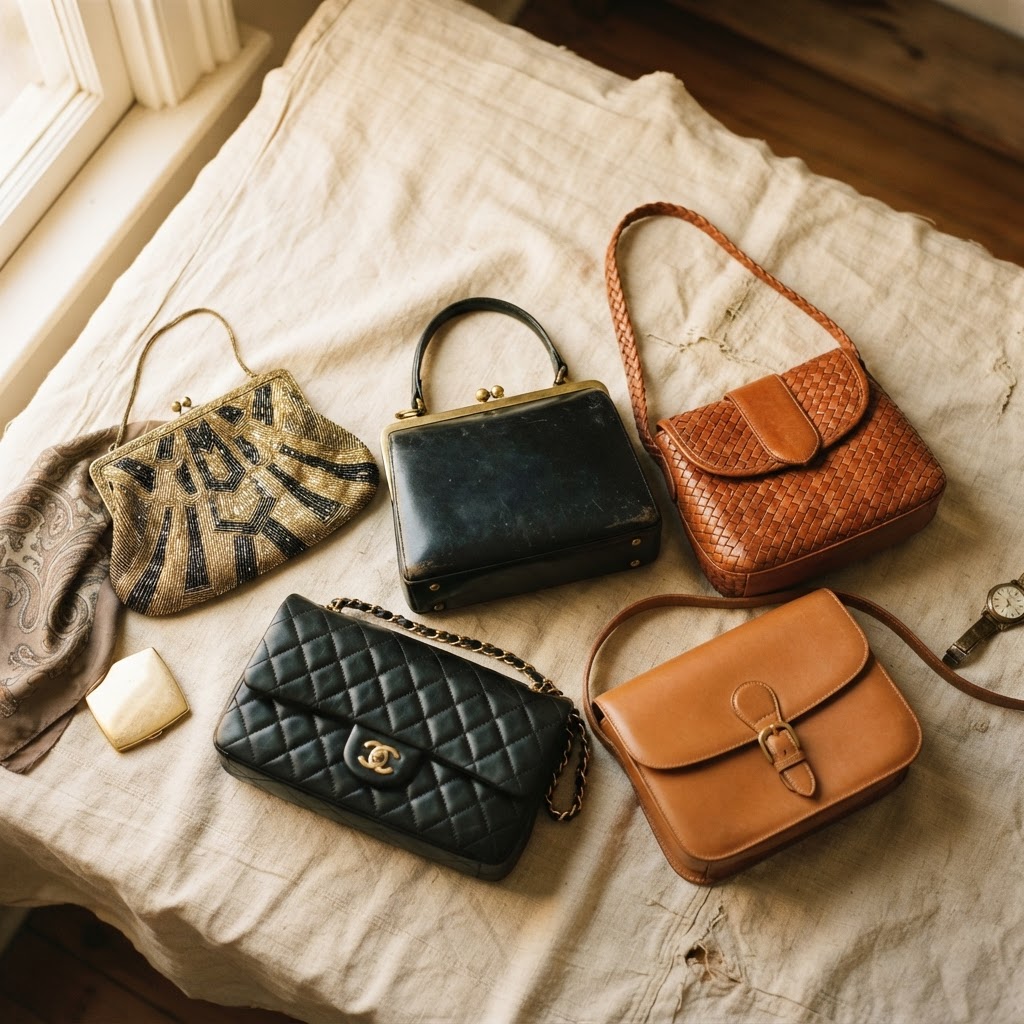
How to Spot an Authentic Vintage Handbag: The Ultimate Decade-by-Decade Shopping Guide
A truly authentic vintage handbag is more than an accessory — it's a wearable piece of fashion history. But the vintage market is filled with reproductions, misattributed pieces, and well-meaning mistakes that can cost you dearly. Whether you're hunting for a 1940s structured frame bag or a 1990s logomania mini, here's exactly what to look for before you buy.
There's a particular thrill that comes with holding a handbag that has genuinely traveled through decades of history. The worn brass clasp, the smell of aged leather, the silk lining printed in a pattern no modern factory would dare reproduce — these details tell a story that no contemporary piece can replicate. But authenticating vintage handbags requires a trained eye, a little patience, and knowledge of what each era actually produced.
Start With the Hardware
One of the most reliable authentication clues lives in the metal hardware. Pre-1950s bags frequently feature hardware in pot metal, brass, or sterling silver — materials that develop a distinct patina over time. Genuine aged brass will show greenish oxidation in recessed areas, not a uniform artificial darkening. From the 1960s onward, gold-tone plating became common, but authentic vintage plating wears differently than modern reproductions: look for consistent, natural wear patterns at stress points like corners, clasps, and chain links, rather than artificially distressed surfaces.
Designer bags from the 1970s and 1980s — think Gucci's bamboo-handled totes or Chanel's quilted flaps — will carry hardware stamped with brand names or country-of-origin marks that align with the period. A Chanel bag claiming to be from 1982 should not feature the holographic authenticity sticker, which wasn't introduced until 1984. Details like these matter enormously.
Examine the Stitching Closely
Hand-stitching versus machine stitching is another critical tell. High-end bags from the 1920s through the 1950s were largely handcrafted, meaning stitches may show slight irregularities that speak to human craftsmanship rather than mechanical production. By the 1960s, luxury houses moved toward more consistent machine stitching, but the thread itself — often linen or waxed cotton in earlier decades — differs noticeably from the polyester threads common in modern reproductions.
Count the stitches per inch. Authentic luxury vintage bags typically feature 8 to 10 stitches per inch on major seams, executed with precision. Fakes often cut corners with fewer, uneven stitches. Also check that corner stitching is reinforced; vintage craftspeople knew exactly where bags would experience the most stress.
Know Your Lining Materials by Decade
The interior of a vintage bag is a goldmine of authentication information. Lining materials evolved dramatically across the decades, and knowing what's period-appropriate is essential.
- 1920s–1940s: Expect silk, moiré fabric, or fine cotton linings, often in muted or jewel tones. Suede linings were common in structured leather bags.
- 1950s–1960s: Rayon and early synthetic linings appear, often in bold prints. Plastic-coated canvas linings began appearing in more affordable lines.
- 1970s–1980s: Nylon linings, especially in designer totes, become standard. Gucci's signature GG canvas interiors date to this era.
- 1990s–2000s: Microfiber and coated cotton linings dominate. Logo-printed linings (Louis Vuitton's alcantara, Coach's signature canvas) are era-specific and easily cross-referenced.
A bag presented as a 1950s piece with a nylon lining should raise immediate red flags.
Read the Labels and Stamps
Authentic maker's marks, stamps, and labels are among the most researched areas of vintage authentication — and also the most frequently forged. That said, genuine vintage labels carry characteristics that are difficult to fake convincingly.
For American handbag makers of the mid-century — Koret, Leiber before her eponymous brand, Rosenfeld — look for labels stitched cleanly into the lining with period-appropriate fonts and materials. A genuine 1940s Bakelite-clasp bag from an American maker will often have a label reading "Made in USA" in a sans-serif typeface typical of the era.
For European luxury houses, research is your best friend. Hermès bags, for example, carry date stamps — a letter inside a shape that corresponds to a specific year — pressed directly into the leather near the hardware. These stamps changed format over the decades and are extensively documented by collectors. Serial numbers, date codes, and craftsperson stamps each follow house-specific formats that can be verified against reputable references.
Feel the Leather — and Know Its Age
Genuine aged leather has a character that is nearly impossible to replicate artificially. Run your fingers across the surface: authentic vintage leather, properly stored, will feel supple and warm, with a natural grain that varies slightly across the hide. It may show creasing at flex points — the top of a structured bag where it's been opened thousands of times, or at the base of handles.
Leather from the 1920s through the 1940s was often vegetable-tanned, giving it a firm, almost papery quality when dry and a rich, burnished appearance when conditioned. Post-war leather tends to be slightly softer due to advances in tanning. By the 1980s, chrome-tanned leather became ubiquitous, offering a more uniform appearance.
Be wary of leather that smells strongly of chemicals or has a plastic-like surface sheen — both suggest either a reproduction or a heavily restored piece that may have been stripped of its original finish.
Verify Closures and Mechanisms
Every era had its signature closure styles, and these are wonderful authentication checkpoints. The 1920s and 1930s favored ornate frame bags with kiss-lock closures in elaborate Art Deco metalwork. The 1940s brought utilitarian zip-top bags as wartime practicality influenced design. The 1950s saw the rise of the elegant top-handle bag with structured magnetic or twist-lock closures.
Zipper pulls are particularly telling. Talon zippers (an American brand) were ubiquitous through the mid-20th century and carry their name on the pull. Riri zippers, beloved by European luxury houses, appear on high-end bags from the 1950s onward. YKK, today's dominant zipper manufacturer, didn't gain significant market share until the 1960s and became nearly universal by the 1980s. A bag supposedly from 1935 with a YKK zipper is not what it claims to be.
Research the Designer's Archive
If you're investing in a named designer piece, spend time in archival research before committing. Many major houses — Chanel, Hermès, Louis Vuitton, Gucci, Fendi — have well-documented production histories, and collector communities have assembled extraordinary reference databases online.
For less-documented American designers like Judith Leiber's early work or mid-century makers like Morris Moskowitz, vintage fashion reference books and museum collection databases are invaluable. The Costume Institute at the Metropolitan Museum of Art and the Victoria and Albert Museum both maintain searchable online archives that can help you place a piece in its correct period.
Trust Condition — But Understand It
Condition tells its own story, and a perfect vintage bag can sometimes be more suspicious than a well-loved one. A handbag claiming to be from 1955 that shows zero wear, no aging of hardware, and pristine lining deserves extra scrutiny — either it's been heavily restored, it's been stored in exceptional conditions (which does happen), or it isn't what it claims to be.
Minor wear is not a flaw in vintage; it's evidence of authenticity. Look for consistent aging: if the exterior leather shows 60 years of patina but the lining looks brand new, something doesn't add up. Honest restoration work — recleaned leather, replaced lining — should be disclosed by any reputable seller.
Finding the Real Thing on Ensemble
Authentic vintage handbags are investments in craft, history, and style that transcends any single season. Armed with knowledge of hardware, stitching, linings, labels, and construction, you're equipped to shop with confidence and discernment.
At Ensemble, every handbag listed on our marketplace is vetted by decade specialists who apply exactly these standards. Our sellers provide detailed provenance notes, close-up photography of hardware, labels, and linings, and transparent condition descriptions — because we believe the story of a bag is as important as the bag itself. Whether you're searching for a beaded 1920s evening clutch or a structured 1980s power-shoulder tote, Ensemble is where authentic vintage finds its next chapter.