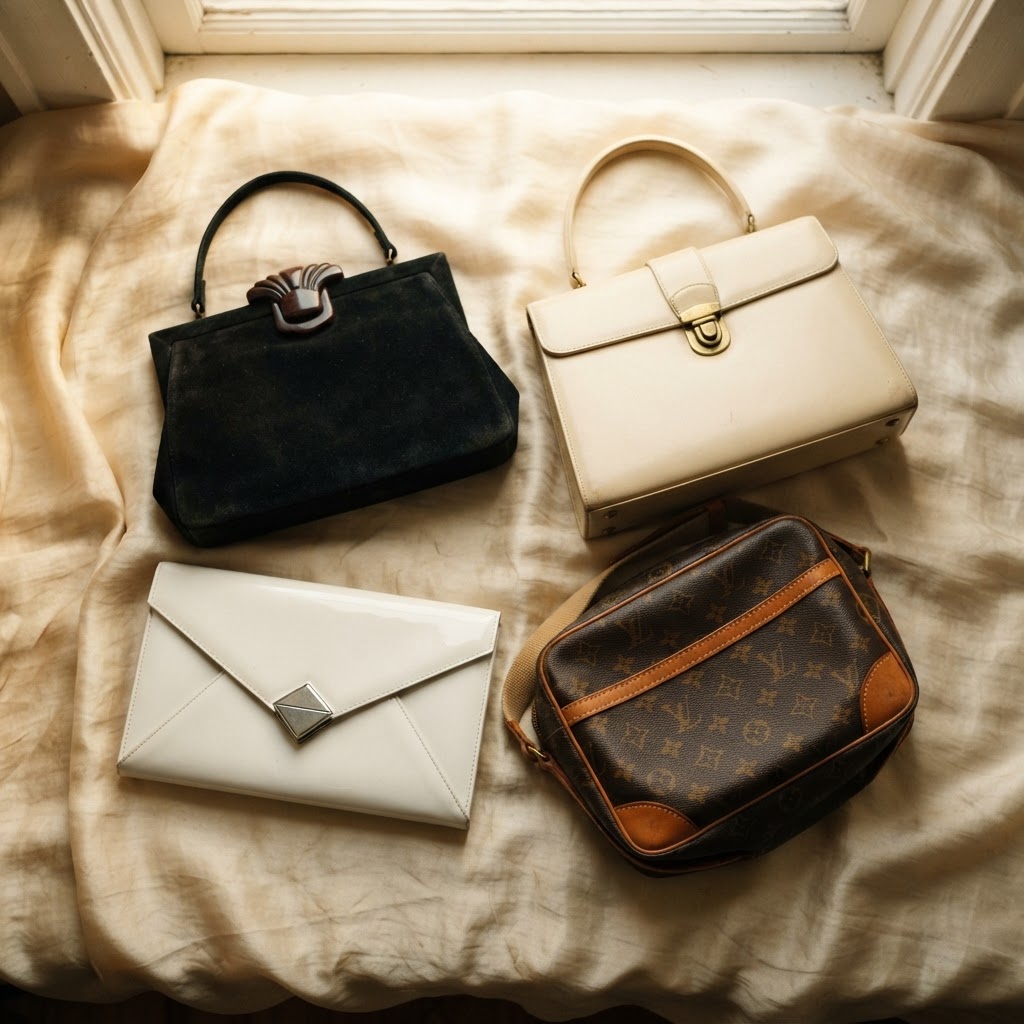
How to Spot an Authentic Vintage Handbag: The Ultimate Buyer's Guide
Vintage handbags are more than accessories — they're wearable history. But the market is flooded with reproductions, misdated pieces, and outright fakes. Here's everything you need to know to shop with confidence and bring home the real thing.
Why Authenticity Matters in Vintage Handbags
A genuine vintage handbag carries decades of craftsmanship, cultural memory, and irreplaceable character. Whether you're hunting for a 1940s structured Bakelite-clasp clutch, a 1960s mod vinyl tote, or a 1980s logo-print shoulder bag, knowing how to verify authenticity protects your investment and ensures you're getting the story you paid for. The difference between a true vintage piece and a convincing reproduction often comes down to a handful of subtle but telling details.
Start with the Hardware
One of the fastest ways to assess a handbag's age is to examine its hardware — the clasps, zippers, rings, and feet. Authentic vintage hardware was almost universally made from solid brass, nickel, or chrome-plated metals. Run a small magnet over the hardware: if it sticks strongly, you're likely looking at cheap base metals common in modern reproductions.
Look closely at the finish. Genuine vintage hardware develops a patina — a soft, uneven dulling that no factory process can perfectly replicate. Overly bright, uniformly shiny hardware on a bag claimed to be from the 1950s or 1960s is a red flag. Also check zipper pulls: YKK zippers weren't widely used until the 1960s, so a bag claiming to be from the 1940s with a YKK pull deserves scrutiny. Earlier bags often feature zippers marked "Talon," "Lightning," or simply have no branding at all.
Examine the Stitching and Construction
Handbag construction evolved enormously across the decades, and stitching patterns are a reliable dating tool. Pre-1960s bags were frequently hand-stitched or produced on slower industrial machines, resulting in slightly irregular but deeply set seams. The thread itself was often linen or heavy cotton — look for natural fiber thread in creamy off-white or tan tones in older pieces.
Post-1970s bags began to show more machine-perfect, uniform stitching, and synthetic threads became standard. If a bag is presented as a 1930s or 1940s piece but features laser-straight polyester stitching, question the provenance. Also examine interior seams: authentic vintage bags frequently have raw, turned, or tape-bound seams rather than the heat-bonded or glued interior edges common in modern manufacturing.
Read the Lining Like a Map
The interior lining of a vintage handbag is essentially its birth certificate. Fabric linings in bags from the 1920s through the 1950s typically feature silk charmeuse, watered taffeta, or cotton sateen in muted jewel tones or subtle prints. By the 1960s and 1970s, synthetic fabrics like nylon and polyester lining became more common, often in bold geometric or psychedelic patterns that are highly era-specific.
Check for original maker's labels sewn into the lining. These can confirm both origin and approximate date. Research the label typography — fonts and logo styles changed over decades for major houses and department stores alike. A Koret, Wilardy, or Lesco label points to mid-century American manufacturing. French labels from Launer, Hermès, or Roberta di Camerino will have their own evolution of typography and placement you can cross-reference with collector archives.
Know Your Leather (and Its Alternatives)
Leather quality and type shifted dramatically across the eras. Full-grain and top-grain leathers were standard in luxury and mid-market bags from the 1920s through the 1960s. Run your fingers across the surface: genuine aged leather develops a supple, uneven texture with natural variations in grain. It should feel warm and slightly porous, never plasticky or uniform.
The 1960s and 1970s introduced patent leather and vinyl as deliberate fashion choices rather than cost-cutting measures — so a shiny, structured 1968 mod bag in vinyl isn't a fake; it's correct for its era. Faux leather (polyurethane-coated fabric) became widespread only in the 1990s and beyond, so any bag from prior decades claiming to be leather should feel and smell like the real thing. Trust your nose: genuine leather has a warm, earthy, slightly animal scent. Plastic smells like plastic, regardless of how it's labeled.
Investigate the Closure Mechanisms
Clasps and closures are among the most era-specific elements of any handbag. The 1920s and 1930s favored elaborate frame bags with ornate kiss-lock clasps in brass or silver-tone metal, often engraved with floral or Art Deco motifs. The 1940s introduced the iconic Lucite and Bakelite clasp, which became enormously popular through the early 1950s. Test potential Bakelite by rubbing it vigorously with your thumb — genuine Bakelite emits a faint formaldehyde or camphor scent when warm.
The 1950s and 1960s brought sleeker turn-lock and push-button closures, while the 1970s and 1980s popularized magnetic snap closures and oversized buckles. Knowing which closure types belong to which era helps you immediately flag anachronisms in a seller's description.
Research Brand-Specific Hallmarks
If you're shopping for a specific designer or maker, invest time in learning their brand-specific authentication markers. Chanel's quilting pattern, for example, changed from diamond to a more precise rhombus shape over the decades. Louis Vuitton's monogram canvas has specific alignment rules at seams that the house has maintained since the early twentieth century — misaligned monograms are a classic counterfeit tell.
For American makers like Judith Leiber, Koret, or Harry Rosenfeld, look for serial numbers stamped inside the hardware or embossed on interior leather panels. Collector communities, auction house archives, and reference books like 'Vintage Purses' by Evelyn Haertig are invaluable resources for cross-referencing what authentic examples look like decade by decade.
Assess Condition Honestly
Authentic vintage bags will almost always show some signs of age — and that's a feature, not a flaw. Light patina on hardware, minor lining wear near the interior base, and gentle softening of the leather are signs of honest age. Be skeptical of bags described as vintage that appear completely pristine with no wear whatsoever. Overly "restored" bags can also mask repairs that alter authenticity.
What you want to avoid are signs of structural damage or poor storage: deep cracking or peeling leather (which indicates improper storage rather than graceful aging), mold smell, broken frame hinges, or missing hardware feet. These issues affect both wearability and long-term value.
Ask the Right Questions Before You Buy
A reputable seller should be able to tell you where the bag was sourced, provide clear photographs of hardware, lining, labels, and closures, and offer a return policy if the piece isn't as described. Ask specifically: Does the hardware show consistent patina? Is the original lining intact? Are there any repairs or restorations? A seller who can answer these questions with confidence and photographic evidence is one worth trusting.
Shop Smarter at Ensemble
At Ensemble, every handbag listing is curated with authenticity at the forefront. Our sellers provide detailed provenance information, close-up imagery of all dating indicators, and transparent condition notes so you can shop for your perfect piece — whether that's a sleek 1930s Art Deco frame bag or a boldly logoed 1990s nylon tote — with complete confidence. Vintage fashion deserves to be celebrated honestly, and we're here to make sure every treasure you find is exactly what it claims to be.