How to Spot an Authentic Vintage Handbag: A Seller's Guide to Dating, Authenticating, and Pricing Your Pieces
Vintage handbags are among the most coveted items in the secondhand fashion world — but they're also among the most misrepresented. Whether you're cleaning out a grandmother's closet or sourcing from estate sales, knowing how to authenticate a bag before listing it can mean the difference between a quick sale and a frustrated buyer. Here's everything you need to know before you post that gorgeous structured clutch or butter-soft leather satchel on Ensemble.
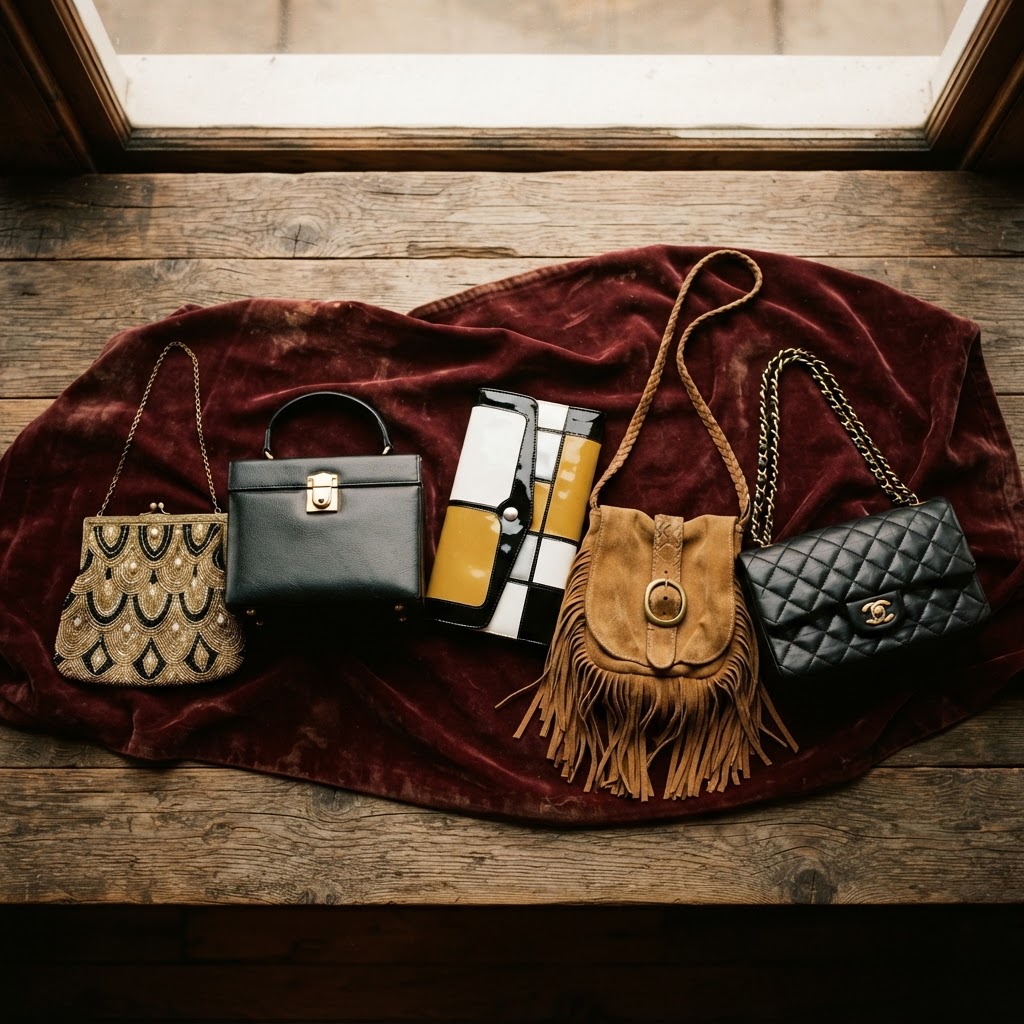
Vintage handbags tell stories. A beaded 1920s evening bag whispers of jazz clubs and cigarette holders. A boxy 1960s patent leather purse screams mod rebellion. A quilted 1980s chain-strap bag carries decades of aspirational glamour. But before a buyer falls in love with the story your bag tells, they need to trust that the story is real. As a seller on Ensemble, your reputation depends on your ability to accurately represent what you're selling — and that starts with knowing how to authenticate vintage handbags with confidence.
Start With the Hardware
One of the fastest ways to date and authenticate a vintage handbag is to examine its hardware closely. Pre-1950s bags often feature hardware made from brass, sterling silver, or early plastics like Bakelite. Run the hardware under warm water or press it briefly — Bakelite emits a faint formaldehyde-like smell when warmed, a telltale sign of authenticity in Art Deco-era pieces.
By the 1960s and 70s, gold-tone and chrome-plated hardware became fashionable, often stamped with the maker's mark or country of origin. Look for clean, weighty hardware with no flaking or hollow feel. Lightweight, tinny clasps are often signs of a later reproduction or a low-quality contemporary bag being passed off as vintage.
For designer bags from the 1980s and 90s, hardware engravings should be crisp and deep. Blurry or shallow stamping is a red flag — especially on pieces claiming to be Chanel, Gucci, or Louis Vuitton.
Examine the Lining and Interior Construction
The interior of a handbag is often where authenticity hides in plain sight. Authentic vintage bags from the 1920s through 1950s were frequently lined in silk, moiré, or fine cotton. Run your fingers along the seams — hand-stitching was common before mass manufacturing took over in the late 1950s, and those stitches will be slightly irregular but tight and intentional.
By the 1960s and 70s, synthetic linings like nylon and polyester became standard, especially in mid-market bags. This isn't a negative — it's a dating clue. If a bag claims to be from 1945 but has a polyester lining, something doesn't add up.
Check the interior pockets, too. Zipper pulls in older bags often feature metal teeth rather than the nylon coil zippers that became ubiquitous after the 1970s. The brand of zipper itself can help you date a piece: Talon zippers were dominant in American-made bags from the 1930s through 1960s, while YKK zippers indicate post-1960s manufacture.
Read the Labels and Maker's Marks
Labels are gold. A clear, legible label not only helps authenticate a bag but dramatically increases its resale value. When examining labels, look at the font, the country of origin designation, and the material content information.
Bags made before 1971 were not required by US law to include fiber content labels, so if a bag has detailed fabric content printed inside, it's likely from the early 1970s or later. Country of origin labeling requirements also shifted over decades — "Made in Occupied Japan" dates a piece to between 1945 and 1952, while "Made in West Germany" places a bag before 1990.
For designer authentication, research is non-negotiable. Authentic Hermès bags, for instance, have date stamps blind-embossed into the leather — a letter inside a shape that corresponds to the year of manufacture. Coach bags made before the mid-1990s feature a creed patch with a serial number hand-stamped inside. These details are well-documented and easy to cross-reference before you list.
Assess the Leather (or Fabric) Quality
Authentic vintage leather has a patina that simply cannot be faked convincingly. Genuine leather from quality bags develops a deepening of color and a slight softness over decades of use and natural oils from handling. Run your fingers across the surface — real leather has texture, warmth, and slight variation. Pleather or vinyl feels uniformly smooth and slightly cool.
That said, not all vintage bags are leather, and fabric bags require their own authentication process. Needlepoint, tapestry, and beaded bags from the 1920s through 1950s are often handmade, and you can verify this by examining the reverse side of the work — machine-made pieces have uniform, mechanical backing while handmade pieces show slight inconsistencies.
For snakeskin, alligator, and other exotic skins, look for natural scale variation and check whether the skin wraps around corners and seams in a way consistent with actual hide. Embossed faux-exotic leathers have perfectly uniform, symmetrical scale patterns — a dead giveaway.
Check the Silhouette and Style Against the Claimed Era
Every decade has its dominant handbag silhouettes, and a quick style audit can help you confirm or question a bag's claimed provenance. The structured box bags and envelope clutches of the 1940s gave way to the rounded, pillowy shapes of the 1950s. The 1960s brought geometric minimalism; the 1970s, slouchy hobo bags and fringe. Power-shoulder structured totes dominated the 1980s, while the 1990s saw a return to minimalism with tiny baguette bags and logo-heavy nylon.
If the silhouette of a bag doesn't match its claimed decade, that's worth noting — either in your research or in your listing. Sometimes bags are simply misdated by well-meaning sellers who inherited pieces. Part of your value as a knowledgeable Ensemble seller is doing that homework.
Document Condition Honestly and Thoroughly
Authentication and condition documentation go hand in hand. When listing a vintage handbag, photograph every inch — the hardware, the lining, any monograms or labels, wear points like corners and strap junctions, and the base of the bag. Natural lighting is best for capturing true color and texture.
Be specific about condition. "Good vintage condition" is vague. Instead, describe: light scratching to hardware, minor ink transfer on interior lining, original mirror included, one replaced screw on clasp. Buyers who specialize in vintage handbags appreciate precision, and honest listings reduce returns and disputes.
Price With Knowledge, Not Just Sentiment
Pricing vintage handbags is both art and science. Research comparable sold listings on platforms like Ensemble, 1stDibs, and eBay's completed sales to understand current market values. Consider the trifecta of pricing factors: maker (designer vs. unsigned), condition (mint vs. well-loved), and rarity (common silhouette vs. limited archive piece).
An unsigned 1950s beaded evening bag in excellent condition might fetch $85–$150, while a documented Judith Leiber minaudière from the same era could sell for ten times that. Know what you have before you guess at a price.
Bring Your Best Pieces to Ensemble
Authentic vintage handbags are perennial bestsellers in the vintage marketplace — they're wearable, collectible, and deeply personal. As a seller on Ensemble, your commitment to accurate authentication and transparent listing practices helps build the kind of trust that keeps buyers coming back. Whether you're listing a beaded Art Deco pochette or a buttery Italian leather shoulder bag from the 1980s, taking the time to research, photograph, and honestly represent your pieces is what sets great Ensemble sellers apart. The story a bag tells is only as good as the seller willing to tell it truthfully.