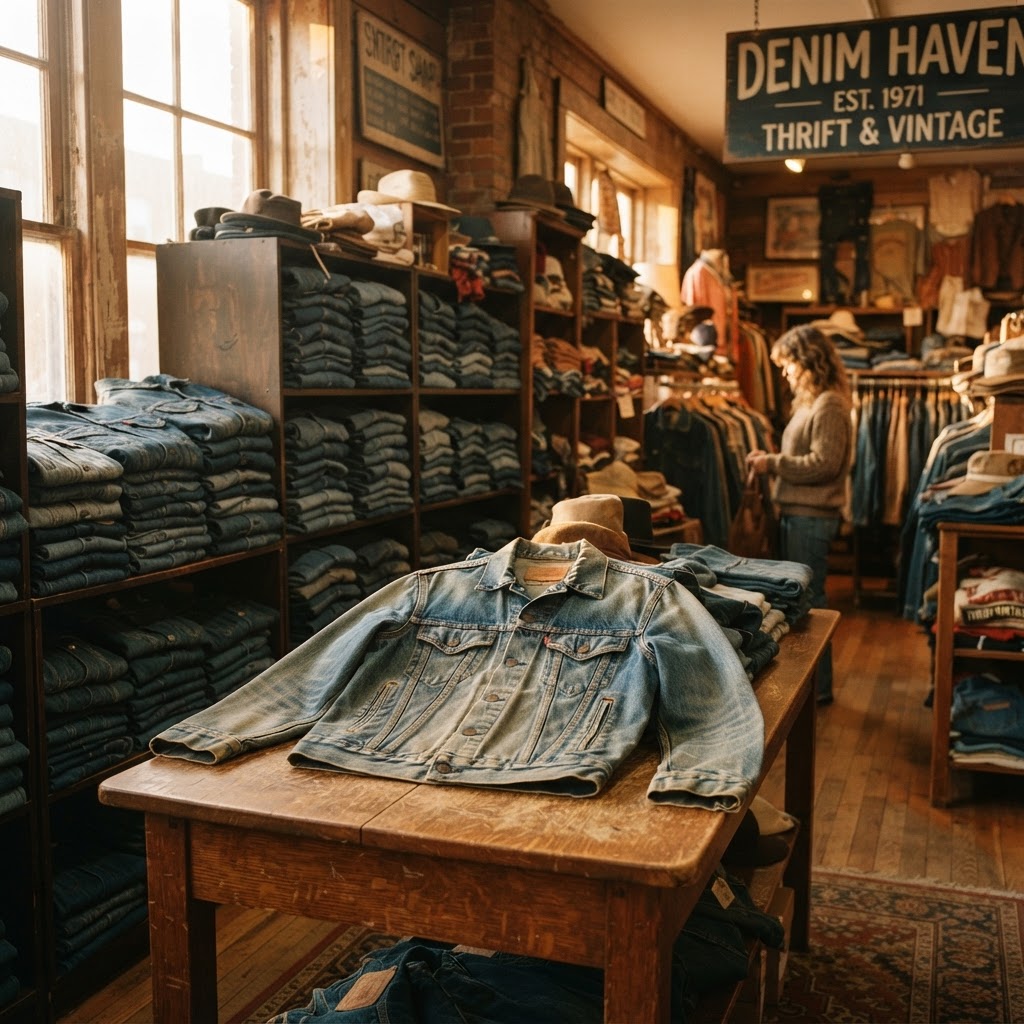
How to Price and Sell Vintage Denim Jackets Online: The Ultimate Guide for Sellers
Vintage denim jackets are among the most sought-after pieces in the resale market, but knowing how to price and present them can mean the difference between a quick sale and a listing that lingers for months. Whether you're clearing out a collection or building a serious resale business, understanding what buyers are looking for is everything. This guide breaks down exactly how to research, price, and sell your vintage denim jackets for maximum return.
Why Vintage Denim Jackets Are Having a Moment
From the Type III Levi's trucker that defined 1970s counterculture to the acid-washed oversized styles of the late 1980s, denim jackets have been a cornerstone of American fashion for decades. Today, collectors and everyday shoppers alike are hunting for authentic vintage pieces with character, history, and the kind of quality that modern fast fashion simply can't replicate. The global resale market for vintage clothing has exploded in recent years, and denim jackets consistently rank among the top-performing categories.
But the vintage denim market rewards sellers who do their homework. Pricing too low leaves money on the table; pricing too high means your jacket collects digital dust. Here's how to get it right.
Step 1: Identify What You Have
Before you set a price, you need to know exactly what you're selling. Authentication and era identification are the foundation of every successful vintage denim listing.
Read the Label
The tag is your first and most important clue. Levi Strauss & Co., Lee, and Wrangler are the holy trinity of collectible vintage denim, but don't overlook lesser-known brands like Pointer Brand, Big Smith, or even early Gap denim from the 1980s. Each brand used different label styles across different eras:
- Levi's used a red tab with all-capital "LEVI'S" through the late 1960s, shifting to a lowercase "e" in "Levis" after 1971 — a key dating detail collectors call the Big E vs. small e distinction.
- Lee jackets from the 1950s and 1960s feature a union-made label and a distinctive storm rider cut.
- Wrangler pieces from the 1960s often show a "W" stitching pattern on the back pockets.
Check the Hardware
Metal hardware — buttons, rivets, and zippers — tells a story. Copper rivets, shank buttons stamped with the brand name, and older zipper brands like Talon or Conmar are all indicators of earlier decades and higher collectibility.
Assess the Fabric
Pre-1980s denim was predominantly made from selvedge or cone mills denim, which has a tighter weave, heavier weight, and more pronounced fading potential than modern denim. If the fabric feels substantial and the fades look earned rather than manufactured, you likely have something special.
Step 2: Evaluate Condition Honestly
Condition is everything in vintage resale, and accurate condition grading protects both you and your buyer. Use these standard categories:
- Mint / Deadstock (NOS): Unworn with original tags. Extremely rare and commands the highest premiums.
- Excellent: Light wear, no flaws, all hardware intact. Still very desirable.
- Very Good: Minor signs of wear — perhaps a small faded spot or slight pilling — but no damage.
- Good: Visible wear, possible small repairs, but structurally sound and wearable.
- Fair / As-Is: Significant distress, repairs, or missing hardware. Price accordingly and disclose everything.
Be ruthless in your honesty. Hidden flaws lead to returns, negative reviews, and damaged seller reputation. Photograph every imperfection under natural light and mention it explicitly in your listing.
Step 3: Research Comparable Sales
This is where your pricing strategy gets real. Don't rely on asking prices — look at completed and sold listings to understand what buyers are actually paying.
Where to Research
- eBay Sold Listings: Filter by "sold items" to see real transaction data. Search by brand, size, and decade.
- Depop and Grailed: Great for understanding what younger collectors are paying for 1990s and early 2000s pieces.
- Etsy Sold Listings: Useful for understanding the premium buyers will pay for well-photographed, well-described vintage pieces.
- Worthpoint and 1stDibs: For higher-end or rarer pieces, these platforms give insight into collector-level pricing.
Key Factors That Drive Price Up
- Small or extra-large sizes (XS/S and XL/XXL tend to sell faster and for more)
- Rare colorways — black denim, white denim, or early indigo
- Distressed or naturally faded patina with no damage
- Embroidery, patches, or original customization from the era
- Women's cuts from the 1970s and 1980s — currently very trendy
Step 4: Set Your Price with Confidence
Once you have comparable data, use this framework:
Base Price = Median sold price for comparable pieces
Then adjust:
- +10–30% for exceptional condition, rare size, or notable provenance
- -10–25% for any noted flaws or less desirable sizing
- +15% if selling on a curated marketplace with a built-in audience of serious buyers
Don't forget to factor in platform fees, shipping costs, and packaging materials before you finalize your number. Many new sellers underprice because they forget that a $10 shipping cost and a 15% platform fee can significantly cut into a $60 sale.
Pricing by Era: A Rough Guide
- 1930s–1950s workwear denim jackets: $150–$800+ depending on brand and condition
- 1960s–1970s branded trucker jackets (Levi's, Lee, Wrangler): $80–$400
- 1980s oversized and acid-wash styles: $45–$150
- 1990s grunge and skate-influenced denim: $35–$120
- Early 2000s Y2K denim (embellished, low-rise cuts): $30–$100, rising fast
Step 5: Write a Listing That Sells
Great photography and strong copy are your most powerful selling tools.
Photography Tips
- Shoot on a clean background — white, cream, or a natural outdoor setting
- Always photograph flat lay and on-body if possible
- Include close-ups of the label, hardware, any fading, and any flaws
- Use natural daylight — it renders denim color most accurately
Writing Your Description
Your title should include: brand + era/decade + style descriptor + size. For example: "Levi's Type III Trucker Jacket 1970s Faded Indigo Denim Men's Medium Big E Era"
In the body, cover:
- Measurements (chest, length, sleeve — always measure, never just list tag size)
- Fabric and hardware details
- Condition notes, including every flaw
- Styling suggestions — help buyers picture themselves wearing it
Step 6: Choose the Right Platform
Not all marketplaces are created equal. General platforms like eBay cast a wide net but require strong SEO skills. Niche vintage marketplaces connect you with buyers who already understand and appreciate what they're looking at — meaning less education required and more willingness to pay fair prices.
For sellers who want their pieces seen by a community that genuinely values authentic vintage fashion, a curated marketplace is often worth the investment.
Conclusion: Turn Your Denim Into Dollars
Selling vintage denim jackets online is equal parts research, presentation, and storytelling. The sellers who consistently succeed are those who take time to authenticate carefully, price with data, photograph honestly, and write descriptions that inform and inspire.
When you're ready to list your pieces with a community that truly gets it, Ensemble is the place to be. As a marketplace dedicated to authentic vintage clothing from the 1920s through the 2010s, Ensemble connects passionate sellers with buyers who know the difference between a Big E Levi's and a reissue — and who are willing to pay accordingly. List your vintage denim jackets on Ensemble today and let your pieces find the home they deserve.