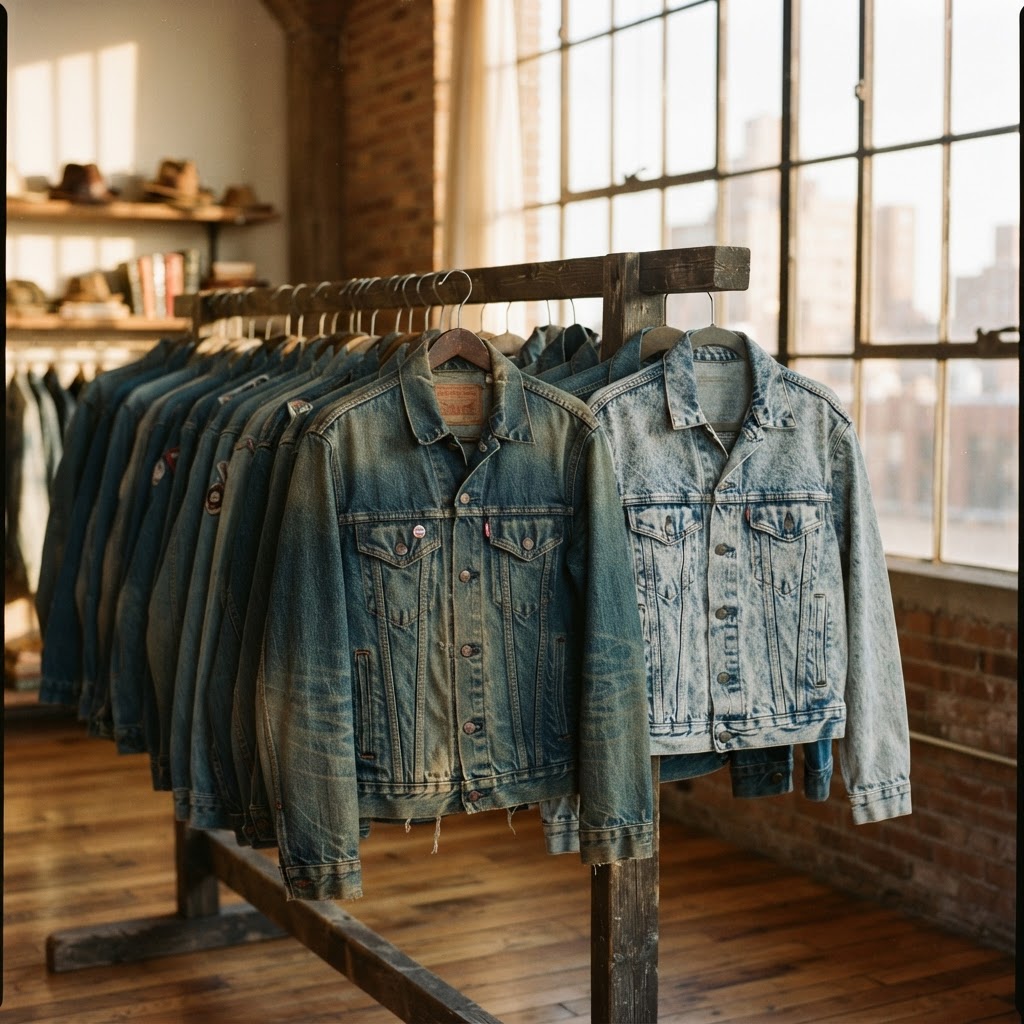
How to Price and Sell Vintage Denim Jackets Online: The Ultimate Guide for Every Decade
Vintage denim jackets are among the most coveted pieces in secondhand fashion — but knowing what yours is worth can feel like cracking a secret code. Whether you're sitting on a 1970s Levi's Type III or a 1990s distressed gem, pricing it right is the difference between a quick sale and a listing that collects digital dust. Read on for everything you need to know to price, photograph, and sell your vintage denim jacket like a pro.
Why Vintage Denim Jackets Are Having a Moment
Few garments carry as much cultural weight as the denim jacket. From the rebellious teenagers of the 1950s to the grunge kids of the 1990s, denim jackets have served as blank canvases for self-expression across every generation. Today, collectors and fashion lovers alike are scouring online marketplaces for authentic vintage pieces — and the demand shows no signs of slowing down. If you have a vintage denim jacket hiding in your closet or storage unit, now is an exceptional time to sell.
But here's the catch: not all vintage denim jackets are created equal. The decade of origin, the brand, the condition, and even the hardware can dramatically affect the price. This guide will walk you through every step of the process so you can list with confidence.
Know Your Decades: A Quick Reference Guide
Before you set a price, you need to identify what era your jacket is from. Here's a fast breakdown:
-
1950s–1960s: Early denim jackets from this era are exceptionally rare. Levi's, Lee, and Wrangler dominated production. Look for pleated fronts, cinch backs, and single stitch construction. These are museum-quality pieces and can fetch anywhere from $300 to well over $1,000.
-
1970s: This decade gave us the beloved Levi's Type III trucker jacket in its most iconic form. Big E labels (pre-1971) carry a premium. Blanket-lined versions and customized pieces are especially popular. Expect prices between $80 and $400 depending on condition and specifics.
-
1980s: Acid wash, oversized silhouettes, and bold patches define this decade. Brands like Jordache, Calvin Klein, and Guess produced denim jackets that are now highly collectible. Prices typically range from $50 to $250.
-
1990s: Grunge and hip-hop culture turned denim jackets into statement pieces. Distressed finishes, embroidery, and oversized fits are hallmarks. Carhartt, Tommy Hilfiger, and Levi's all made standout pieces in this era. Expect $40 to $200.
-
2000s–2010s: These decades are now entering vintage territory. Y2K-era stretch denim and early 2010s raw selvedge revivals are gaining traction. Prices are still moderate — $25 to $150 — but trending upward fast.
How to Authenticate Your Jacket
Authentication is everything in vintage selling. Buyers will scrutinize your listing, so you need to do your homework first.
Start with the care label. Care labels (washing instructions with symbols) weren't required in the U.S. until 1971, so any jacket without one is likely pre-1971. The font, logo style, and country of origin on the brand label can also narrow down the year significantly. For Levi's specifically, the evolution from Big E to small e (which happened in 1971) is one of the most important markers for dating and pricing.
Next, examine the hardware. Copper rivets, brass zippers (look for YKK versus older Scovill or Talon zippers), and the style of the buttons can all help you pinpoint the era. Original hardware in good condition adds meaningful value.
Finally, check the stitching. Single-needle stitching generally indicates an older, higher-quality garment. Chain stitch versus lock stitch can also be a clue to age and origin.
Pricing Strategy: How to Set the Right Number
Once you've identified and authenticated your jacket, it's time to price it. The most reliable method is comparable sales research, often called "comps."
Here's how to do it:
-
Search sold listings on platforms like eBay, Depop, and Etsy. Look specifically at completed or sold listings — not active ones. Active listings tell you what people are asking; sold listings tell you what people are actually paying.
-
Filter by condition. A mint-condition 1970s Levi's trucker will sell for double (or more) what a heavily faded or repaired version commands. Be honest with yourself about your jacket's condition.
-
Account for rarity. Unusual colorways, limited-run collaborations, deadstock (unworn with original tags) pieces, and heavily customized jackets can command significant premiums above standard market rates.
-
Factor in your platform fees. Most platforms take 10–20% in fees. Price your jacket to account for this so you're not left shortchanged after a sale.
A simple formula: Comparable Sale Price × Condition Multiplier − Platform Fees = Your Target Price. If you're in a hurry to sell, price 10–15% below comps. If you can wait for the right buyer, price at or slightly above market and let demand do the work.
Photographing Your Jacket to Maximize Sales
In online vintage fashion, photography is your storefront. Poor photos kill sales regardless of how good the piece is.
Here are the non-negotiable shots every listing needs:
- Front flat lay or on a model/mannequin in natural light
- Back view showing the full silhouette
- Close-up of the label (both brand and care label)
- Hardware details — zippers, buttons, and rivets
- Any flaws — fading, staining, repairs, or wear spots
- Interior lining if applicable
Shoot on a neutral background (white, cream, or concrete work well) and always use natural daylight or a daylight-balanced light source. Avoid flash photography, which flattens texture and distorts color — two things buyers specifically look for in denim.
Writing a Listing That Converts
Your title and description need to work hard for you. Include the following in your listing title: brand name, approximate decade or year, style name (e.g., Type III, trucker), size, and one key distinguishing feature (e.g., "blanket lined," "Big E," "acid wash").
In your description, lead with the most important details: era, brand, condition, measurements, and any authentication markers. Then move into the story — buyers of vintage are emotionally driven. Tell them what makes this jacket special. Was it clearly well-loved? Does the fading tell a story? Is it deadstock perfection? Lean into the narrative.
Always include exact measurements (chest, length, sleeve length, shoulder width) rather than relying on the tag size alone. Vintage sizing runs small, and a clear measurement chart will reduce returns and increase buyer confidence.
Common Mistakes Sellers Make (and How to Avoid Them)
Overpricing based on sentimentality. Your jacket might hold memories, but the market doesn't care. Price based on data, not emotion.
Underpricing out of impatience. Rare pieces deserve patience. If you have a genuine Big E Levi's in excellent condition, don't undersell it to a reseller for $30 when it's worth $300.
Hiding flaws. Buyers who feel misled leave bad reviews and request returns. Disclose everything upfront — many buyers want a naturally worn jacket; they just need to know what they're getting.
Ignoring measurements. This single omission is responsible for a significant percentage of returns in vintage clothing sales. Always measure.
Where to Sell: Choosing the Right Platform
Different platforms attract different buyers. eBay is excellent for reaching a broad audience and is particularly strong for rare, high-value pieces where buyers are actively searching by specific terms. Depop and Poshmark skew younger and are great for 1990s and 2000s pieces that appeal to trend-driven shoppers. Etsy works well for curated, story-driven listings with strong photography.
And of course, for buyers and sellers who care deeply about authenticity, provenance, and quality across every decade, Ensemble is the destination of choice. Our marketplace is built specifically for vintage fashion from the 1920s through the 2010s, which means your denim jacket will be seen by buyers who genuinely understand and appreciate what they're looking at. When you list on Ensemble, you're not competing with fast fashion resellers or box-store returns — you're connecting with a community that values the real thing.
Conclusion
Selling vintage denim jackets online is part detective work, part market research, and part storytelling. When you take the time to authenticate your piece, price it based on real comparable sales, photograph it beautifully, and write a description that informs and inspires, you dramatically increase your chances of a fast, fair sale. The vintage denim market is robust, passionate, and growing — and your jacket deserves to find a buyer who will love it as much as you did.
Ready to list? Head over to Ensemble and join a marketplace where vintage fashion is celebrated, every decade is respected, and great pieces find great homes.