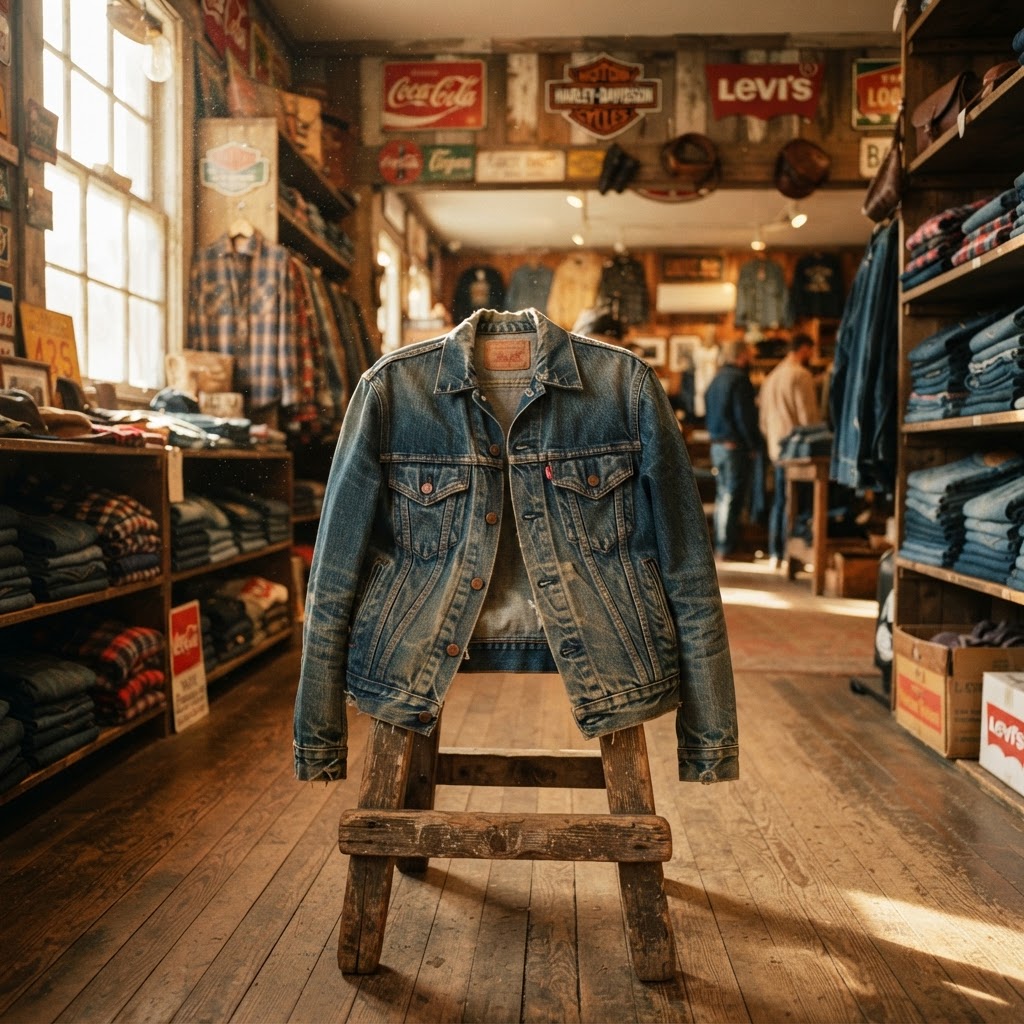
How to Price and Sell Vintage Denim Jackets Online: The Complete Guide for Sellers
Vintage denim jackets are among the most sought-after pieces in the secondhand fashion market, with rare finds fetching hundreds — even thousands — of dollars from the right buyer. But knowing how to accurately price and effectively sell your denim treasures online can mean the difference between a quick sale and a listing that gathers digital dust. Whether you've inherited a 1970s Levi's trucker or stumbled upon a perfectly distressed 1990s Guess jacket at an estate sale, this guide will help you turn that find into real money.
Why Vintage Denim Jackets Are Having a Moment
Denim has never really gone out of style, but vintage denim is experiencing a cultural renaissance. Collectors, stylists, and everyday fashion lovers are actively hunting for authentic pieces that carry history in every fade and wear mark. From the stiff, dark indigo of a 1950s Levi's Type I to the acid-washed glory of a 1980s Lee Storm Rider, each decade produced denim with a distinct character that modern reproductions simply cannot replicate.
As a seller, understanding this hunger in the market is your first competitive advantage. Buyers aren't just purchasing a jacket — they're purchasing a story, an era, a feeling. Your job is to help them find it.
Step 1: Identify What You Have
Before you can price anything, you need to know exactly what you're selling. Accurate identification is the foundation of every successful vintage denim sale.
Read the Label
The care label is your best friend. In the United States, care labels with fiber content became federally required in 1971, so a jacket without one almost certainly predates that year — a significant value marker. Single-stitch construction, chain-stitched hems, and hidden rivets are hallmarks of earlier decades.
For Levi's specifically, look for the Big E red tab (pre-1971), the two-horse patch, and the style number stamped inside. These details can push a jacket from a $60 thrift find to a $400+ collectible.
Know Your Brands
Not all vintage denim is created equal. The most collectible brands include:
- Levi Strauss & Co. — especially Type I, II, and III truckers from the 1950s–1980s
- Lee — particularly the 101-J and Storm Rider styles
- Wrangler — beloved by Western wear collectors
- Guess — iconic for 1980s and early 1990s pieces
- Carhartt — workwear crossover appeal with a dedicated collector base
- Diesel, Calvin Klein, and JNCO — increasingly collectible 1990s–2000s pieces
Deadstock (unworn, with original tags) commands a significant premium regardless of brand.
Step 2: Assess Condition Honestly
Condition is arguably the single most important pricing factor after identification. The vintage market uses fairly standardized condition grades:
- Mint / Deadstock: Unworn, original tags present. Maximum value.
- Excellent: Minimal wear, no flaws, all hardware intact.
- Very Good: Light fading and wear consistent with age, no damage.
- Good: Noticeable wear, minor fading, possibly small repairs.
- Fair: Heavy distressing, repairs, or alterations — often sold as a project piece.
Be ruthless in your assessment. Overstating condition is the fastest way to earn negative reviews and returns. Photograph every flaw — a small collar stain, a replaced button, a hairline crack in the hardware. Buyers appreciate transparency, and it protects you as a seller.
Step 3: Research the Market Before You Price
Resisting the urge to guess at a price is crucial. Instead, do your homework.
Use Sold Listings as Your Benchmark
On platforms like eBay, filter your search to "Sold Listings" to see what buyers have actually paid — not what sellers are asking. There's a significant difference. Search by brand, style, decade, and size to find comparable sales.
Cross-Reference Multiple Platforms
Check sold prices across Depop, Grailed, Poshmark, and niche vintage marketplaces like Ensemble. Each platform has a slightly different buyer demographic and price tolerance. A 1980s Levi's trucker in excellent condition might move for $95 on Poshmark but fetch $140 from a dedicated collector on a curated platform.
Factor In Sizing
This is a detail many new sellers overlook. Vintage sizing runs small, and buyers know it. Always include both the tagged size and the actual measured dimensions — chest, shoulder width, sleeve length, and body length. A vintage medium that measures like a modern small will sell differently than one that measures true to size. Unusually large vintage sizes (tagged XL or XXL from the 1970s–1980s) are increasingly rare and can command a premium.
Step 4: Set a Strategic Price
With your research done, it's time to set a price that balances speed of sale with fair return.
The Three-Price Framework
Consider three numbers before listing:
- Your floor price — the absolute minimum you'd accept, covering your costs and time.
- Your market price — what comparable items have sold for.
- Your aspirational price — slightly above market, with room to negotiate.
For most sellers, listing at your aspirational price and leaving room for offers is the sweet spot. Many platforms allow buyers to submit offers, and a well-priced jacket with offer capability often sells faster than one listed at a rigid fixed price.
Account for Platform Fees
Don't forget to factor in selling fees. Most platforms take between 8% and 15% of the sale price. Shipping materials and actual postage costs should also be calculated before you commit to a price, especially for heavier denim pieces that can weigh 2–3 lbs.
Step 5: Photography That Sells
In online vintage fashion, photography is your storefront window. A poorly lit photo of a valuable jacket will underperform against a beautifully shot photo of something less special.
Essential Shots to Include
- Front flat lay on a clean, neutral background
- Back flat lay
- Detail of the label and care tag
- Close-up of hardware (buttons, zippers)
- Any wear, fading, or flaws
- On-body or on-hanger shot for fit context
Natural light near a window is your best tool. Avoid harsh flash, which flattens texture and misrepresents color. True color accuracy is non-negotiable — buyers expect what they see.
Step 6: Write a Listing That Converts
Your listing title and description need to work for both human buyers and search algorithms.
Optimize Your Title
Include: Brand + Decade + Style descriptor + Size. For example: "Vintage 1970s Levi's Type III Trucker Denim Jacket — Faded Indigo — Tagged 42 / Fits L"
Write a Description That Tells the Story
Open with the most compelling detail — the era, the rarity, the condition. Then move into specifics: exact measurements, label information, notable wear or hardware details. Close with styling suggestions. Buyers love to envision how they'll wear a piece.
Use relevant keywords naturally throughout: the decade, the brand, the style name, and descriptors like "workwear," "streetwear," "Y2K," or "Americana" depending on the piece.
Conclusion: Sell Smarter on a Platform That Values Authenticity
Selling vintage denim online rewards sellers who do the work — who research, photograph thoughtfully, and price with both confidence and flexibility. The market for authentic vintage pieces is strong and growing, and buyers are increasingly sophisticated. Meeting them with accurate information and honest presentation builds the kind of seller reputation that generates repeat customers and strong reviews.
When you're ready to list your vintage denim collection, Ensemble is built for exactly this kind of selling. As a marketplace dedicated exclusively to authentic clothing from the 1920s through the 2010s, Ensemble attracts buyers who understand and appreciate the value of genuine vintage — which means your well-researched, beautifully photographed Levi's trucker lands in front of exactly the right audience. List smarter, sell confidently, and let your pieces find the homes they deserve.