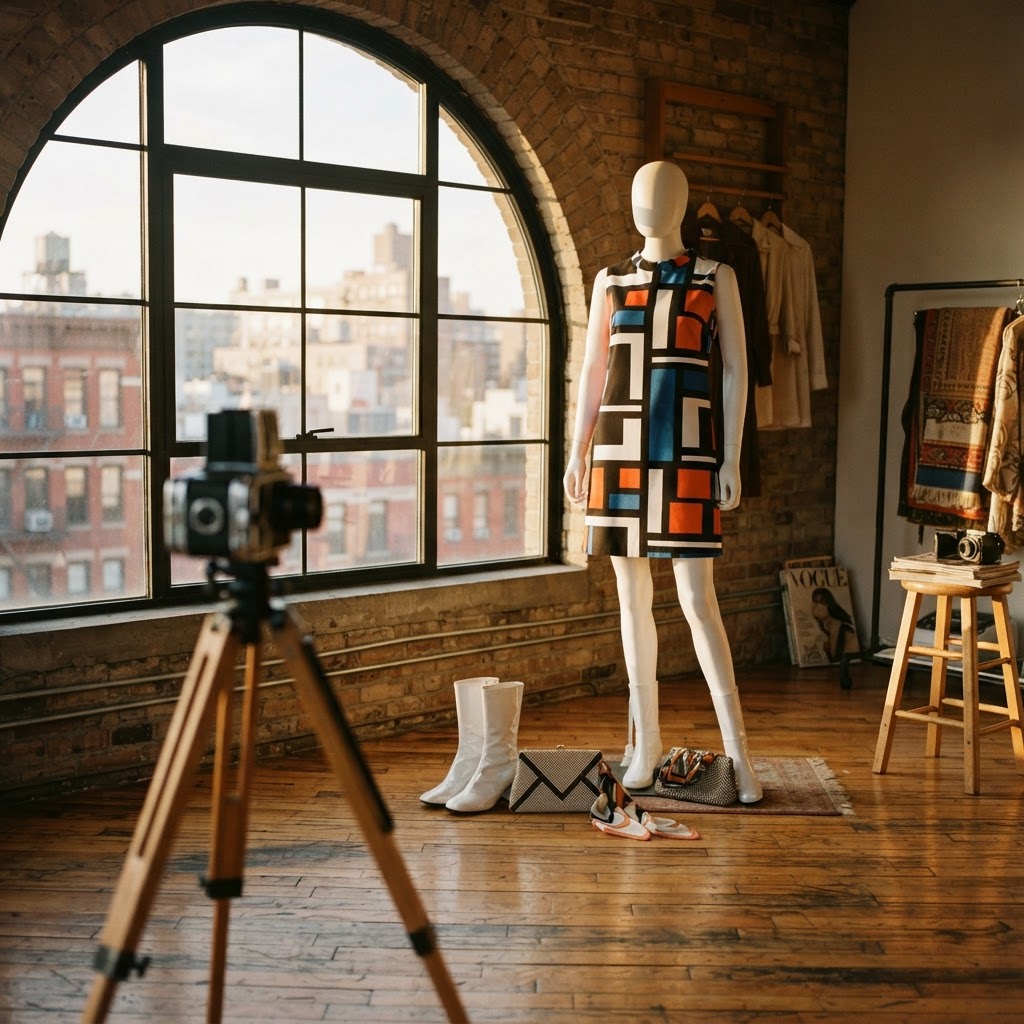
How to Photograph Vintage Clothing for Resale: Lighting and Styling Tips That Sell
A stunning photograph is the difference between a scroll-past and a sale. Whether you're listing a 1960s mod shift dress or a 1990s denim jacket, the way you capture your vintage pieces can make buyers fall in love before they ever touch the fabric. Master these lighting and styling techniques and watch your Ensemble listings fly off the virtual rack.
Selling vintage clothing online is as much an art form as it is a commerce. Buyers can't feel the weight of a 1940s wool blazer or hold a 1970s silk blouse up to the light — all they have is your photograph. That means your images need to do the heavy lifting: communicating texture, fit, condition, and that ineffable era energy that makes vintage so irresistible. Here's how to photograph your pieces like a pro, no expensive studio required.
Understand the Light Before You Shoot
Natural light is your best friend. Soft, diffused daylight — think an overcast sky or a spot just inside a large north-facing window — creates even illumination that shows true color and reveals fabric texture without harsh shadows. Direct midday sun, on the other hand, blows out details and can make colors look washed out or inaccurate.
The golden hours (shortly after sunrise and before sunset) offer a warm, flattering glow that works beautifully for earthy 1970s palettes, rustic workwear, and anything with a romantic edge. For crisper, truer-to-life color — essential when listing a 1980s power suit or a 1950s circle skirt in a specific hue — stick to overcast midday light or a bright, shaded outdoor spot.
Avoid mixed lighting at all costs. Combining a window's cool daylight with a warm incandescent lamp creates color casts that confuse the eye and misrepresent your item. Turn off overhead lights when shooting near a window, and if you must use artificial light, invest in a pair of daylight-balanced LED panels (5000–5500K). These are affordable, adjustable, and will transform your indoor setup entirely.
Set Up Your Background with Intention
Background choice tells a story. A clean white or off-white backdrop is the timeless default — it keeps the focus on the garment, photographs cleanly, and edits easily. But vintage clothing often sings when it's given a bit of context.
Consider textured backgrounds that echo the garment's era: a weathered wooden floor for 1920s and 1930s pieces, a terrazzo tile surface for mid-century items, a concrete wall for 1990s grunge-era finds. The key is contrast — your background should complement the piece without competing with it. A heavily patterned backdrop will fight with a printed 1960s blouse; a neutral linen sheet will let it breathe.
Avoid busy, distracting backgrounds like unmade beds, cluttered rooms, or bright-colored walls. Even the most beautiful garment gets lost in visual noise. If you're shooting at home, a large piece of seamless paper (available at art supply stores) or a plain bedsheet pinned flat to a wall works wonders.
Flat Lay, Hanger, or Human: Choosing Your Display Method
Each display method has its strengths, and the best listings often use all three.
Flat lays are ideal for showing the full scope of a garment — every seam, every pattern, every detail laid out in a single frame. They work particularly well for structured pieces like 1940s blazers, 1950s skirts, and statement 1980s outerwear. Shoot from directly above (a ladder or standing on a sturdy chair helps) and use a wide-angle lens or step back enough to capture everything without distortion. Style the flat lay with a few era-appropriate accessories — a string of pearls near a 1930s evening gown, a chunky belt beside a 1970s jumpsuit — to give buyers a sense of the full look.
Hanger shots are quick, clean, and practical for marketplace listings. Use a slim velvet hanger in a neutral color; wire hangers look cheap and distort shoulder seams. Hang your item on a hook against your chosen backdrop and smooth out any wrinkles beforehand — a handheld steamer is one of the best investments a vintage seller can make.
On-body or on-mannequin shots are the gold standard. Nothing communicates fit and drape like seeing a garment worn. If you have a dress form or vintage mannequin, use it — these photograph beautifully and give your shop a cohesive editorial feel. Live model shots are even better: they show real-world movement, suggest styling, and help buyers visualize themselves in the piece. Even a self-timer and a full-length mirror can get you there.
Styling Your Shot for Maximum Era Appeal
Vintage buyers aren't just purchasing clothing — they're purchasing a feeling, a time, a fantasy. Your styling should lean into that.
For 1920s and 1930s pieces, think Old Hollywood glamour: soft light, dramatic shadows, pearls and gloves as props, cool tones. For 1940s and 1950s items, consider a crisp, optimistic presentation — bright light, clean lines, retro kitchen or parlor backdrops if available. 1960s and 1970s pieces thrive in natural outdoor settings: a garden, a tiled patio, a sunlit park bench. For the 1980s and 1990s, embrace a grittier urban aesthetic — brick walls, fire escapes, skate parks, bold graphic contrast.
Accessorize thoughtfully. A few well-chosen props anchor the shot in its era and help buyers style the piece in their minds. But keep it curated: two or three items maximum. A vintage handbag, a pair of era-appropriate shoes, a hat. The garment remains the star.
Always steam or press your pieces before shooting. Wrinkles read as neglect in photographs, even on otherwise beautiful items. Take the extra ten minutes — it makes an enormous difference to perceived value.
Camera Settings and Technical Tips
You don't need a DSLR to shoot great vintage. Modern smartphones have exceptional cameras, especially in good light. That said, a few technical habits will elevate any shot:
- Shoot in portrait mode (or with a wide aperture if using a camera) to gently blur the background and make the garment pop.
- Use gridlines to keep your composition level — crooked horizon lines look unprofessional.
- Shoot multiple angles: front, back, detail close-ups of hardware, labels, stitching, and any flaws. Transparency builds trust.
- Don't over-edit. A little brightness and contrast adjustment is fine; heavy filters distort color and mislead buyers. Accurate color representation is both ethical and practical — it reduces returns and builds your reputation as a seller.
- Always photograph the label. Vintage labels are authentication gold. Era-specific fonts, country-of-origin tags, and union labels tell buyers exactly what they're getting and add tremendous credibility to your listing.
Detail Shots: Don't Skip Them
Close-up detail photography is where good listings become great ones. Capture the weave of a tweed, the iridescence of a beaded bodice, the hardware on a 1980s leather jacket. These shots communicate quality and craftsmanship in a way that full-body images simply can't.
Equally important: photograph every flaw honestly. A moth hole, a faded patch, a missing button — document it clearly and describe it accurately in your listing. Buyers respect honesty, and transparent condition reporting is the cornerstone of a trustworthy vintage shop.
Putting It All Together
Great vintage photography is a practice, not a one-time setup. As you shoot more, you'll develop an intuitive sense for what light works best in your space, which angles flatter different silhouettes, and how to bring each era to life in a frame. Keep refining, keep experimenting, and don't be afraid to reshoot pieces that didn't get the attention they deserved.
At Ensemble, we believe that every vintage piece has a story worth telling beautifully. When you take the time to photograph your listings with care, you're not just making a sale — you're honoring the history of the garment and connecting it with the buyer who was always meant to find it. Ready to list? Your next great shot is one good window away.