How to Photograph Vintage Clothing for Resale: Lighting and Styling Tips That Sell
A stunning photo can be the difference between a vintage gem gathering digital dust and a quick, satisfying sale. Whether you're listing a 1960s mod shift dress or a 1990s bomber jacket, the way you photograph your pieces tells the story buyers need to hear. Master these lighting and styling techniques and watch your Ensemble listings come to life.
Selling vintage clothing online is as much about visual storytelling as it is about the garment itself. Buyers can't touch the fabric, check the drape in person, or hold the piece up to the light — your photographs have to do all of that work for them. The good news? You don't need a professional studio or expensive gear to take photos that convert browsers into buyers. You just need to understand a few key principles.
Start With the Right Light
Lighting is the single most important variable in clothing photography, and natural light is your best friend. Set up near a large window on an overcast day for the most flattering, even illumination. Overcast skies act as a giant softbox, diffusing harsh shadows that can obscure texture and color.
If you're shooting on a sunny day, avoid direct sunlight, which creates blown-out highlights and deep shadows that flatten fabric details. Instead, position your setup so the window light hits your garment at a 45-degree angle — this creates gentle dimension that reveals texture in knits, brocades, and embroidered pieces without washing them out.
For evening or indoor shooting, invest in a simple two-light LED panel setup with daylight-balanced bulbs (around 5500K). Place one light as your key light slightly to the side, and use a white foam board on the opposite side as a reflector to fill in shadows. Avoid warm tungsten or cool fluorescent bulbs, as they shift colors in ways that can mislead buyers about what they're actually purchasing — a critical trust issue in vintage resale.
Choose Your Background Wisely
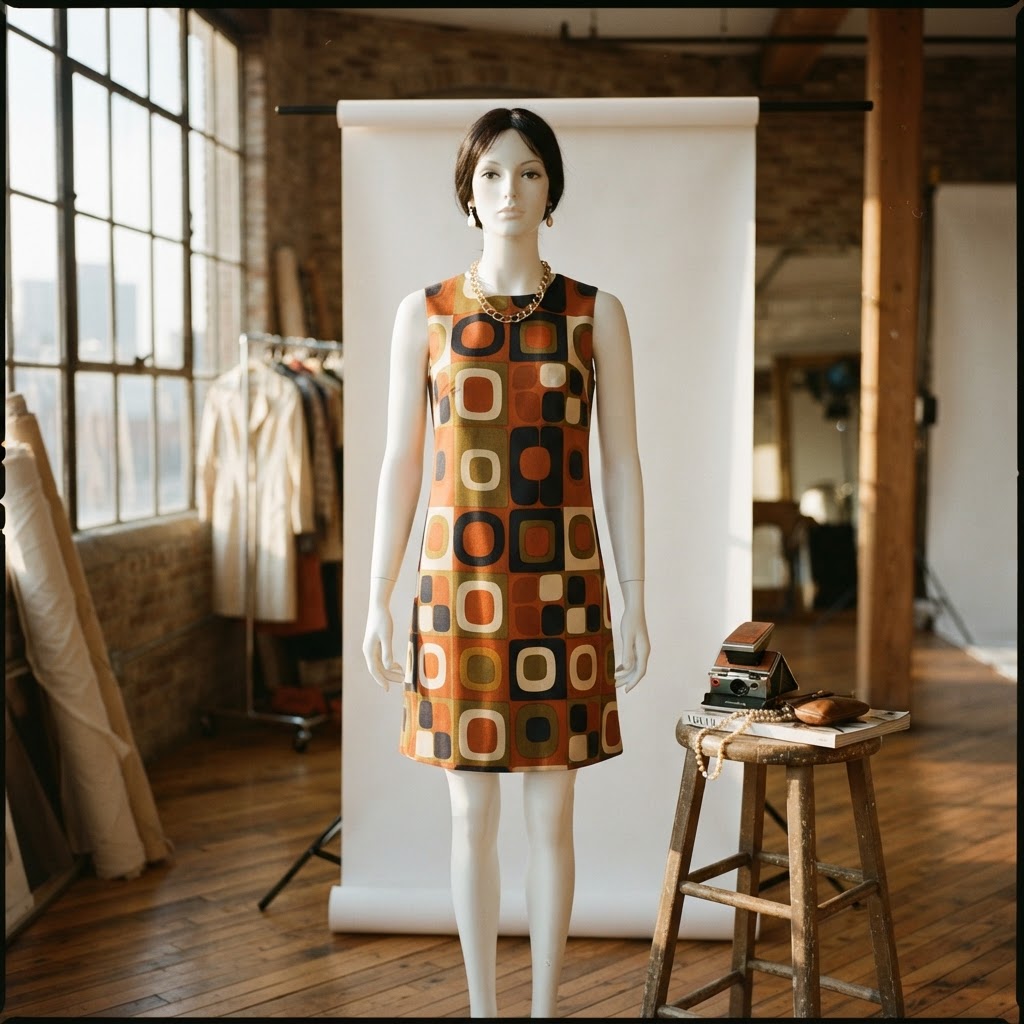
Your background should complement the clothing, not compete with it. For most listings, a clean white or off-white background is the safest choice — it's neutral, it reads as professional, and it makes colors pop accurately. A seamless paper roll or a simple white wall works perfectly.
That said, vintage clothing has personality, and sometimes a contextual background can elevate a listing significantly. A 1970s peasant blouse might shine against a warm wood backdrop. A 1940s suit could look extraordinary against aged brick. A 1980s power blazer might sing in front of a sleek, minimal grey surface. Think about the decade and the vibe of the piece, and ask yourself what environment that garment originally lived in.
Avoid busy patterns, distracting clutter, or backgrounds that clash with the clothing's color palette. The garment is always the star.
Flat Lay vs. Hanger vs. Model: Knowing When to Use Each
The three primary methods of presenting clothing each have their strengths, and experienced sellers often use a combination.
Flat lay photography works best for graphic pieces — printed tees, patterned scarves, statement accessories, or anything where the two-dimensional design is the main draw. Lay the garment on your chosen background, smooth out wrinkles carefully, and shoot directly overhead. Use a stepladder or position your phone or camera on a tripod aimed straight down. Flat lays are quick, clean, and easy to style with props like vintage sunglasses or period-appropriate accessories for added context.
Hanger shots are efficient and professional when done correctly. Use a slim, non-slip velvet hanger rather than bulky plastic, and hang the piece against your background at eye level. Hanger shots are great for outerwear, structured blazers, and dresses with interesting silhouettes. The key is to steam or iron the garment first — wrinkles look worse on a hanger than anywhere else.
Model or mannequin shots are the gold standard for conveying fit and drape, which are especially important for vintage sizing (more on that in a moment). If you don't have access to a human model, an invisible mannequin (also called a ghost mannequin) creates a three-dimensional shape without distracting from the garment. You can achieve a similar effect in post-processing by photographing the front and back separately on a mannequin and compositing them. If you are the model, use a tripod and self-timer, and choose neutral basics for bottoms and shoes that don't pull focus.
Styling for the Decade
One of the greatest advantages of selling on a platform like Ensemble is that buyers are actively looking for authentic period style — they want to feel transported. Use this to your advantage by styling your shots with decade-appropriate sensibility.
For 1920s and 1930s pieces, think art deco props, pearl accessories, and clean, elegant compositions. For 1950s garments, full skirts benefit from crinolines underneath to show proper volume. 1960s mod pieces look sharp with graphic, high-contrast backgrounds. 1970s bohemian clothing comes alive with warm tones, macramé, or natural wood textures nearby. 1980s power fashion wants bold energy — strong angles, vivid backdrops. 1990s and 2000s pieces can lean into the aesthetic revival culture that buyers in those categories often embrace, with intentionally retro styling cues.
Don't overdo it — one or two thoughtful props or styling choices are enough. The goal is context, not costume.
Capturing the Details That Matter
Beyond your hero shot, detail photography is what builds buyer confidence and reduces return requests. Always photograph:
- Labels and tags, including brand, size, and care instructions
- Fabric texture up close, especially for specialty materials like velvet, silk, or tweed
- Hardware such as zippers, buttons, and buckles — these often date a piece and signal quality
- Any flaws, including small stains, pulls, missing buttons, or wear at cuffs and collars
Being upfront about condition isn't just ethical — it builds your reputation as a trustworthy seller. Buyers who feel deceived don't come back. Buyers who feel respected do.
A Note on Vintage Sizing
Always photograph the interior label clearly, and add a flat measurement shot or include measurements in your listing description. Vintage sizing runs dramatically different from modern sizing conventions — a labeled "size 12" from 1955 is not the same as a modern size 12. Photos of a garment laid flat with a measuring tape alongside key points (bust, waist, length) are incredibly helpful and significantly reduce buyer hesitation.
Edit With a Light Touch
Post-processing can enhance your photos, but restraint is key. Adjust exposure and white balance to ensure colors are true to life — this is a legal and ethical obligation in resale. Bump up clarity or texture slightly to bring out fabric detail. Crop for consistency across your listings so your shop looks cohesive and professional.
Free tools like Lightroom Mobile, Snapseed, or even the native editing features on your phone can accomplish everything you need. Avoid heavy filters that alter color perception, and never remove documented flaws in post.
Build a Consistent System
The sellers who succeed long-term on vintage marketplaces are the ones who build repeatable workflows. Designate a shooting corner in your space. Keep your background, lighting setup, and hangers ready to go. Batch your photography sessions so you're shooting multiple items at once. Develop a consistent sequence: hero shot, back shot, detail shots, label shot, flaw shots.
Consistency across your listings creates a shop aesthetic that buyers recognize and trust. It also makes the process faster — a 20-minute scramble per item becomes a 5-minute flow.
Conclusion
Great photography doesn't just sell a garment — it sells a feeling, a moment in time, a connection to a past that someone wants to carry forward. When you invest in how you present your vintage pieces, you're honoring the history of the clothing and giving it the best possible chance at a new life.
At Ensemble, we believe every vintage piece deserves to be seen at its best. Whether you're listing a flapper-era beaded dress or a Y2K velour tracksuit, these techniques will help you present your finds with the care and intention they deserve. Start with great light, tell the story of the decade, and let the clothing speak for itself — your buyers are out there, and they're ready to fall in love.