How to Photograph Vintage Clothing for Resale: Lighting and Styling Tips That Sell
Great vintage pieces deserve great photography. Whether you're listing a 1970s boho maxi dress or a crisp 1950s wiggle skirt, the right lighting and styling can mean the difference between a scroll-past and a sold sticker. Here's everything you need to know to make your vintage clothing shine online.
Selling vintage clothing is as much about storytelling as it is about fabric and fit. A buyer browsing an online marketplace can't touch the silk charmeuse or feel the weight of a wool coat — all they have is your photograph. That means your images need to do the heavy lifting: communicating condition, color, scale, and style all at once. The good news? You don't need a professional studio or expensive gear to take photos that sell. You just need the right knowledge.
Understand the Power of Natural Light
The single most important factor in vintage clothing photography is lighting, and natural light is your best friend. Harsh artificial lighting — think overhead fluorescents or direct flash — flattens texture, distorts color, and creates unflattering shadows that make even the most gorgeous garment look dull.
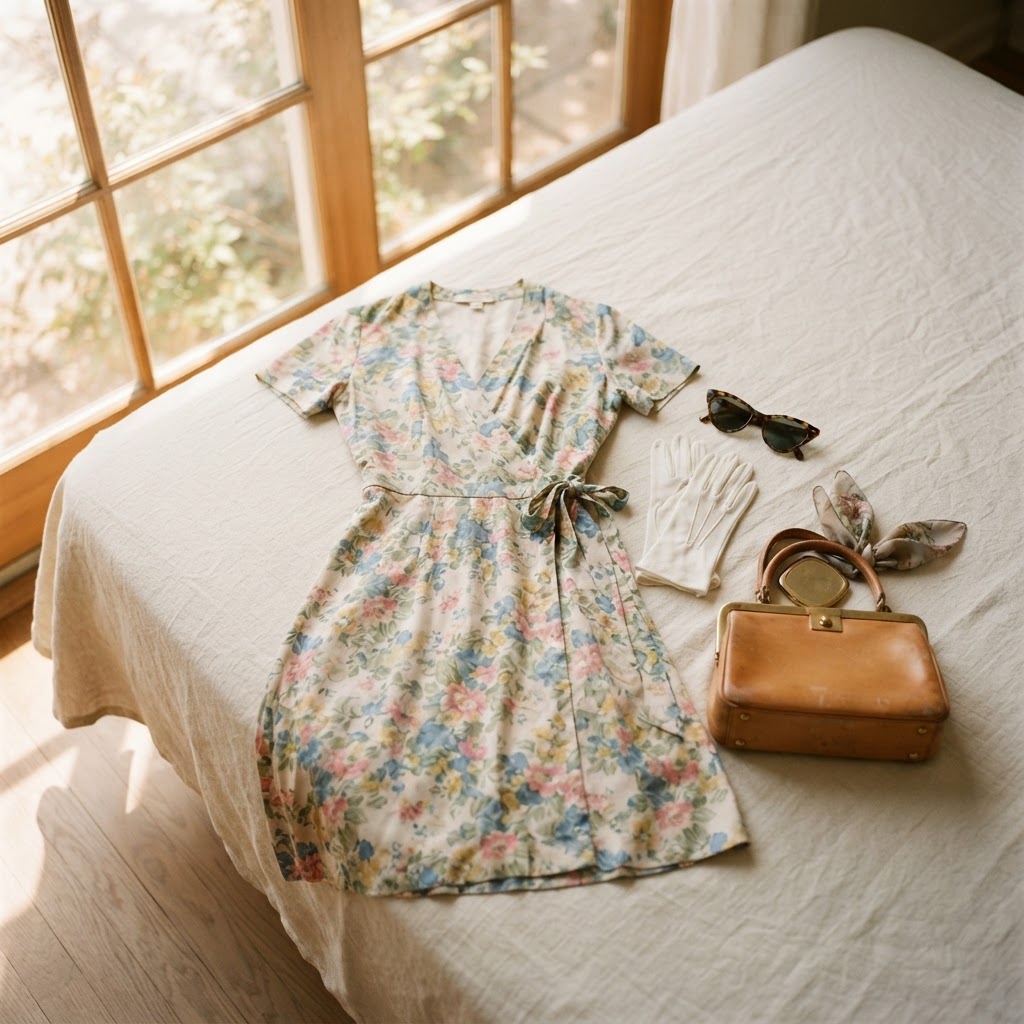
Instead, position your setup near a large north- or east-facing window. This gives you soft, diffused daylight that wraps around the garment, revealing texture in lace, embroidery, and woven fabric without creating blown-out highlights. The best time to shoot is mid-morning, when the sun is bright but not yet at its most intense.
If you're shooting on an overcast day, even better. Cloud cover acts like a giant natural softbox, producing even, shadow-free light that's particularly flattering for delicate fabrics like chiffon, organza, and velvet — all staples in any serious vintage wardrobe.
Avoid shooting in direct sunlight. It creates harsh shadows, washes out color, and makes it nearly impossible to accurately capture the nuanced hues of a vintage piece — those dusty roses, faded navies, and warm ochres that make decades-old clothing so visually compelling.
Choose Your Background Wisely
The background of your photo should support the garment, not compete with it. For most pieces, a clean, neutral backdrop — white, cream, or light gray — is the safest and most professional choice. It keeps the focus on the clothing and makes your listings look cohesive as a collection.
That said, a thoughtfully chosen contextual background can add enormous storytelling power, especially for items with strong era associations. A 1920s beaded flapper dress photographed against aged wood paneling or Art Deco wallpaper immediately transports the viewer. A 1980s power blazer shot against a sleek marble surface channels the decade's bold aesthetic.
Just be careful that the background doesn't create visual confusion. Busy patterns, clashing colors, or distracting objects in the frame can pull attention away from the clothing and make it harder for buyers to assess what they're actually purchasing.
Flat Lay vs. On a Hanger vs. Styled on a Model
You have three main options for presenting your garment: flat lay, hanger shot, or modeled. Each has its strengths.
Flat lay photography works well for smaller items like blouses, scarves, and accessories. Lay the piece on your neutral background, smooth out any wrinkles, and shoot directly overhead. Use a step stool or stand on a chair to get the right angle. The challenge with flat lays is that they can make clothing look lifeless — compensate by adding complementary props (a vintage compact, a pair of gloves, a brooch) that evoke the era without overwhelming the frame.
Hanger shots are quick and easy, and they give buyers a clear sense of the garment's shape. Use a slim, matching-color or transparent hanger rather than a bulky plastic one. Hang the piece against your backdrop or on a clean wall, and ensure it's fully steamed or pressed beforehand. Wrinkles in product photos communicate carelessness, even when the item itself is in excellent condition.
Modeled photography is the gold standard. Seeing a garment on a human body — even a dress form or vintage mannequin — gives buyers the clearest sense of fit, drape, and proportion. If you're able to model the pieces yourself or enlist a friend, do it. Include shots from the front, back, and side. Show how the waist nips in, how a hemline falls, how a collar frames the face. These details close sales.
Styling for the Era
Vintage clothing buyers aren't just shopping for garments — they're shopping for a feeling, a fantasy, a connection to another time. Leaning into era-appropriate styling elevates your photos from transactional to aspirational.
For 1940s and 1950s pieces, think structured silhouettes, pin-curl hairstyles, and red lips. Props like vintage handbags, white gloves, and cat-eye sunglasses complete the picture. For 1960s and 1970s items, embrace flowing movement — photograph maxi skirts mid-twirl, or style a peasant blouse with wide-leg trousers and wooden platform sandals. For 1980s and 1990s vintage, don't be afraid of bold accessories: chunky jewelry, scrunchies, and oversized denim jackets all help establish the era immediately.
The key is restraint. You want styling that enhances the hero piece, not overwhelms it. One or two well-chosen accessories are always better than a cluttered tableau.
Capture the Details That Matter
Beyond your hero shots, detail photographs are essential for building buyer trust. Include close-ups of:
- Labels and tags — these authenticate the era and brand, which is hugely important for serious vintage collectors
- Fabric texture — a close-up of silk velvet or hand-stitched embroidery communicates quality that words alone cannot
- Hardware and closures — zippers, buttons, hooks, and clasps all tell a story and need to be assessed by the buyer
- Any flaws or wear — be honest and transparent. A small moth hole, a faded patch, or a repaired seam should be photographed clearly. Buyers who feel surprised by condition issues upon delivery leave bad reviews and request returns.
Aiming for 6–10 photos per listing gives buyers the visual information they need to feel confident purchasing without ever seeing the item in person.
Post-Processing: Less Is More
Lightly editing your photos can make a real difference, but the goal is accuracy, not transformation. Use a free tool like Lightroom Mobile or Snapseed to:
- Correct white balance so colors appear true to life
- Brighten shadows slightly to reveal detail
- Boost clarity marginally to enhance fabric texture
- Straighten and crop the frame
Avoid heavy filters, artificial saturation boosts, or any edits that alter how the color of the garment truly appears. Misrepresented colors are one of the top reasons for returns in online vintage resale — and they damage your reputation as a seller.
Build a Consistent Visual Identity
If you're selling multiple pieces, consistency across your listings builds trust and makes your shop look professional. Use the same backdrop, the same lighting setup, and the same photo dimensions for every listing. Buyers who land on your profile should immediately recognize your aesthetic — it signals reliability and care.
Consider building a small, dedicated photo station in your home: a corner near a large window, a roll of seamless white paper or a linen flat backdrop, a steamer nearby, and a tripod so you're not hand-holding every shot. Once your setup is in place, photographing a new item takes fifteen minutes instead of an hour.
Conclusion
Great photography is an investment in your vintage pieces — and in your reputation as a seller. Every garment has a story, and your photos are the first chapter a buyer reads. Take the time to light thoughtfully, style with intention, capture honest detail, and edit with a light hand.
When you're ready to share your beautifully photographed pieces with the world, Ensemble is the perfect home for them. Our marketplace is built specifically for authentic vintage clothing from the 1920s through the 2010s, connecting sellers who love fashion history with buyers who treasure it. List your pieces on Ensemble today — and let your photography do the talking.