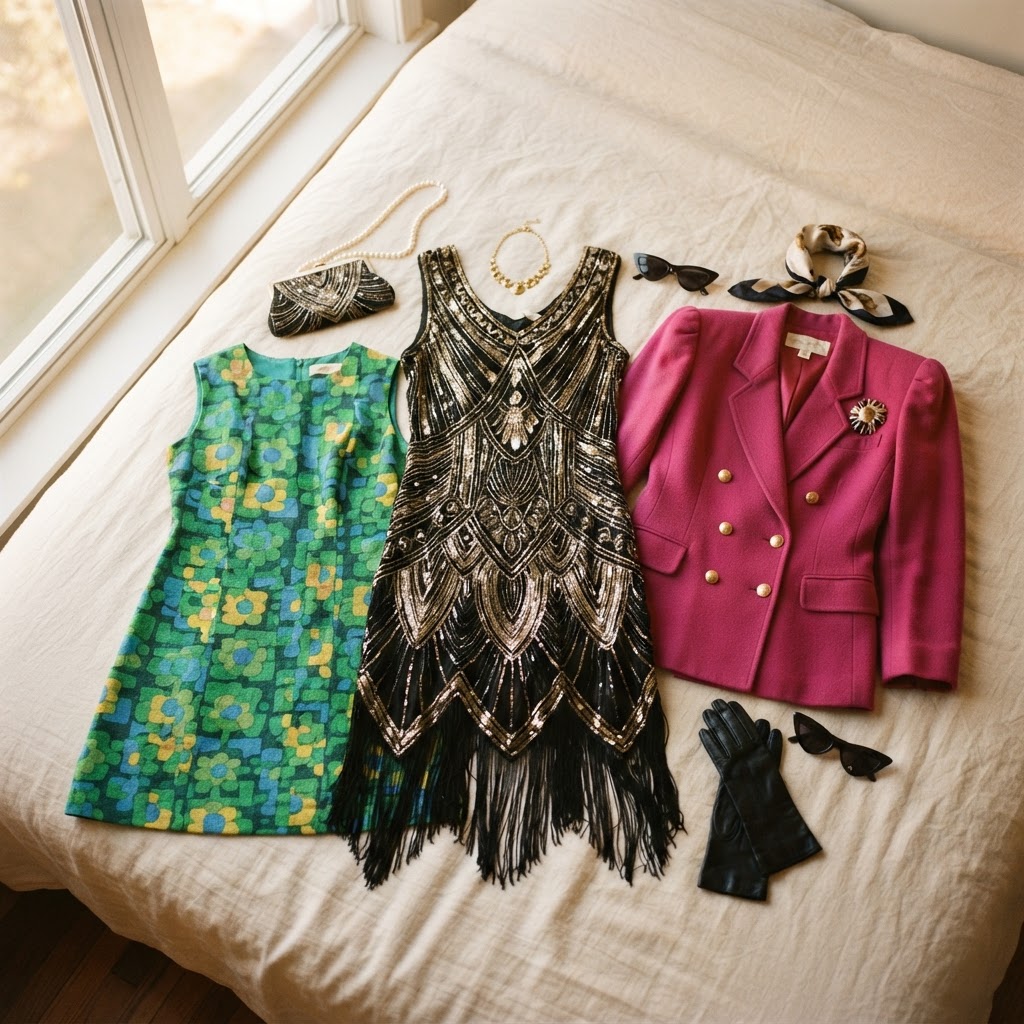
How to Photograph Vintage Clothing for Resale: Lighting and Styling Tips That Sell
A stunning photograph can mean the difference between a vintage gem sitting in your closet and it finding its perfect new home. Whether you're listing a beaded 1920s flapper dress or a grunge-era 1990s leather jacket, the way you present your pieces tells a story before a single word is read. Master these lighting and styling techniques to make your vintage listings irresistible.
Selling vintage clothing online is as much about visual storytelling as it is about the garment itself. Buyers can't touch the fabric, check the drape, or try it on — so your photographs have to do all of that work for them. The good news? You don't need a professional studio or expensive gear to take photos that convert browsers into buyers. You just need the right techniques, a little patience, and an eye for detail.
Understanding Light: Your Most Powerful Tool
When it comes to photographing vintage clothing, natural light is your best friend. Soft, diffused daylight — the kind you find near a large north-facing window on an overcast day — flatters fabric, reveals true color, and brings out texture without harsh shadows. Direct sunlight, on the other hand, creates blown-out highlights that can obscure embroidery, beading, or delicate weave patterns.
If you're shooting indoors, position your garment within two to three feet of a window and use a white foam board or reflector on the opposite side to bounce light back and fill in shadows. This simple two-light setup (window + reflector) mimics a professional photography studio at virtually zero cost.
For evening or low-light shoots, invest in a pair of affordable LED softbox lights or ring lights. Avoid using your phone's flash — it flattens the image, distorts color, and erases the very texture that makes vintage clothing so compelling. Warm-toned bulbs (around 3200K) work beautifully for woolens, tweeds, and anything from the 1940s or 1950s that has a rich, cozy quality. Cooler daylight-balanced bulbs (5500K–6500K) are better for crisp 1980s power suits or sleek 1990s minimalist pieces.
Choosing Your Background
The background of your photo should frame the garment, not compete with it. Neutral backgrounds — white, off-white, cream, light gray, or natural wood — are the gold standard for marketplace listings because they keep the focus on the clothing and photograph consistently across your entire shop.
That said, era-appropriate backgrounds can elevate your listing from a product photo to a mood board. A 1970s boho maxi dress photographed against a sun-drenched adobe wall tells a richer story than the same dress on a white sheet. A sleek 1980s blazer draped over a mirrored vanity evokes the decade's glamour instantly. Use these atmospheric backgrounds for your hero shot (the main listing image), then follow up with clean, neutral close-ups for detail shots.
Avoid busy wallpaper, cluttered rooms, or patterned rugs. The eye should travel straight to the clothing.
Flat Lay, Hanger, or Styled Model?
You have three main presentation options for vintage garments, and ideally, your listing should include all three.
Flat lay photography works beautifully for structured pieces like blazers, denim jackets, and pleated trousers. Lay the garment on a clean surface, smooth out every wrinkle, and shoot directly overhead with your camera parallel to the floor. Steam the piece beforehand — creases in a flat lay read as sloppiness, not vintage charm.
Hanger shots are the workhorses of vintage resale. Use a slim velvet hanger for knits and delicate fabrics, and a sturdy wooden hanger for heavier outerwear. Hang the garment against a plain wall or a clothing rack, and shoot at eye level. Tilt the hanger slightly toward the camera to give the image a sense of depth.
Styled model shots are the most powerful tool in your arsenal. A real body shows drape, fit, and proportion in a way no flat surface can replicate. If you can model the pieces yourself or enlist a friend, do it. Even a dress form or mannequin is better than a hanger for dresses, blouses, and tailored jackets. When using a dress form, make sure it's the right size for the garment — an ill-fitting dress form distorts the silhouette just as badly as a bad photograph.
Styling Tips by Decade
Styling your vintage pieces with period-appropriate accessories and props transforms a simple product photo into an aspirational image that resonates emotionally with buyers.
- 1920s–1930s: Think art deco geometry. A strand of pearls, a cigarette holder prop, a velvet chaise longue, or a gilded hand mirror. Lighting should be dramatic and moody.
- 1940s–1950s: Soft pin curls, red lipstick, structured handbags, and pastel props. Bright, cheerful lighting works perfectly.
- 1960s–1970s: Mod prints, round sunglasses, macramé wall hangings, record covers, and dried botanicals. Warm golden-hour light is ideal.
- 1980s–1990s: Cassette tapes, bold jewelry, neon accents, or clean architectural minimalism. High contrast lighting suits this era.
- 2000s–2010s: Polaroid cameras, urban backdrops, sneakers, and casual layering. Natural street-style light reads as authentic.
Don't over-style — one or two props maximum. The garment remains the star.
Detail Shots Are Non-Negotiable
Every vintage listing should include macro detail photographs of the following:
- Labels and tags (brand, care instructions, country of origin — these authenticate the piece and build buyer trust)
- Fabric texture (especially for luxurious materials like silk charmeuse, brocade, or angora)
- Closures (zippers, buttons, hooks — buyers want to see condition and functionality)
- Any flaws or wear (pilling, minor fading, loose threads — full transparency builds your reputation as a trusted seller)
Shoot detail shots with your camera or phone in portrait mode or use macro lens attachments to achieve that beautifully blurred background that makes texture pop. Always keep detail shots well-lit and in sharp focus.
Phone vs. Camera: Does It Matter?
Honestly? Less than you think. Modern smartphones — particularly the iPhone 14 Pro and Google Pixel series — shoot magazine-quality images in good light. The camera you have is always better than the camera you don't. What matters far more is lighting, composition, and preparation.
If you do want to level up, a mirrorless camera with a 35mm or 50mm prime lens gives you beautiful depth of field and color accuracy. But start with what you have, nail your lighting, and upgrade when your sales justify it.
Editing: Enhance, Don't Deceive
Light editing is essential. Heavy filtering is not. Use free tools like Lightroom Mobile or Snapseed to adjust exposure, contrast, and white balance. The goal is to make your image look like what the human eye would see in perfect lighting — not to alter the color of the garment.
This is a critical point: never edit out flaws or alter colors in a way that misrepresents the item. A disappointed buyer means returns, negative reviews, and damaged trust. Accurate color representation, especially for decade-specific hues like mustard yellow, avocado green, or dusty rose, is essential to a positive buying experience.
Conclusion
Great vintage photography is part craft, part storytelling, and part respect for the history stitched into every seam. When you take the time to light your pieces beautifully, style them thoughtfully, and document their details honestly, you're not just selling clothing — you're passing on a piece of cultural memory to someone who will treasure it.
At Ensemble, we believe every vintage piece deserves to be seen at its absolute best. Whether you're a first-time seller or a seasoned vintage curator, our marketplace is built to showcase your pieces to buyers who genuinely appreciate authentic fashion history. List your collection on Ensemble today, and let your photography do the talking.