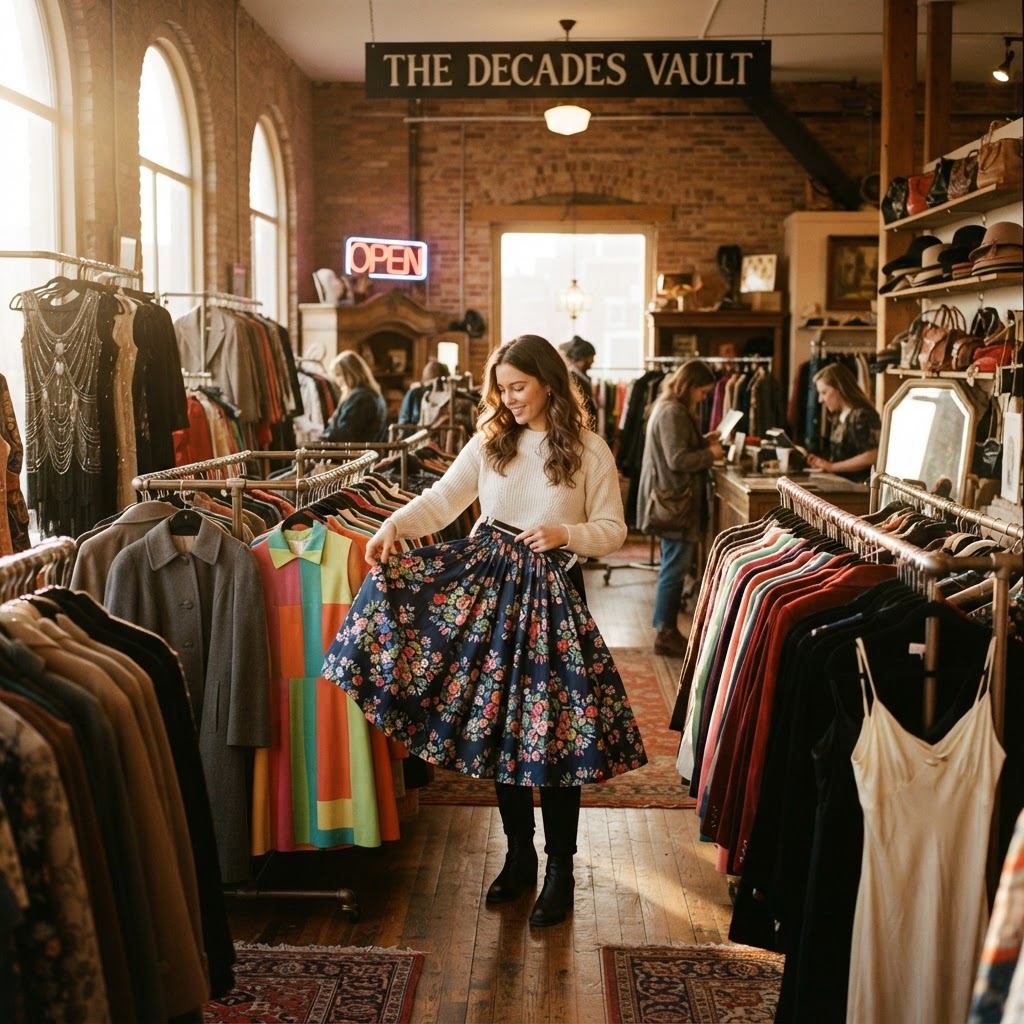
How to Find Your Personal Style Using Vintage Fashion from Every Decade
Your personal style isn't something you stumble upon in a single shopping trip — it's a living, evolving conversation between you and history. Vintage fashion gives you access to nearly a century of silhouettes, fabrics, and cultural moments to draw from. Here's how to use pieces from the 1920s through the 2010s to build a wardrobe that is completely, unmistakably yours.
Why Vintage Fashion Is the Ultimate Style Laboratory
Personal style is one of the most intimate forms of self-expression, yet so many of us feel stuck cycling through the same fast-fashion trends season after season. The secret that seasoned stylists and fashion insiders have always known? The past is the richest runway you'll ever walk. Vintage clothing offers an unparalleled archive of human creativity — every decade has its own distinct visual language, and learning to read that language is the first step toward dressing with true intention.
When you shop vintage, you aren't just buying a garment. You're acquiring a piece of cultural history, a hand-stitched argument for a particular way of living. And when you mix those arguments thoughtfully, you get something entirely new: you.
Start With a Decade Audit
Before you dive into the racks, take a moment to do what stylists call a decade audit. Pull up images from each era — the structured glamour of the 1930s, the utilitarian chic of the 1940s, the full-skirted optimism of the 1950s — and notice where your eye lingers. Don't overthink it. Your gut reaction to a silhouette is real data.
Ask yourself:
- Do I gravitate toward clean, geometric lines (1920s, 1960s, 1990s minimalism)?
- Am I drawn to romantic, ornate details (1930s, 1970s bohemian, 1980s maximalism)?
- Do I love structured tailoring (1940s, 1980s power dressing, 2000s sharp suiting)?
- Am I most alive in relaxed, rebellious cuts (1950s rockabilly, 1970s counterculture, 1990s grunge)?
Write down three decades that excite you most. These become your personal style anchors.
Decoding the Decades: A Quick Style Guide
The 1920s–1930s: Drama and Decadence Dropped waists, bias-cut gowns, intricate beadwork, and art deco motifs define this era. If you're drawn to these decades, you likely value theatrical elegance — getting dressed feels like a ritual. Look for pieces with architectural detail: a beaded collar, a silk charmeuse blouse, or a wide-leg palazzo pant that echoes the languid luxury of the period.
The 1940s–1950s: Structure Meets Sweetness Wartime rationing gave the 1940s a sharp, resourceful aesthetic — cinched waists, padded shoulders, and practical fabrics that somehow still looked polished. The 1950s softened that discipline into full skirts, kitten heels, and pastel twin sets. If these eras speak to you, you likely appreciate intentional dressing — nothing accidental, everything considered.
The 1960s–1970s: Freedom and Experimentation From mod mini-skirts and bold color-blocking in the early 1960s to peasant blouses, wide lapels, and earth tones in the 1970s, these decades celebrated personal liberation through clothing. If you're drawn here, you're probably a natural rule-breaker who values comfort and self-expression equally.
The 1980s–1990s: Power and Rebellion The 1980s were unapologetically loud — oversized blazers, neon colors, statement jewelry, and nothing subtle about any of it. The 1990s reacted with deliberate restraint: slip dresses, flannel shirts, minimalist suiting, and a studied nonchalance. Both decades, in opposite ways, were about owning your identity loudly. If you love either era, you're someone who dresses to make a statement.
The 2000s–2010s: Nostalgia in Real Time We're now far enough from Y2K and the 2010s to view them as genuine vintage territory. Low-rise denim, velour tracksuits, logomania, and later, the normcore and athleisure aesthetic of the 2010s — these decades were defined by pop culture saturation and the rise of personal branding. Pieces from this era work brilliantly as ironic or nostalgic anchors in a modern outfit.
The Art of Decade Mixing
Here's where personal style truly begins: mixing pieces across decades. The goal isn't a costume. It's a conversation between eras that creates something the original designers never imagined.
Some proven combinations to try:
- A 1940s tailored blazer over a 1990s slip dress with modern sneakers — structured meets languid meets contemporary.
- A 1970s bohemian blouse tucked into 1980s high-waisted trousers — volume on top balanced by a strong silhouette below.
- A 1960s mod shift dress worn with 2000s chunky platform sandals — geometric simplicity gets a maximalist update.
- A 1950s full circle skirt paired with a 1990s oversized band tee — feminine meets rebellious in one effortless look.
The rule? Let one piece from your anchor decade lead, and let supporting pieces from other decades follow. This prevents the outfit from feeling like a costume while still giving it historical depth.
Building a Capsule Wardrobe Across Eras
Once you've identified your style anchors, begin building a vintage capsule wardrobe — a small, intentional collection of pieces that reflect your personal aesthetic across multiple decades. Aim for:
- 2–3 statement outerwear pieces (a 1940s wool coat, a 1970s shearling, a 1980s oversized blazer)
- A foundation of versatile bottoms (1950s pencil skirts, 1970s wide-leg trousers, 1990s straight-leg jeans)
- Tops that layer beautifully (1930s silk blouses, 1960s mod turtlenecks, 2000s graphic tees)
- Accessories from unexpected decades (1920s art deco brooches, 1980s power earrings, 1990s minimalist belts)
Accessories are often the easiest entry point for vintage mixing — a single 1970s enamel brooch or 1960s mod handbag can transform a contemporary outfit without requiring a full commitment to an era.
Tips for Sellers: Helping Customers Find Their Style
If you're a seller on a vintage marketplace, your job isn't just to list inventory — it's to curate possibility. Here's how to help your customers discover their personal style through your shop:
- Describe the era's cultural context in your listings. Don't just say "1950s dress" — tell the story. What was happening in culture? What woman was this designed for? Context makes pieces aspirational.
- Suggest decade pairings in your product descriptions. "This 1940s blazer pairs beautifully with a 1990s slip dress or modern wide-leg trousers" helps buyers visualize the garment in a modern context.
- Photograph pieces styled with modern accessories. This bridges the gap between historical and contemporary, reducing the costume factor that intimidates new vintage buyers.
- Organize your shop by aesthetic, not just decade. Groupings like "Romantic & Dramatic," "Structured & Tailored," or "Relaxed & Rebellious" speak directly to personal style rather than historical knowledge.
Conclusion: Your Style Is a Living Archive
Personal style isn't a destination — it's an ongoing excavation. Every vintage piece you try on teaches you something new about what you value, how you want to move through the world, and which chapters of history feel most alive in your hands. The beauty of dressing across decades is that you are never limited to a single narrative.
At Ensemble, we believe that the most compelling wardrobes are built slowly, intentionally, and with genuine curiosity about the past. Whether you're a seller curating your shop or a buyer building your first vintage capsule, our marketplace is designed to help you find the pieces — and the decades — that feel like home. Explore our collections from the 1920s through the 2010s, and start writing your own sartorial history today.