How to Care for and Preserve Vintage Clothing at Home: A Seller's Guide to Keeping Your Pieces Pristine
Vintage clothing tells a story — but only if it survives long enough to be worn again. Whether you're curating a collection to sell on Ensemble or safeguarding treasured pieces between listings, proper care can mean the difference between a garment that lasts decades and one that crumbles in your hands. Here's everything you need to know about preserving vintage clothing at home.
Why Vintage Care Is Different
Modern clothing is engineered for convenience — machine-washable fabrics, colorfast dyes, and synthetic blends that bounce back from rough treatment. Vintage clothing, by contrast, was made in a different era with different standards, different fibers, and decades of wear already behind it. A 1940s silk blouse or a 1970s polyester jumpsuit each comes with its own vulnerabilities, and treating them like contemporary garments is one of the fastest ways to destroy their value — and their beauty.
As a seller on Ensemble, the condition of your pieces directly affects their resale price and buyer satisfaction. Investing a little time and knowledge into proper care isn't just about preservation — it's about protecting your inventory and your reputation.
Start with a Condition Assessment
Before you do anything else, examine each garment thoroughly. Lay it flat on a clean white surface in good lighting and look for:
- Fabric weakness or thinning: Hold the garment up to a light source. Sheer or fragile areas are prone to tearing during cleaning.
- Stains: Note the location, size, and likely origin. Old stains that have been set for years require different treatment than recent ones.
- Seam integrity: Check that stitching hasn't unraveled, particularly at stress points like underarms and waistbands.
- Odors: Musty, smoky, or mothball smells are common in vintage pieces and need to be addressed before storage or sale.
- Embellishments: Beading, sequins, embroidery, and appliqués are often fragile and may not survive wet cleaning.
Once you understand what you're working with, you can make informed decisions about how to proceed.
Know Your Fabrics
Different decades favored different materials, and fabric identification is the foundation of proper vintage care.
- 1920s–1940s: Expect silk charmeuse, rayon crepe, wool, and cotton. These natural fibers are beautiful but sensitive to heat, agitation, and moisture.
- 1950s–1960s: Full skirts often used tulle and crinoline; suits featured structured wool and early synthetics like nylon. Acetate linings are notoriously fragile.
- 1970s–1980s: Polyester, Qiana nylon, and blended fabrics dominate. These are more durable but can melt under high heat.
- 1990s–2000s: Lycra blends, velvet, and stretch fabrics are common. Check for elastane degradation, which can cause irreversible breakdown.
If care labels are missing — and they often are in pre-1971 garments, before labels became legally required in the US — do a burn test on a hidden thread or research the fabric by feel and drape.
Cleaning Vintage Clothing Safely
Hand Washing
For most stable vintage pieces in natural or synthetic fabrics, gentle hand washing is the safest wet-cleaning method. Use cool or lukewarm water — never hot — and a pH-neutral soap like Woolite or a dedicated textile wash. Submerge the garment and gently swish; never wring, twist, or scrub. Rinse thoroughly and press out excess water by rolling the garment in a clean towel.
Dry Cleaning
When in doubt, dry clean. Heavily structured garments (like 1940s suits or 1950s cocktail dresses), beaded pieces, silk velvets, and anything with unknown fiber content should go to a professional dry cleaner — ideally one with experience in vintage or couture clothing. Always mention the garment's age and any known vulnerabilities.
Spot Cleaning
For minor stains on otherwise clean pieces, spot cleaning can avoid the stress of full immersion. Use a clean white cloth and work from the outside of the stain inward to prevent spreading. Test any cleaning solution on an inconspicuous area first.
What to Avoid
- Never machine wash vintage clothing unless you are certain it is a sturdy, post-1980s synthetic with no embellishments.
- Avoid bleach entirely — even oxygen bleach can degrade fibers and strip color.
- Skip enzyme-based detergents, which can break down protein fibers like silk and wool.
Drying and Pressing
Air drying flat is the gold standard for vintage pieces. Hanging a wet garment causes stretching, especially in knits and bias-cut silhouettes. Lay the piece on a clean dry towel away from direct sunlight and heat sources.
When pressing, always use a press cloth between the iron and the fabric. Set the iron to the lowest appropriate temperature for the fiber and test on a hidden seam first. Steam can be a gentle alternative for removing wrinkles — a handheld steamer held a few inches from the fabric is often safer than direct contact ironing, particularly for delicate silks and velvets.
Storing Vintage Clothing Properly
How you store vintage pieces is just as important as how you clean them.
Use Acid-Free Materials
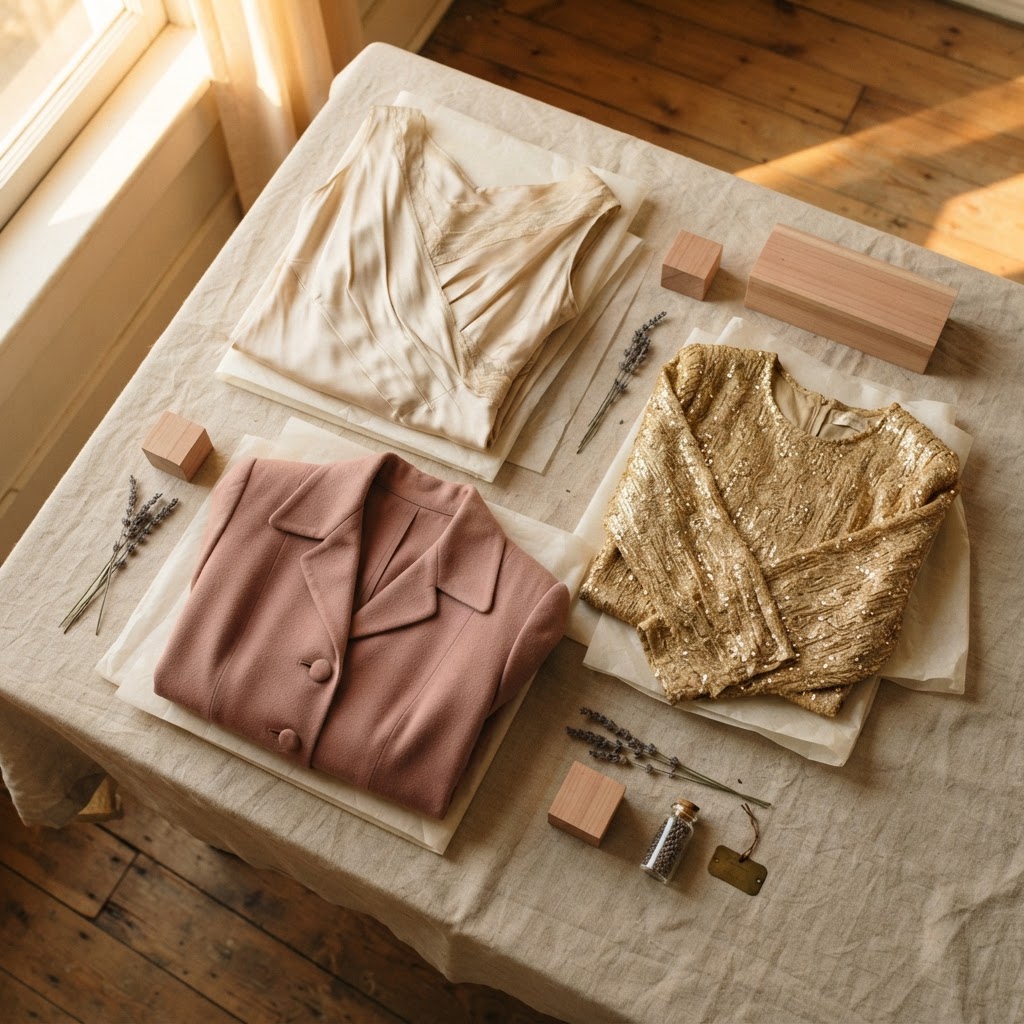
Acid is the enemy of vintage textiles. Regular cardboard boxes, tissue paper, and even some plastic bags release acids over time that yellow and weaken fibers. Invest in acid-free tissue paper, archival storage boxes, and unbleached muslin garment bags.
Avoid Hanging Long-Term
Hanging puts stress on seams and shoulders, especially for heavy beaded gowns, knits, and bias-cut dresses. Fold these pieces loosely with acid-free tissue tucked into the folds to prevent permanent creasing. Reserve hanging for structured jackets and coats, using padded hangers rather than wire.
Control the Environment
Store vintage clothing in a cool, dry, dark space with stable humidity — ideally 45–55% relative humidity. Attics and basements are notorious for temperature swings and moisture, both of which accelerate fabric deterioration. A climate-controlled closet or under-bed storage is far preferable.
Guard Against Pests
Moth larvae are a devastating threat to wool, cashmere, and silk. Rather than using traditional mothballs — which leave a persistent chemical odor that's nearly impossible to remove — opt for cedar blocks or lavender sachets, refreshing them every few months. For serious infestations, seal the garment in a plastic bag and freeze it at 0°F for 72 hours.
Odor Removal
Musty, smoky, or vintage-storage odors are among the most common complaints buyers raise. Here are a few safe methods:
- Airing out: Hang the garment in fresh air (not direct sunlight) for several hours. This alone resolves many mild odors.
- Baking soda: Place the folded garment in a sealed bag with an open container of baking soda for 24–48 hours.
- White vinegar mist: Lightly mist the garment with diluted white vinegar and allow it to air dry fully. The vinegar smell dissipates as it dries.
- Activated charcoal pouches: Seal with the garment for a few days to absorb stubborn odors without contact.
Avoid spraying perfume or fabric fresheners directly onto vintage fabric — the alcohol and chemicals can cause staining and fiber damage.
When to Call a Professional Textile Conservator
Some pieces are beyond DIY care. If you're dealing with extremely fragile textiles, significant tearing, complex stains on high-value pieces, or garments with historical significance, a professional textile conservator is worth the investment. The American Institute for Conservation (AIC) maintains a directory of certified conservators who specialize in clothing and textiles.
Conclusion
Caring for vintage clothing at home is part science, part patience, and part respect for the craftsmanship of the past. By taking the time to properly assess, clean, press, and store your pieces, you extend their lives — and the stories they carry — for another generation of wearers.
At Ensemble, we believe that every vintage garment deserves to be passed on in the best possible condition. When sellers take care of their inventory, buyers receive something truly special: clothing with history, integrity, and longevity. Whether you're listing a 1930s bias-cut gown or a 1990s designer blazer, these care practices will help you present your pieces at their absolute finest — and build the kind of seller reputation that keeps buyers coming back.