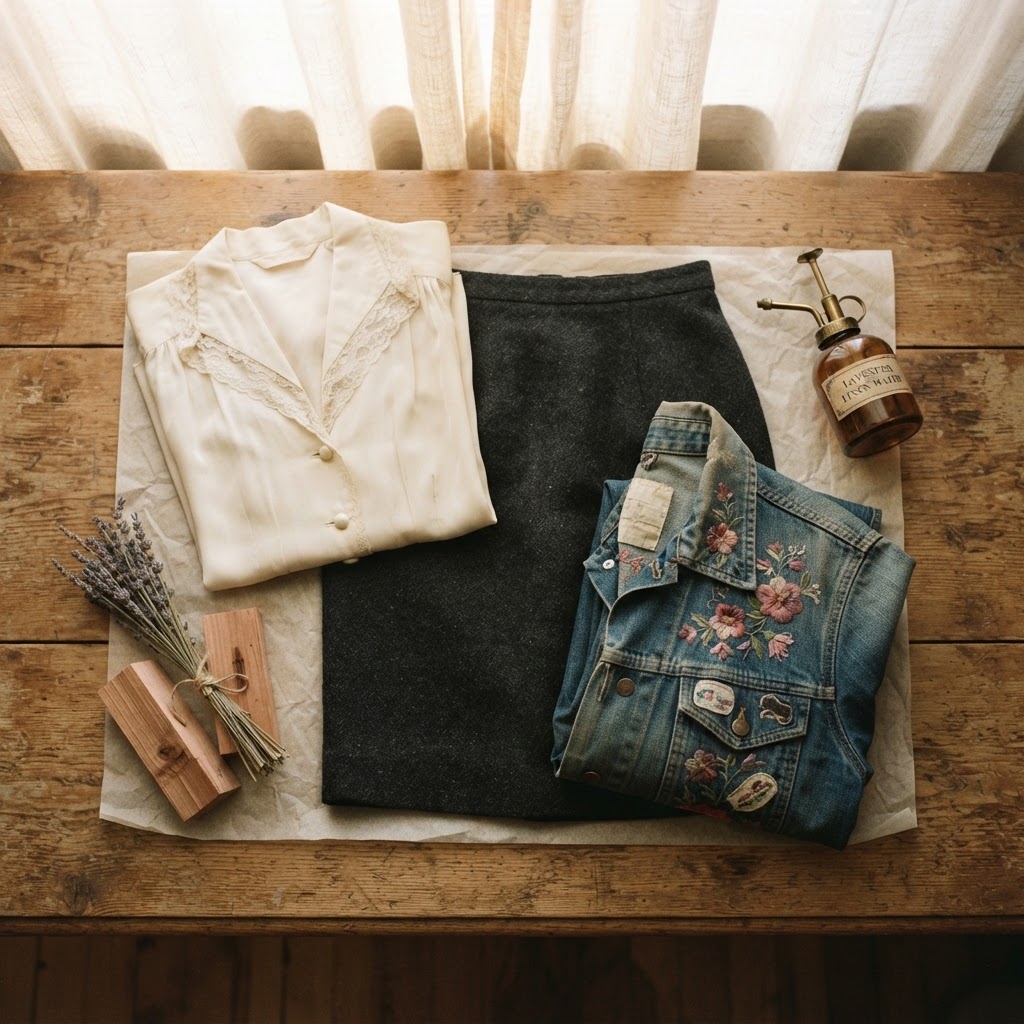
How to Care for and Preserve Vintage Clothing at Home: A Seller's Guide to Keeping Pieces in Their Best Condition
Vintage clothing is more than fabric and thread — it's wearable history. Whether you're a seasoned Ensemble seller or just starting to curate your closet, knowing how to properly care for and store your pieces can mean the difference between a garment that lasts another century and one that crumbles before its time. Here's everything you need to know to protect your investment and keep your listings looking their absolute best.
Why Proper Care Matters for Vintage Clothing
Vintage garments have already survived decades — sometimes nearly a century — of wear, washing, storage, and the general chaos of life. But that longevity doesn't mean they're invincible. In fact, the older a piece is, the more fragile its fibers, dyes, and construction can become. As a seller on Ensemble, the condition of your clothing is directly tied to its value, its appeal to buyers, and the story it tells. A well-preserved 1940s silk blouse or a pristine 1970s denim jacket commands far more attention — and a better price — than one that's been carelessly stored or harshly laundered.
The good news? You don't need a professional conservator or a climate-controlled vault to keep your vintage pieces in excellent shape. With a few mindful habits and the right materials, you can preserve garments at home with confidence.
Know Your Fabrics Before You Do Anything Else
The golden rule of vintage care is this: always identify the fabric before cleaning or storing a garment. Different materials have wildly different needs, and what saves a wool coat might destroy a rayon dress.
Here's a quick cheat sheet:
- Silk (common in 1920s–1950s pieces): Extremely delicate. Avoid direct sunlight, harsh detergents, and heat. Hand wash only in cool water with a gentle, pH-neutral soap — or better yet, dry clean.
- Wool and cashmere: Prone to moth damage and felting. Never machine wash. Hand wash in cold water or dry clean, and always store with cedar blocks or lavender sachets.
- Rayon and viscose (popular from the 1930s onward): Weakens significantly when wet. Dry cleaning is strongly recommended.
- Cotton and linen: Generally more forgiving, but older cottons can yellow or weaken with aggressive washing. Use gentle cycles or hand wash in cool water.
- Synthetics (nylon, polyester — common in 1960s–1980s pieces): More durable, but can still pill, snag, or warp under high heat. Low-temperature washing and air drying are your friends.
- Beaded or embellished garments: Always hand wash or spot clean. Machine washing can snap threads and send beads scattering.
If a garment has no care label — which is common for anything pre-1970s — err on the side of caution and dry clean or spot clean only.
The Right Way to Wash Vintage Clothing
When washing is necessary, gentle is always the operative word. Here are best practices for home laundering:
- Test for colorfastness first. Dampen a hidden corner of the fabric and press it against a white cloth. If dye transfers, the garment is not colorfast and should be dry cleaned.
- Use pH-neutral or vintage-specific detergents. Products like Eucalan or Woolite are popular choices. Avoid anything with bleach, optical brighteners, or enzymes, which can break down old fibers.
- Wash in cool or lukewarm water only. Hot water shrinks, warps, and weakens vintage textiles.
- Never wring or twist. Gently squeeze water out and support the garment's full weight. Wringing stresses seams that may already be fragile.
- Roll in a clean towel to absorb moisture, then lay flat to dry on a clean surface away from direct sunlight or heat sources.
For most delicate or valuable pieces, dry cleaning remains the safest option — especially for structured garments like 1950s cocktail dresses or tailored 1930s suits where shape retention is critical.
Removing Stains Without Causing Damage
Vintage stains are a fact of life, but aggressive stain removal can do more harm than the stain itself. Here's how to approach them:
- Act carefully, not quickly. Blot (never rub) fresh stains with a clean white cloth.
- Use distilled water for initial treatment on most stains before reaching for any product.
- For yellowing on white or cream fabrics, a soak in oxygen-based cleaner (like OxiClean Free) diluted in cool water can help — but test first.
- For perspiration stains, a diluted white vinegar solution applied gently can neutralize odor and lift light discoloration.
- For mystery stains on precious or fragile pieces, take them to a professional cleaner who specializes in vintage or antique textiles. It's worth the investment.
Never use chlorine bleach on vintage clothing under any circumstances.
Smart Storage: The Foundation of Preservation
How you store vintage clothing matters just as much as how you clean it. Poor storage is responsible for more garment damage than almost anything else.
Avoid plastic at all costs. Plastic bags and dry cleaning bags trap moisture, promote yellowing, and release chemicals that degrade fabric over time. Instead, use breathable cotton garment bags or wrap pieces in acid-free tissue paper.
For hanging:
- Use padded or wide wooden hangers for structured garments. Wire hangers distort shoulders and cause creasing.
- Never hang knits, beaded pieces, or heavily embellished garments — the weight will stretch and deform them. Fold these flat instead.
- Hang garments loosely so air can circulate and fabrics aren't compressed against each other.
For folding and drawer storage:
- Always fold along natural seam lines to minimize stress on the fabric.
- Place acid-free tissue paper between folds to prevent permanent creasing.
- Store flat in acid-free archival boxes for particularly fragile or valuable pieces.
Control your environment. Vintage clothing thrives in cool, dry, dark conditions. Avoid attics (too hot), basements (too damp), and anywhere with direct sunlight. A spare closet or under-bed storage in a climate-controlled room is ideal. Aim for consistent temperature and humidity — fluctuations are damaging over time.
Protect against moths and pests. Wool and cashmere are especially vulnerable. Use cedar blocks, lavender sachets, or cedar-lined storage rather than mothballs, which contain harsh chemicals that can damage fibers and leave odors nearly impossible to remove.
Handling and Display
If you display vintage clothing — whether for personal enjoyment or for photography for your Ensemble listings — handle pieces with care:
- Wash your hands before handling delicate items. Natural skin oils can transfer to fabric and cause long-term discoloration.
- For photography, use a clean, padded surface or a quality hanger and avoid pinning directly into fabric.
- Limit exposure to direct sunlight even during shoots. UV light fades dyes and weakens fibers surprisingly quickly.
- When steaming garments to remove wrinkles for photos or sale, hold the steamer several inches away from the fabric and never press directly onto delicate surfaces. Avoid ironing altogether on most vintage fabrics unless you're confident in the material and use a pressing cloth.
Repairs: When to DIY and When to Call a Pro
Minor repairs — replacing a button, re-stitching a loose hem with matching thread — can often be done at home if you're careful and confident with a needle. But for more significant repairs, consider whether the cost of professional alteration or restoration is worth it relative to the garment's value. A skilled seamstress or textile conservator can re-weave moth holes, stabilize fragile seams, and restore missing trims in ways that actually increase a piece's value and wearability.
When listing repaired items on Ensemble, always disclose any alterations or repairs honestly in your product description. Buyers appreciate transparency, and it builds the kind of trust that earns you repeat customers and five-star reviews.
A Final Word from the Ensemble Community
Vintage clothing connects us to the people who wore it before us — the seamstresses who stitched it, the women who danced in it, the decades that shaped it. When you take the time to care for and preserve these pieces properly, you're not just protecting a product. You're honoring that history and passing it on.
At Ensemble, we believe that every garment deserves a second life — and a third, and a fourth. The better you care for your inventory, the more compelling your listings become, the higher prices your pieces can command, and the more satisfied your buyers will be. It's a virtuous cycle that starts with something as simple as a padded hanger and a cedar block.
Happy preserving — and happy selling.