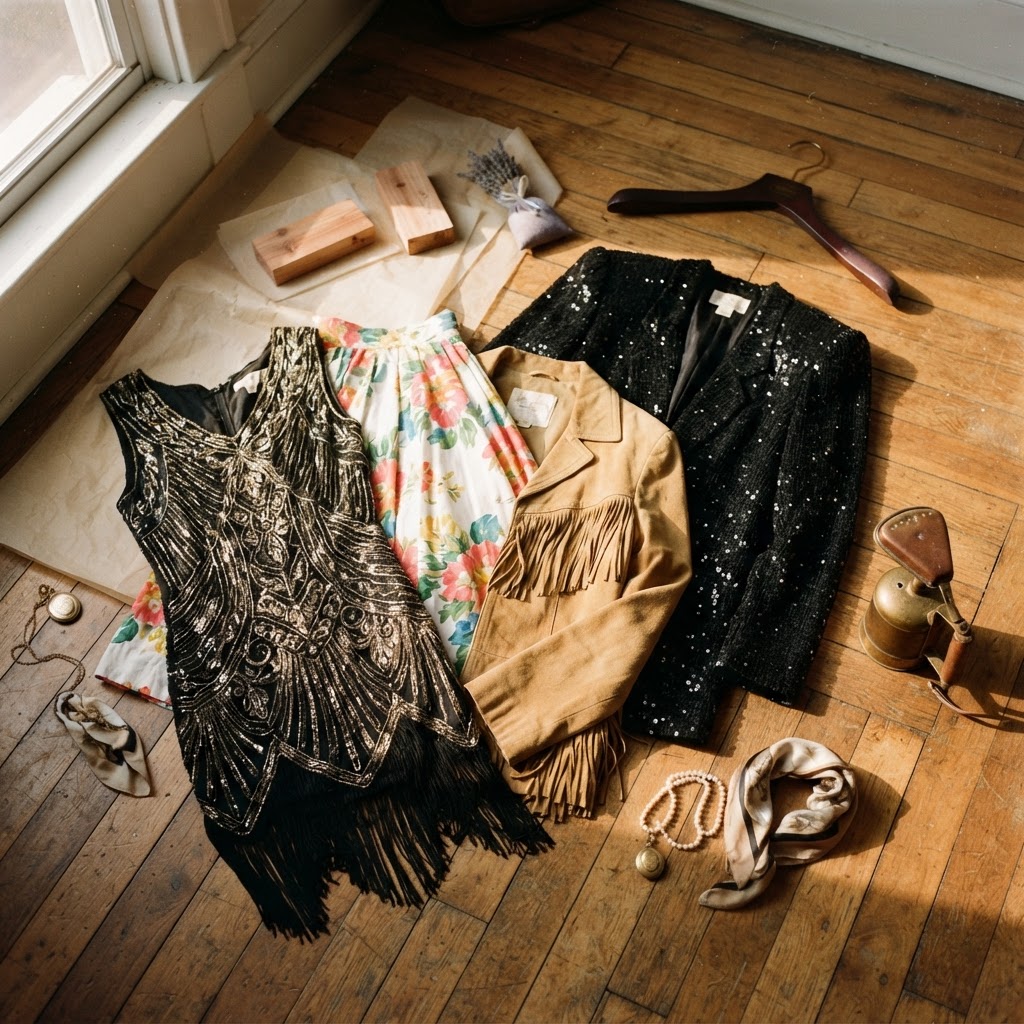
How to Care for and Preserve Vintage Clothing at Home: A Decade-by-Decade Guide
Vintage clothing is more than fabric and thread — it's wearable history. Whether you've just scored a 1940s silk blouse or a 1980s power blazer, knowing how to care for these treasures at home can mean the difference between decades more of wear and irreversible damage. Here's everything you need to know to keep your collection looking its best.
Why Vintage Clothing Needs Special Care
Vintage clothing is not like the fast fashion filling modern closets. The fabrics, dyes, construction methods, and hardware used across the decades from the 1920s through the 2000s vary enormously — and so do their vulnerabilities. A beaded 1920s flapper dress requires an entirely different approach than a nylon windbreaker from the 1990s. Understanding what you have is the first and most important step in preservation.
Before you wash, store, or even hang a piece, take a moment to identify the fabric and decade of origin. If a garment still has its care label (labels became standard in the U.S. only after 1971), that's a great starting point. For older pieces, you'll need to rely on fabric feel, construction details, and sometimes a little research.
Cleaning Vintage Clothing: The Golden Rules
Always Test Before You Treat
One of the most important rules in vintage care is spot testing. Before applying any cleaning agent — even water — dab a small, hidden area of the fabric with a damp white cloth. If color transfers or the fabric puckers, proceed with extreme caution or consult a professional conservator.
Hand Washing vs. Machine Washing
For most vintage pieces, hand washing in cool water is the safest method. Use a gentle, pH-neutral detergent designed for delicates. Avoid wringing or twisting the fabric; instead, gently press the water out and lay the garment flat on a clean towel to dry.
Machine washing is generally acceptable only for sturdy cotton and denim pieces from the 1970s through the 2000s, and even then, always use a mesh laundry bag, the delicate cycle, and cold water. Never put vintage clothing in a hot dryer — heat is one of the greatest enemies of aged fibers.
Dry Cleaning: Use Sparingly
While dry cleaning seems like the "safe" option, the harsh chemicals used in conventional dry cleaning can actually degrade delicate vintage fibers over time. Reserve it for heavily soiled pieces or structured garments like 1940s wool suits or 1960s cocktail dresses where hand washing would distort the shape. When you do dry clean, seek out a cleaner with experience handling vintage or antique textiles.
Fabrics by Decade: What to Watch For
- 1920s–1930s: Silk, rayon, and beaded embellishments. These are extremely fragile. Avoid soaking beaded pieces entirely — spot clean only.
- 1940s–1950s: Wool, gabardine, and early synthetics like rayon blends. Wool is prone to shrinking and felting; always use cool water and minimal agitation.
- 1960s–1970s: Polyester, nylon, and mod-era synthetics. These are more durable but can yellow over time. Wash in cool water to prevent setting stains.
- 1980s–1990s: Mixed fabrics, metallics, and bold prints. Check seams carefully — this era's fast construction sometimes means fragile stitching.
- 2000s–2010s: Low-rise denim, jersey knits, and embellished pieces. Generally more forgiving, but beading and screen prints still require gentle handling.
Storing Vintage Clothing the Right Way
Avoid Wire Hangers at All Costs
Wire hangers are the enemy of vintage clothing. They create stress points in shoulders and distort garment shapes over time. Instead, use padded hangers for blouses, dresses, and jackets. For heavier items like coats, opt for wide, contoured wooden hangers that distribute weight evenly.
To Hang or to Fold?
Not everything should be hung. Knits, bias-cut garments, and anything with stretch should be folded and stored flat to prevent distortion. When folding delicate pieces, place acid-free tissue paper between folds to prevent crease lines from becoming permanent.
For particularly fragile items — think 1920s lace or 1930s silk charmeuse — consider rolling them around a acid-free tube rather than folding at all.
The Right Environment
Vintage clothing thrives in cool, dark, and dry conditions. Avoid storing garments in attics or basements where temperature and humidity fluctuate wildly. Ideal storage conditions are around 65°F (18°C) and 45–55% relative humidity.
Light is a silent destroyer. UV rays cause dyes to fade and fibers to break down. Keep your vintage collection away from direct sunlight and fluorescent lighting whenever possible. Garment bags made from breathable muslin or cotton are ideal — never use plastic dry cleaning bags, which trap moisture and can cause yellowing and mildew.
Dealing with Moths and Pests
Moth damage is one of the most heartbreaking fates for a vintage wool or cashmere piece. Rather than using traditional mothballs (which contain toxic naphthalene and can damage fibers), opt for cedar blocks, lavender sachets, or cedar-lined storage drawers. Check your stored pieces every few months for signs of insect activity and air them out seasonally.
Handling and Wearing Vintage with Care
Clean Hands, Always
The natural oils and acids on your skin can transfer to fabric and cause long-term staining and degradation. Always handle fragile vintage pieces — especially those you're examining rather than wearing — with clean, dry hands or even cotton gloves.
Dress Thoughtfully
When putting on vintage clothing, be mindful of jewelry, belts, and accessories that might snag delicate fabrics. Zipper closures on older garments are often metal and prone to catching. Never force a zipper — if it resists, a tiny application of beeswax along the teeth can ease the mechanism without damaging the fabric.
Steaming vs. Ironing
Ironing vintage fabrics directly is risky. High heat can scorch delicate fibers, flatten embroidery, and melt early synthetics. A handheld garment steamer is a much safer option for removing wrinkles. If you must iron, always use a pressing cloth between the iron and the garment, and test on the lowest heat setting first.
When to Call a Professional
Some situations are beyond home care. If you're dealing with significant staining, torn seams on structured garments, failing beadwork, or heavily soiled antique lace, it's worth consulting a textile conservator. The American Institute for Conservation (AIC) maintains a directory of professional conservators who specialize in historic textiles.
Also consider professional help if you've acquired a piece of significant monetary or sentimental value that you want to preserve for future generations rather than for active wear.
Conclusion: Preserve the Story, Wear the History
Every vintage garment carries a story — the seamstress who stitched it, the person who first wore it, the decades it survived to reach your hands. Caring for these pieces properly isn't just about keeping them looking beautiful; it's about honoring that history and ensuring it continues.
At Ensemble, we believe that vintage fashion is meant to be lived in, not locked away. That's why every piece in our marketplace is carefully authenticated and described with the fabric and care details you need to keep it thriving. Whether you're building a wearable archive or hunting for that one perfect statement piece, we're here to help you find, wear, and preserve the clothes that tell the best stories. Explore our latest arrivals at Ensemble — because great style never goes out of fashion.