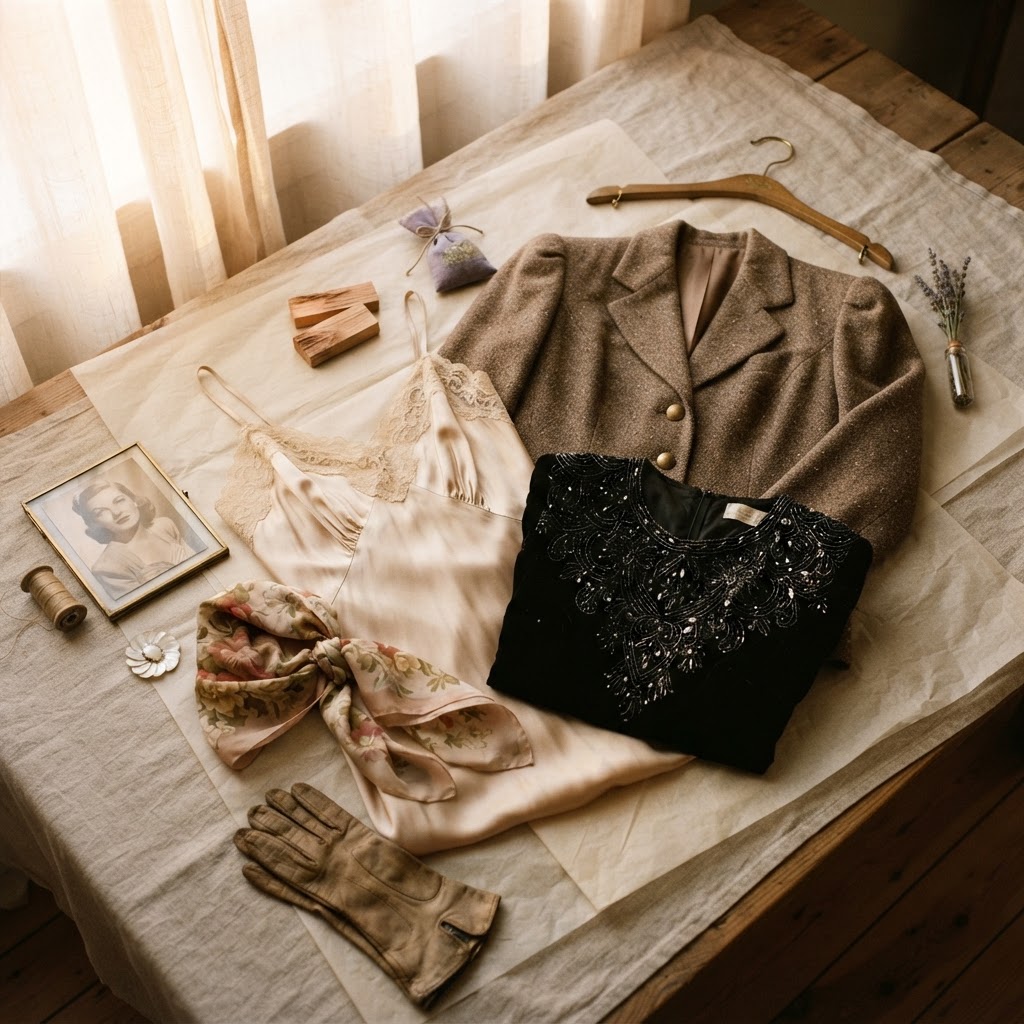
How to Care for and Preserve Vintage Clothing at Home: A Complete Guide
Vintage clothing carries decades of history in every fiber, seam, and stitch — but that history can unravel without the right care. Whether you've just scored a 1940s silk blouse or a 1980s power blazer, knowing how to properly clean, store, and preserve your pieces is essential. Follow this guide to keep your vintage wardrobe looking beautiful for decades to come.
Why Vintage Clothing Requires Special Care
Vintage garments aren't just old clothes — they're artifacts. Fabrics from the 1920s through the 1990s were often made with natural fibers, hand-stitching, or dyes that behave very differently from modern synthetic textiles. A machine-wash cycle that barely fazes a contemporary cotton tee can destroy a 1950s rayon dress beyond repair. Understanding what makes vintage clothing vulnerable is the first step toward protecting it.
The most common enemies of vintage clothing are moisture, light, heat, pests, and improper handling. Once you learn to defend against these forces, you'll be amazed at how long your pieces can last.
Know Your Fabrics
Before you do anything else, identify the fabric of each garment. This single step will inform every cleaning and storage decision you make.
- Silk (common in 1920s–1940s pieces): Extremely delicate, sensitive to water spots and perspiration. Always hand-wash or dry clean.
- Rayon and viscose (popular from the 1930s onward): Prone to shrinking and distorting when wet. Treat like silk.
- Wool and tweed (staples across every decade): Can felt and shrink with agitation or hot water. Always use cold water and gentle handling.
- Polyester and nylon (dominant from the 1960s–1980s): More resilient, but still vulnerable to high heat.
- Cotton and linen (timeless classics): Generally more forgiving, but older weaves may be fragile.
If a garment has no care label — which is common for anything pre-1970s, when labels became standardized — err on the side of extreme caution.
Cleaning Vintage Clothing the Right Way
Spot Cleaning First
Before attempting a full wash, always try spot cleaning stains with a gentle, pH-neutral soap and a soft cloth. Dab — never rub — the affected area. This minimizes stress on the fabric and reduces the risk of water marks on delicate materials like silk or velvet.
Hand Washing
For most vintage pieces, hand washing in cold water is the safest home method. Use a mild detergent formulated for delicates — look for products free of enzymes, bleach, and optical brighteners, which can damage aged fibers and vintage dyes.
- Fill a clean basin with cool water and a small amount of gentle detergent.
- Submerge the garment and gently swish — avoid scrubbing or wringing.
- Rinse thoroughly with cool water until no soap remains.
- Press (don't wring) excess water out by rolling the garment in a clean towel.
- Lay flat to dry on a drying rack or clean surface, reshaping as needed.
When to Dry Clean
Some pieces should always go to a professional dry cleaner — particularly structured garments like 1940s suits, beaded or embellished pieces, heavily lined coats, and anything made of silk velvet. When you take a piece in, tell the cleaner it's vintage so they can adjust their approach. A good dry cleaner will inspect the garment and advise you honestly.
What to Avoid
- Never use a washing machine on anything pre-1980s unless you are absolutely certain the fabric can handle it.
- Avoid tumble drying entirely for vintage clothing. Heat degrades fibers, melts delicate trims, and causes irreversible shrinkage.
- Skip bleach at all costs — even on white vintage pieces. Bleach weakens fibers and can cause yellowing over time.
Ironing and Steaming
Wrinkles are inevitable, but how you remove them matters enormously.
Steaming is almost always the safer option for vintage clothing. A handheld garment steamer relaxes wrinkles without the direct pressure and heat of an iron, reducing the risk of scorching or flattening delicate weaves. Hold the steamer a few inches from the fabric and work in gentle, sweeping motions.
If you must iron, always use a pressing cloth — a thin piece of cotton placed between the iron and the garment — to protect the fabric. Use the lowest heat setting appropriate for the fiber, and test on an inconspicuous area first. Never iron directly on velvet, beading, sequins, or printed designs.
Storing Vintage Clothing Properly
How you store vintage clothing is just as important as how you clean it. Poor storage is responsible for more damage than almost anything else.
Choose the Right Hangers
Avoid wire hangers entirely. They distort shoulder shapes and can rust, leaving stains on fabric. Use padded hangers for dresses, blouses, and jackets. For heavy garments like coats, wide wooden hangers distribute weight more evenly and prevent shoulder distortion over time.
Knitted or bias-cut garments should never be hung — the weight of the fabric will stretch them out of shape. Fold these pieces and store them flat.
The Case Against Plastic
Plastic garment bags trap moisture and release chemicals that can yellow and degrade fabrics over time. Instead, use breathable cotton garment bags or wrap delicate pieces in acid-free tissue paper. This allows air circulation while protecting against dust.
Acid-Free Storage
For long-term storage of particularly precious pieces, invest in acid-free boxes and tissue paper. Acidic materials cause fibers to break down and can create yellow staining. Acid-free tissue can also be stuffed gently inside garments to help them hold their shape in storage.
Environment Matters
Store vintage clothing in a cool, dark, and dry environment. Avoid attics (too hot and humid), basements (too damp and prone to mold), and anywhere with direct sunlight. UV light fades dyes and weakens fibers rapidly — even indirect light over long periods causes damage.
Aim for a consistent temperature and humidity level. If you live in a very humid climate, consider using silica gel packets in your storage boxes to absorb excess moisture.
Protecting Against Pests
Moth damage is one of the most heartbreaking fates for a vintage wool or cashmere piece. Cedar blocks and lavender sachets are natural deterrents that can be placed in drawers and storage boxes. Replace or refresh them every few months, as their effectiveness fades over time. Avoid mothballs — the chemical smell permeates fabric and is very difficult to remove.
Before storing any new acquisition, inspect it carefully for signs of insect activity and consider placing it in a sealed bag in the freezer for 72 hours to kill any larvae or eggs.
Handling and Wearing Your Vintage Pieces
Even how you handle your vintage clothing day-to-day makes a difference.
- Wash your hands before handling delicate pieces — natural oils and lotions transfer easily to fabric.
- Apply perfume, hairspray, and deodorant before dressing, not after, to minimize chemical contact with vintage fabrics.
- Rotate your pieces rather than wearing the same item repeatedly in quick succession. Giving garments time to rest allows fibers to recover.
- Mend small issues early. A loose button or a tiny seam opening is a quick fix; ignore it, and the damage multiplies.
Conclusion: Stewardship for the Long Haul
Caring for vintage clothing is an act of stewardship. Every piece you preserve is a small victory against the throwaway culture that dominates modern fashion. With a little patience and the right techniques, the garments you own today can remain beautiful and wearable for generations.
At Ensemble, we believe that vintage clothing deserves to be worn, cherished, and cared for — not locked away or lost to neglect. Whether you're building a wardrobe of 1960s mod dresses or curating a collection of 1990s streetwear, we're here to help you find pieces worth preserving. Browse our marketplace to discover authentic vintage clothing from every decade, sourced with care and ready for a new chapter in their story.