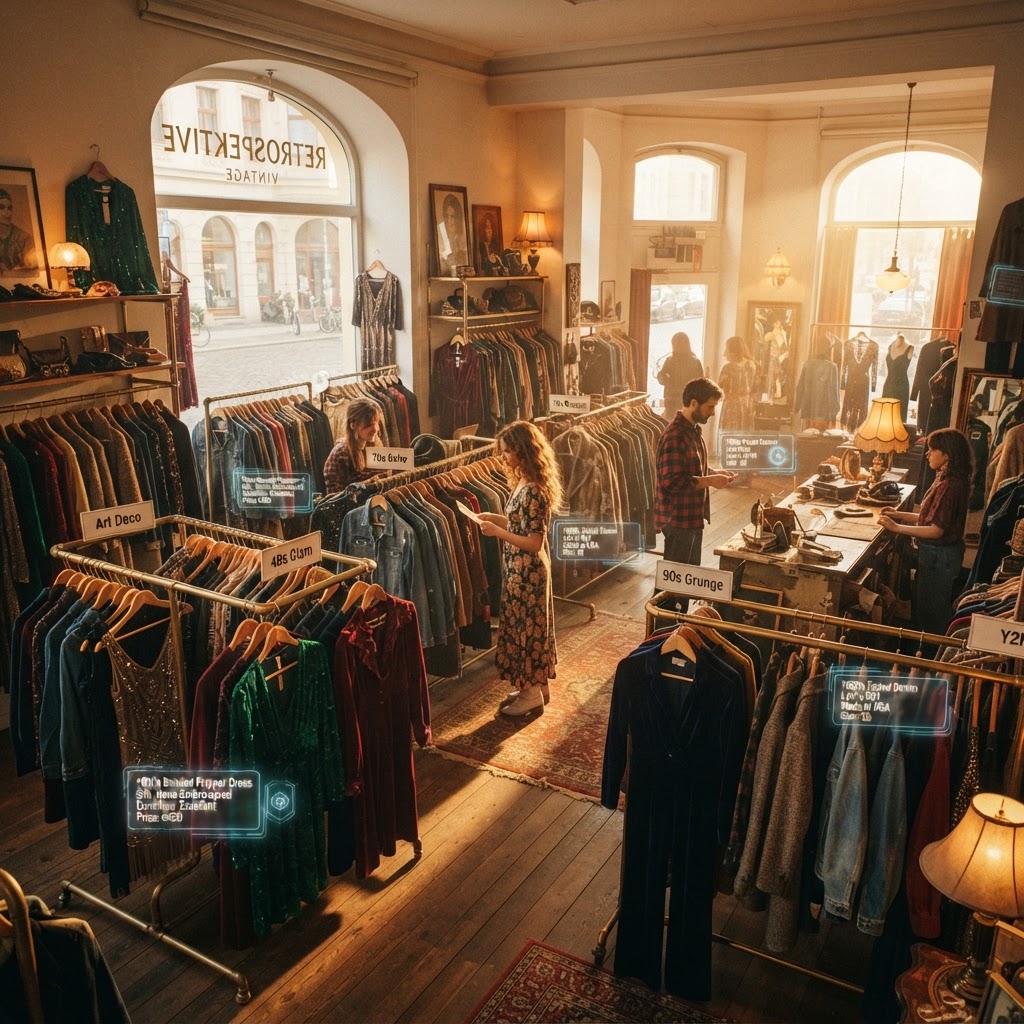
How AI Is Revolutionizing the Way People Buy and Sell Vintage Clothing
Artificial intelligence is quietly transforming the vintage fashion world, making it easier than ever to find, authenticate, and price that perfect piece from decades past. Whether you're a seasoned collector or a first-time thrifter, AI-powered tools are changing every step of the vintage buying and selling journey. Here's what you need to know to stay ahead of the curve.
The Vintage Fashion Market Meets the Digital Age
Vintage fashion has always had a certain magic to it — the thrill of unearthing a 1970s Halston wrap dress, a perfectly worn-in 1990s denim jacket, or a delicate 1940s silk blouse with its original buttons still intact. For decades, finding these treasures required patience, expertise, and a lot of weekend mornings spent digging through dusty racks at estate sales and thrift shops.
But the landscape is shifting. Artificial intelligence is now embedded in nearly every corner of the vintage marketplace, from the way sellers photograph and list items to the way buyers search, authenticate, and negotiate. And the results are genuinely exciting for anyone who loves clothes with a past.
AI-Powered Search: Finding Exactly What You're Looking For
One of the biggest frustrations in vintage shopping has always been discovery. How do you search for something when you don't know exactly what it's called? You might remember a style of collar from a photograph of your grandmother, or you've seen a type of print in a film but can't name it.
Visual search technology, powered by AI, is solving this problem. Tools now allow buyers to upload a photo — from a mood board, a runway image, or even a screenshot from an old movie — and find visually similar vintage pieces listed for sale. Platforms are training their models on millions of garments, learning to recognize silhouettes, fabric patterns, construction details, and era-specific design elements with remarkable accuracy.
This means buyers can search the way their brains actually work: visually, intuitively, and without needing to know that the blouse they want is technically called a "peasant-style pintuck voile top from the early 1970s."
Smarter Pricing for Sellers
Pricing vintage clothing has always been part art, part science. A seller has to weigh the brand, the decade, the condition, the current trend cycle, and the quirks of their particular audience — all at once. Get it wrong in one direction and you undersell a gem; get it wrong in the other and it sits in your closet for months.
AI pricing tools are now helping sellers make more confident decisions. By analyzing thousands of comparable sales across multiple platforms, these tools can suggest a competitive price range based on real market data. Some tools even track trend velocity — identifying which eras and styles are gaining momentum on social media before the demand spike hits the marketplace.
For small sellers who don't have time to do hours of research per item, this is a game-changer. It levels the playing field between casual sellers and professional vintage dealers who have spent years accumulating market knowledge.
Authentication: Fighting Fakes with Algorithms
Authentication has long been one of the thorniest issues in vintage fashion. With the rise of fast fashion reproductions and deliberate fakes targeting collectors of high-value pieces — think 1960s Courreges, early Calvin Klein, or authentic 1980s Versace — buyers have had to rely heavily on personal expertise or expensive professional appraisals.
AI is beginning to change this, too. Machine learning models trained on authenticated garments can now analyze photos for telltale signs of era-accurate construction: the specific way a zipper was manufactured in a given decade, the font used on a care label before a certain year, the precise weave of a fabric that wasn't available until the 1980s. Some tools cross-reference label typography, stitching patterns, and hardware details simultaneously.
This doesn't mean AI authentication is infallible — a knowledgeable human eye is still essential for high-stakes purchases — but it adds a powerful first layer of verification that was previously unavailable to the average buyer.
Writing Listings at Scale
Anyone who has sold vintage clothing knows the hidden labor involved: measuring every garment, researching its provenance, writing a description that is accurate, appealing, and optimized for search. For sellers with large inventories, this can represent dozens of hours of work each week.
Generative AI writing tools are now being used to draft listing descriptions from minimal inputs. A seller can enter the brand, decade, condition, and a few key details, and an AI assistant will generate a polished, SEO-friendly description in seconds. The best implementations still require a human review — AI can occasionally hallucinate details or miss the nuance that makes a listing truly sing — but the time savings are substantial.
Some tools are going even further, using image recognition to auto-generate drafts directly from product photos, identifying garment type, probable era, notable features, and suggested styling notes without any manual input from the seller.
Personalization: The Endless Fitting Room
For buyers, one of the persistent anxieties of online vintage shopping is fit. Vintage sizing is notoriously inconsistent — a "size 12" from 1955 bears no relationship to a modern size 12 — and returns on vintage items are often not accepted. The result is a lot of hesitation at checkout.
AI-driven fit recommendation engines are addressing this head-on. By asking buyers to input their measurements once and storing that profile, these systems can flag when a listed garment's actual measurements (not its labeled size) are likely to work for that individual body. Some platforms are experimenting with virtual try-on technology, using body-mapped avatars to give buyers a rough visual sense of drape and proportion before purchasing.
This technology is still maturing, but its trajectory suggests that the guesswork around vintage fit is set to diminish considerably in the coming years.
The Human Element Isn't Going Anywhere
For all its promise, it's worth being clear about what AI cannot do. It cannot replace the curatorial instinct of a great vintage seller who truly understands fashion history. It cannot replicate the feeling of handling a garment — the weight of a 1930s crepe dress, the particular stiffness of an unworn 1980s leather jacket. It cannot capture the full story behind a piece: where it came from, who wore it, what moment in cultural history it represents.
The best use of AI in vintage fashion is as a tool that amplifies human expertise, not a replacement for it. Sellers who understand their inventory deeply will use AI to work faster and reach more buyers. Buyers who have developed a personal aesthetic will use AI to surface pieces they might otherwise have missed.
Vintage fashion is, at its heart, a deeply human pursuit — a conversation between the past and the present, conducted through cloth and cut and color. AI simply helps more people join that conversation.
How Ensemble Is Embracing the Future
At Ensemble, we believe that the future of vintage fashion is one where technology and expertise work hand in hand. Our marketplace is built for buyers and sellers who care about authenticity, history, and the irreplaceable quality of clothing made to last. As AI tools continue to evolve, we're committed to integrating the best of them into the Ensemble experience — smarter search, more confident authentication, and a personalized discovery process that helps you find the pieces that were always meant to be yours.
Whether you're listing a collection of 1950s swing dresses or hunting for the perfect 1990s minimalist blazer, Ensemble is where the past meets the possibilities of the future. Welcome to the new era of vintage.