From Thrift Store Finds to Global Marketplace: How Vintage Fashion Found Its Digital Home
Vintage fashion has always had devoted followers, but the rise of online marketplaces transformed a niche hobby into a global movement. Today, shoppers aren't just hunting for bargains — they're curating identities, investing in sustainability, and connecting with the craftsmanship of decades past. Here's how the landscape evolved, and why Ensemble is rewriting the rules.
The Vintage Revolution: A Brief History
For most of the twentieth century, buying vintage clothing meant one thing: digging through the musty racks of a local thrift store, hoping to unearth something extraordinary between a stained polyester blazer and a donated wedding dress. It was a treasure hunt — thrilling for the devoted few, but inaccessible to most.
Then came the internet, and everything changed.
The early 2000s saw platforms like eBay democratize secondhand selling, allowing anyone with a camera and a postal scale to reach buyers across the country. It was clunky, impersonal, and rife with misdescribed items, but it proved a fundamental truth: people everywhere were hungry for clothing with history. That hunger only grew.
By the 2010s, dedicated vintage and secondhand platforms began to emerge. Etsy carved out a space for handmade and vintage goods. Depop arrived with a social-media sensibility aimed squarely at Gen Z. ThredUp and Poshmark tackled the broader resale market. Each platform filled a niche, and together they signaled the dawn of what analysts now call the recommerce era — a fundamental shift in how consumers think about clothing ownership, value, and style.
Why Vintage Fashion is Having Its Biggest Moment Yet
The numbers are staggering. The global secondhand apparel market was valued at over $170 billion in 2023 and is projected to nearly double by 2028, according to ThredUp's annual resale report. What's driving this explosive growth?
Sustainability is a major factor. Fast fashion's environmental toll — mountains of textile waste, exploitative labor practices, staggering carbon emissions — has become impossible to ignore. Younger consumers in particular are voting with their wallets, choosing pre-loved garments over newly manufactured ones. Buying vintage isn't just stylish; it's a statement.
But sustainability alone doesn't explain the fervor. There's also the undeniable allure of individuality. In a world where algorithms push everyone toward the same trending silhouettes, vintage clothing offers an escape. A hand-stitched 1940s swing dress or a perfectly worn-in 1970s denim jacket cannot be replicated by a fast fashion giant. These pieces are, by definition, one of a kind.
Then there's the collector's dimension. Serious enthusiasts treat certain decades like art movements — the structured glamour of the 1950s, the psychedelic freedom of the 1960s, the disco decadence of the 1970s, the power-shouldered ambition of the 1980s. Each era tells a story about culture, politics, and identity, and wearing that history is its own form of scholarship.
The Problem with Existing Marketplaces
Despite the boom, most vintage marketplaces still leave serious buyers and sellers frustrated. Here's why:
Authenticity is a constant battle. Misrepresented items — modern reproductions listed as genuine vintage, incorrect decade attributions, exaggerated condition ratings — plague open-marketplace models. Without rigorous standards, buyers learn to distrust listings, and trust is the currency of any great marketplace.
Search and discovery are broken. Most platforms weren't built with the decade-specific nuances of vintage fashion in mind. Searching for "1930s bias-cut gown" on a general resale platform is an exercise in frustration, returning pages of modern interpretations and incorrectly dated pieces alongside genuine finds.
Community and education are absent. For a category so steeped in history, craft, and cultural context, the major platforms offer surprisingly little in the way of knowledge-sharing. New collectors have nowhere to learn how to date a piece by its zipper hardware, or understand why a particular 1960s mod shift dress commands the price it does.
Curation is nonexistent. Scroll through most vintage platforms long enough and the sheer volume of inventory becomes overwhelming. When everything is listed, nothing stands out. Great vintage deserves to be presented with the same care as gallery art — contextualized, authenticated, and celebrated.
What Makes Ensemble Different
Ensemble was built as a direct answer to these frustrations — a marketplace designed not just for the transaction, but for the entire experience of vintage fashion.
Decade-Anchored Architecture
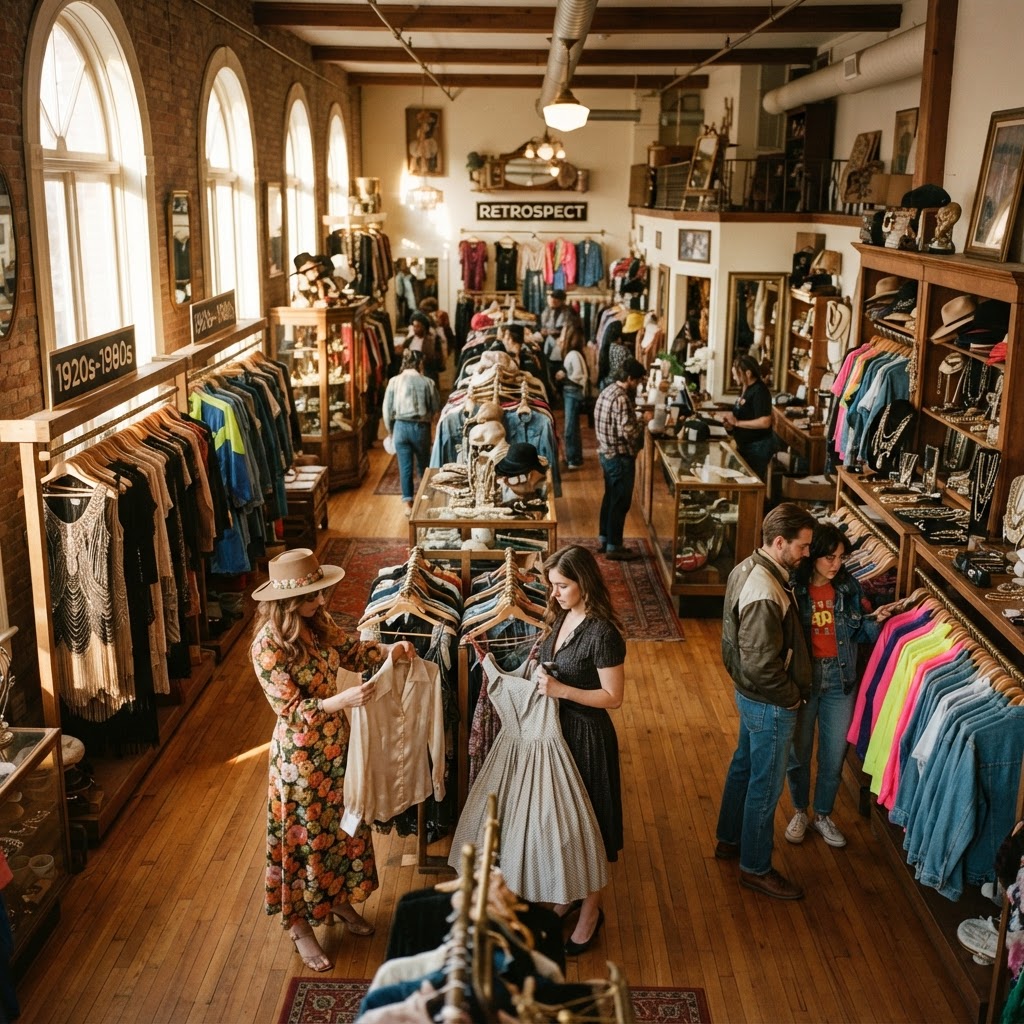
At Ensemble, every listing is organized and authenticated by decade, from the roaring 1920s through the defining decades of the 2000s and 2010s. This isn't a cosmetic feature — it's the backbone of how the platform thinks about clothing. Each decade has its own aesthetic fingerprint, construction techniques, fabric technologies, and cultural DNA. Ensemble's team of trained vintage specialists evaluates every item against these decade-specific criteria before it goes live.
This means when you browse the 1940s collection, every piece you see has been verified as genuinely of that era — not a 1990s reproduction, not a "vintage-inspired" contemporary piece, but the real thing. That commitment to accuracy is rare, and it matters enormously to serious collectors.
Authentication as a Standard, Not a Premium
Many platforms offer authentication as an add-on service reserved for high-value items. At Ensemble, authentication is the baseline. Every item — whether it's a $45 1980s band tee or a $450 1920s beaded flapper dress — goes through the same rigorous vetting process. Sellers receive detailed feedback on how to describe and date their pieces accurately, raising the quality of the entire ecosystem.
Curated Editorial Discovery
Ensemble's Decade Deep Dive content series — the very column you're reading now — is part of a broader editorial commitment. Great vintage deserves great storytelling. By pairing marketplace listings with rich cultural and historical context, Ensemble helps buyers understand not just what they're buying, but why it matters. This transforms a purchase into an education, and a shopper into a true collector.
A Community Built on Knowledge
Behind every great vintage piece is a community of people who know how to find it, date it, and style it. Ensemble fosters that community through seller profiles, collector spotlights, decade guides, and an active forum where experts and newcomers share knowledge freely. The goal is to lower the barrier to entry for new enthusiasts while deepening the expertise of experienced collectors.
The Decades Ahead
It's worth pausing to appreciate just how much territory the vintage fashion world now covers. The 1920s pieces entering the market today are over a century old — fragile, rare, and extraordinary. Meanwhile, Y2K fashion from the early 2000s has matured into a fully recognized vintage category, with collectors paying serious money for period-perfect low-rise jeans and logo-heavy accessories.
This expanding timeline means the vintage market will only grow more complex, more diverse, and more in need of the kind of structured, knowledgeable curation that sets great platforms apart from digital flea markets.
The brands and marketplaces that will thrive in this environment are those that treat vintage fashion with the respect it deserves — as cultural artifact, as sustainable choice, as wearable art, and as a living connection to the humans who made and wore these clothes before us.
Conclusion
The rise of vintage fashion marketplaces has been one of the more quietly revolutionary stories in retail over the past two decades. What began as niche hobbyism has become a mainstream movement reshaping how the world thinks about clothing, consumption, and identity.
Ensemble exists at the center of that movement — not as another aggregator of secondhand goods, but as a dedicated home for authentic vintage fashion, decade by decade, story by story. Whether you're a first-time buyer curious about the 1970s or a seasoned collector hunting for a pristine 1950s couture piece, Ensemble is built for you.
Because every decade had a style. And every style deserves to be found.