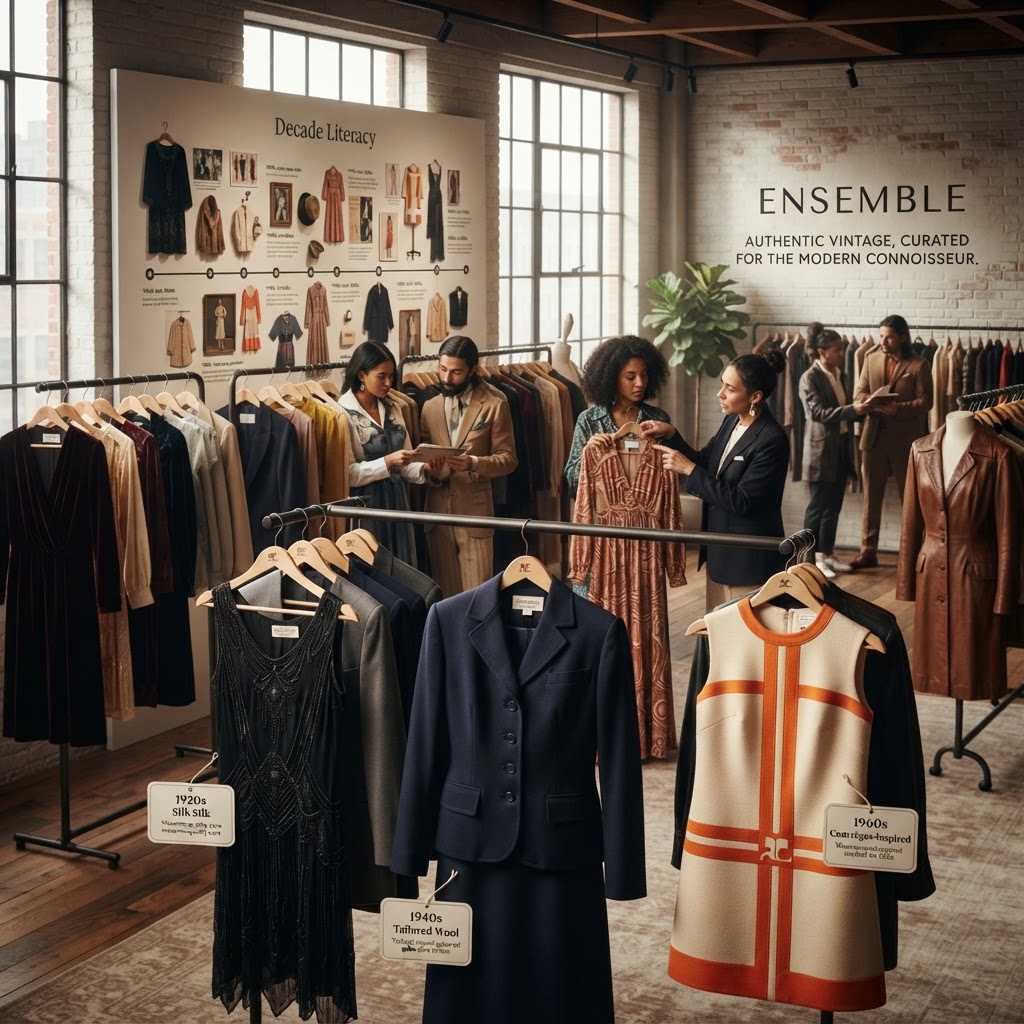
From Thrift Store Finds to Digital Gold: How Vintage Fashion Marketplaces Are Rewriting the Rules of Style
Vintage fashion has exploded from a niche hobby into a multi-billion-dollar global movement, and digital marketplaces are at the center of it all. But not every platform is created equal — and discerning shoppers are starting to notice the difference. Enter Ensemble, the curated destination for authentic vintage clothing that's changing what it means to shop secondhand.
The Vintage Boom: A Movement, Not a Moment
Something remarkable has happened to the way we think about clothing over the past decade. What was once considered the territory of thrift-store diehards and costume enthusiasts has become one of the most dynamic sectors in all of fashion. Vintage clothing — broadly defined as garments from decades past that carry the craftsmanship, silhouette, and spirit of their era — has gone fully mainstream.
According to recent industry research, the global secondhand and vintage apparel market is projected to reach $350 billion by 2027, growing three times faster than the broader fashion industry. Gen Z and millennial consumers are leading the charge, driven by a potent combination of environmental consciousness, nostalgia, and an appetite for individuality that fast fashion simply cannot satisfy. When everyone can walk into the same store and buy the same blouse, the appeal of owning something genuinely one-of-a-kind becomes irresistible.
But the vintage boom didn't happen in a vacuum. It was enabled — and accelerated — by the rise of digital vintage marketplaces that made it possible to browse thousands of carefully sourced garments from the comfort of your couch.
How Digital Platforms Changed the Game
Before the internet, hunting for vintage meant weekend mornings at estate sales, dusty racks at Goodwill, and the occasional lucky find at a flea market. It was time-consuming, geographically limited, and deeply serendipitous. You either lived near a great vintage district or you didn't.
The first wave of online resale platforms changed all that. Sites like eBay in the late 1990s gave sellers a global audience, and buyers suddenly had access to vintage inventory from across the country — and eventually, the world. It was revolutionary, if imperfect. Listings were inconsistent, authentication was nonexistent, and the experience of shopping felt more like a garage sale than a boutique.
The second wave brought more polish. Platforms like Etsy, Depop, and ThredUp introduced social discovery, cleaner interfaces, and community-driven curation. Sellers built followings. Aesthetic coherence started to matter. The idea that vintage shopping could be beautiful began to take hold.
But with growth came new problems. As these platforms scaled, quality control collapsed. The word