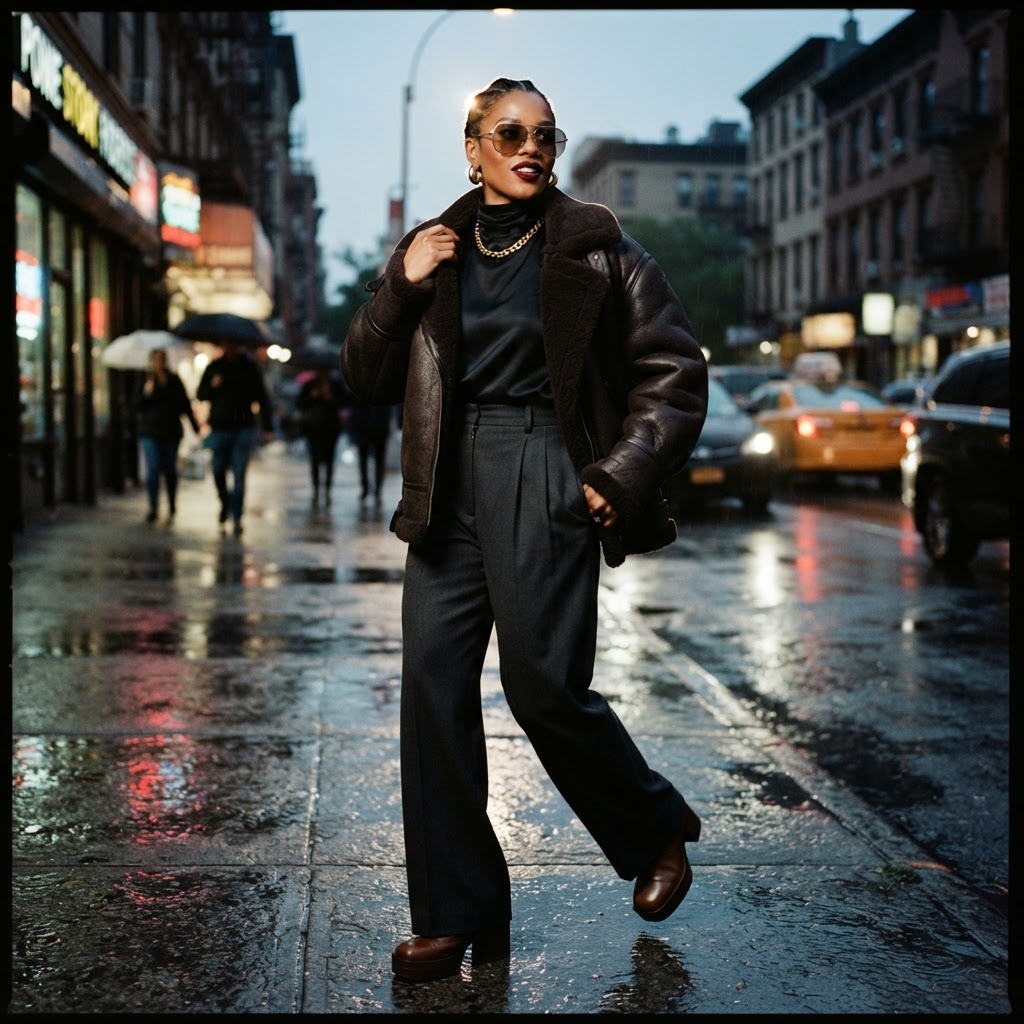
From the Block to the Runway: The History and Cultural Impact of 1990s Hip-Hop Streetwear
Few style movements have reshaped global fashion as radically—or as permanently—as the streetwear born from 1990s hip-hop culture. What started as self-expression on the corners of Compton, Harlem, and Brooklyn became a multi-billion-dollar aesthetic force that still drives runways and resale markets today. At Ensemble, we dig into where it all began and why these pieces remain some of the most coveted vintage finds on the market.
The Streets as Runway
Before Instagram mood boards and algorithmic trend cycles, there was the block. In the early 1990s, young Black and Latino men and women in cities across America were constructing a visual language entirely their own. This was not fashion handed down from European houses or department store catalogs—it was self-determined style, assembled from sportswear brands, military surplus, and workwear, worn in ways that defied the original intentions of their manufacturers. A Carhartt chore coat, built for laborers, became an emblem of urban cool. A Champion reverse-weave hoodie, designed for college athletics, was transformed into a statement piece.
Hip-hop was the cultural engine driving all of it. As rap music moved from underground block parties to mainstream radio, the artists became the tastemakers. What Notorious B.I.G. wore in a music video, what TLC rocked in a photo shoot, what Tupac threw on for a court appearance—these images circulated through magazines like The Source and Vibe, functioning as the street-level style bibles of a generation.
The Big Labels and What They Meant
Certain brands became synonymous with 1990s hip-hop identity, and understanding them is essential to appreciating the era's vintage pieces today.
Tommy Hilfiger occupies a unique and somewhat ironic place in this history. Designed originally for a preppy, yacht-club demographic, Hilfiger's bold color-blocked pieces and prominent logo branding were adopted by hip-hop artists who wore them oversized, layered, and loud. When Aaliyah appeared on TRL draped in Tommy, or when the Wu-Tang Clan name-dropped the brand, it triggered a cultural crossover that sent Hilfiger's sales soaring. The brand's rugby shirts, logo tees, and varsity jackets from this period are now highly collectible.
FUBU—For Us, By Us—represented something different and arguably more powerful: economic and cultural ownership. Founded by Daymond John in Hollis, Queens, FUBU was explicitly created by Black entrepreneurs for the hip-hop community. Its oversized jerseys and embroidered logos were declarations of independence. Wearing FUBU wasn't just a fashion choice; it was a statement of solidarity and self-sufficiency.
Polo Ralph Lauren, particularly the Lo-Life subculture rooted in Brooklyn, offered yet another angle. The Lo-Lifes were a collective of young men who shoplifted and collected Ralph Lauren Polo pieces with almost religious devotion, mixing high-end American heritage fashion with street credibility. Their influence helped cement the oversized Polo rugby and the iconic Polo Sport line as cornerstones of '90s hip-hop fashion.
Other essential brands of the era include Karl Kani, Cross Colours, Phat Farm (founded by Russell Simmons), ENYCE, and the sportswear giants Nike, Adidas, and Timberland—whose 6-inch wheat boot became perhaps the single most iconic footwear symbol of the decade.
Silhouettes, Fabrics, and the Art of Wearing It
The 1990s hip-hop aesthetic was defined by specific silhouette choices that were deeply intentional, not accidental. Oversized everything was the dominant approach—baggy jeans worn low, XXL jerseys hanging past the hips, puffer jackets so voluminous they added a full body of girth. This was partly practical (hand-me-downs, shared wardrobes, freedom of movement) and partly philosophical (defying the fitted, restrictive clothing associated with corporate conformity).
Denim was ubiquitous, from JNCO's almost comically wide-leg cuts to Girbaud jeans with their distinctive strap detailing. Velour and velvet tracksuits introduced a luxurious texture to streetwear. Nylon windbreakers in bright colorways—particularly from Nike ACG and Starter—offered lightweight, logo-forward outerwear that photographed brilliantly.
Logomania was central to the aesthetic. Visible, large-scale branding served as a counter-narrative to the idea that luxury and prestige were reserved for the wealthy. Sporting a Tommy flag or a Polo pony in oversized form was both an aspiration and a subversion.
Accessories completed the picture: bamboo earrings, door-knocker hoops, Kangol bucket hats, Cazal frames, thick rope chains, Timbs, Air Force 1s, and the ever-present snapback cap, often worn sideways or slightly tilted.
Women in the Movement
No account of '90s hip-hop fashion is complete without centering the women who shaped it just as powerfully as their male counterparts. Salt-N-Pepa pioneered bold, colorful, body-confident dressing that mixed athletic wear with leather and metallics. Missy Elliott pushed into avant-garde territory, particularly with her inflatable trash bag suit in the