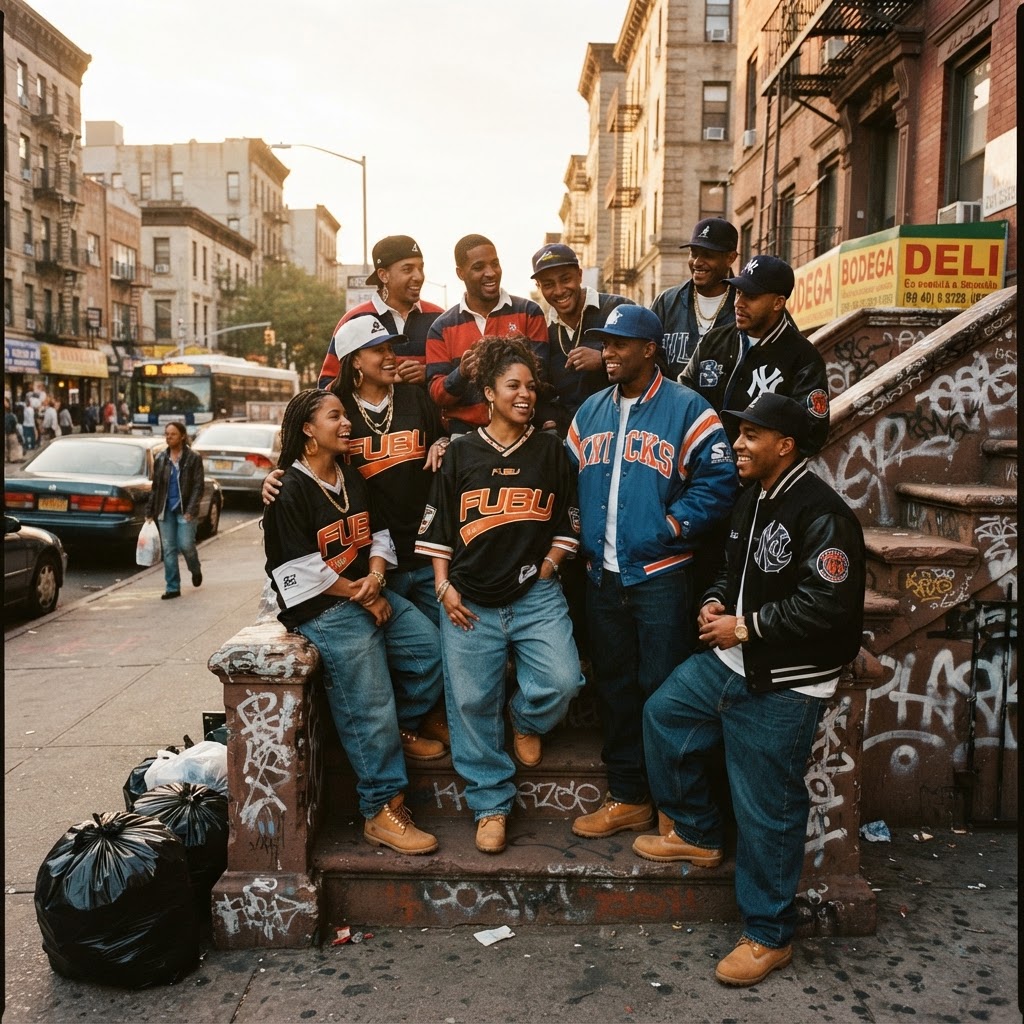
From the Block to the Runway: The History and Cultural Impact of 1990s Hip-Hop Streetwear
Few style movements have reshaped global fashion as profoundly as 1990s hip-hop streetwear. What began as a creative language born in urban neighborhoods became a billion-dollar aesthetic that still drives trends today. Whether you're a collector, a stylist, or simply a lover of authentic clothing, understanding this era is essential to appreciating how culture and fashion collide.
The Streets as a Runway
Long before luxury fashion houses were sending models down catwalks in oversized hoodies and logo-heavy tracksuits, the streets of New York, Los Angeles, Atlanta, and Compton were already writing the rulebook. 1990s hip-hop streetwear was never just clothing — it was a declaration of identity, economic aspiration, community pride, and artistic rebellion. It was fashion that talked back.
The story of this movement cannot be separated from the broader story of hip-hop itself. As rap music exploded from a regional underground scene into a mainstream cultural force during the late 1980s and early 1990s, the artists driving that wave brought their wardrobes with them. What MCs and DJs wore on album covers, in music videos, and on stage became as influential as the music itself.
The Building Blocks: Where the Style Came From
To understand '90s hip-hop fashion, you have to look at its roots. The aesthetic drew heavily from workwear and athletic wear — practical, durable clothing that was affordable and widely available. Brands like Carhartt, Dickies, and Timberland were adopted not for their outdoor utility, but because they signaled a kind of rugged authenticity. A pair of wheat-colored Timberland boots became one of the most iconic symbols of the era, equally at home in a rap video and on a construction site.
At the same time, sportswear labels became status symbols in an unprecedented way. FILA, Starter, Champion, and above all, Nike and Adidas, were elevated from gym equipment to cultural currency. The Nike Air Jordan line, launched in 1985 but reaching peak cultural saturation through the '90s, made sneakers into collectibles and objects of deep personal meaning. Wearing the right pair of shoes told the world who you were and where you stood.
The Rise of Hip-Hop-Specific Labels
Perhaps the most significant development of the era was the rise of fashion brands created by and for the hip-hop community. Cross Colours, founded in 1989 and exploding through the early '90s, was one of the first labels to market directly to young Black consumers with bold, Afrocentric color blocking and explicitly political messaging. Phrases like "Clothing Without Prejudice" were sewn directly into garments.
Karl Kani, FUBU (For Us By Us), Rocawear, and Sean John followed, each representing a different facet of Black entrepreneurship and creative expression. FUBU in particular became a symbol of economic empowerment — a brand started in a Queens basement that eventually generated over $350 million in annual sales. When LL Cool J wore a FUBU hat in a Gap commercial, it felt like a quiet revolution broadcast on primetime television.
These brands weren't just selling clothes. They were building ecosystems of cultural pride at a time when mainstream fashion largely ignored or tokenized Black consumers.
Silhouettes, Logos, and the Language of Excess
The visual vocabulary of '90s hip-hop streetwear was unmistakable. Oversized silhouettes reigned supreme — baggy jeans worn low on the hips, XXXL flannels left unbuttoned over white tees, and puffer jackets big enough to disappear into. This wasn't sloppiness; it was a deliberate aesthetic choice that communicated ease, confidence, and an unapologetic refusal to conform to the fitted, preppy styles of mainstream fashion.
Logomania was another defining feature. Wearing a visible logo — whether it was the Tommy Hilfiger flag, the Polo Ralph Lauren pony, or the Nautica sail — was a way of accessing and reinterpreting aspirational American imagery. Hip-hop artists famously "hijacked" preppy brands like Tommy Hilfiger and Ralph Lauren, wearing them in ways their designers never imagined and in doing so, transforming those brands entirely. Tommy Hilfiger sales surged after artists like Aaliyah and Snoop Dogg were seen in his clothes, and the brand was never the same again.
Velour tracksuits, Kangol bucket hats, Cazal eyeglasses, Dapper Dan's custom luxury knockoffs, and gold rope chains all became essential pieces of the era's iconography. Harlem tailor Dapper Dan deserves special recognition — his boutique on 125th Street created custom pieces that merged luxury house logos with hip-hop aesthetics years before those brands acknowledged the culture, essentially inventing what we now call high-fashion streetwear.
The Gender Dimension
While much of the conversation around '90s hip-hop fashion centers on male artists, women in hip-hop were equally influential in shaping the aesthetic. TLC, Missy Elliott, Lil' Kim, and Foxy Brown each brought distinct, powerful visual identities to the genre. TLC's gender-bending oversized styles and bold prints challenged conventional femininity. Missy Elliott's futuristic silhouettes — most memorably her inflatable trash bag suit in the "The Rain" video — pushed streetwear into avant-garde territory. Lil' Kim and Foxy Brown embraced hyperfeminine glamour and luxury branding as a form of reclamation and power.
These women proved that hip-hop fashion was not monolithic — it was a spectrum of expression that could be baggy or body-conscious, understated or maximalist, political or purely pleasurable.
Going Global
By the mid-to-late 1990s, hip-hop streetwear had crossed every border it encountered. In Tokyo, Harajuku style absorbed and remixed American hip-hop aesthetics into something entirely new. In London, grime's early seeds were being planted in a soil fertilized by American rap fashion. In Paris, designers were quietly studying the movement that would eventually push them toward the streetwear collaborations that define luxury fashion today.
The global spread of MTV and later the internet accelerated this cultural exchange. A teenager in Stockholm or Seoul could study the same music videos as a kid in Brooklyn, creating a worldwide community unified by shared aesthetic references. Denim, hoodies, snapback caps, and chunky sneakers became a universal language.
The Legacy: From Vintage Gem to High Fashion
Today, the influence of '90s hip-hop streetwear is everywhere — and it never really left. Virgil Abloh's work at Off-White and Louis Vuitton was a direct conversation with this era. Balenciaga's Triple S sneaker owes a debt to the chunky soles of '90s Nike and Reebok. Every luxury hoodie on a contemporary runway traces its lineage back to a South Bronx block in 1993.
But for those who lived it, or who discover it now through vintage hunting, there is something irreplaceable about the original artifacts. An authentic FUBU jersey from 1996, a Cross Colours tee from 1992, a Starter jacket in mint condition, or a pair of original Air Max 95s are not just clothing — they are primary sources, physical documents of one of the most important cultural movements of the twentieth century.
Find Your Piece of History at Ensemble
At Ensemble, we believe that authentic vintage clothing is a living connection to the past. Our curated collection of 1990s hip-hop streetwear includes verified original pieces from the labels, silhouettes, and cultural moments that defined a generation. Whether you're building a serious collection or looking for that one perfect statement piece, our marketplace connects you directly with sellers who understand and respect the history behind every garment.
The '90s were more than a decade — they were a revolution stitched into cotton, denim, and nylon. Wear the history. Find it at Ensemble.