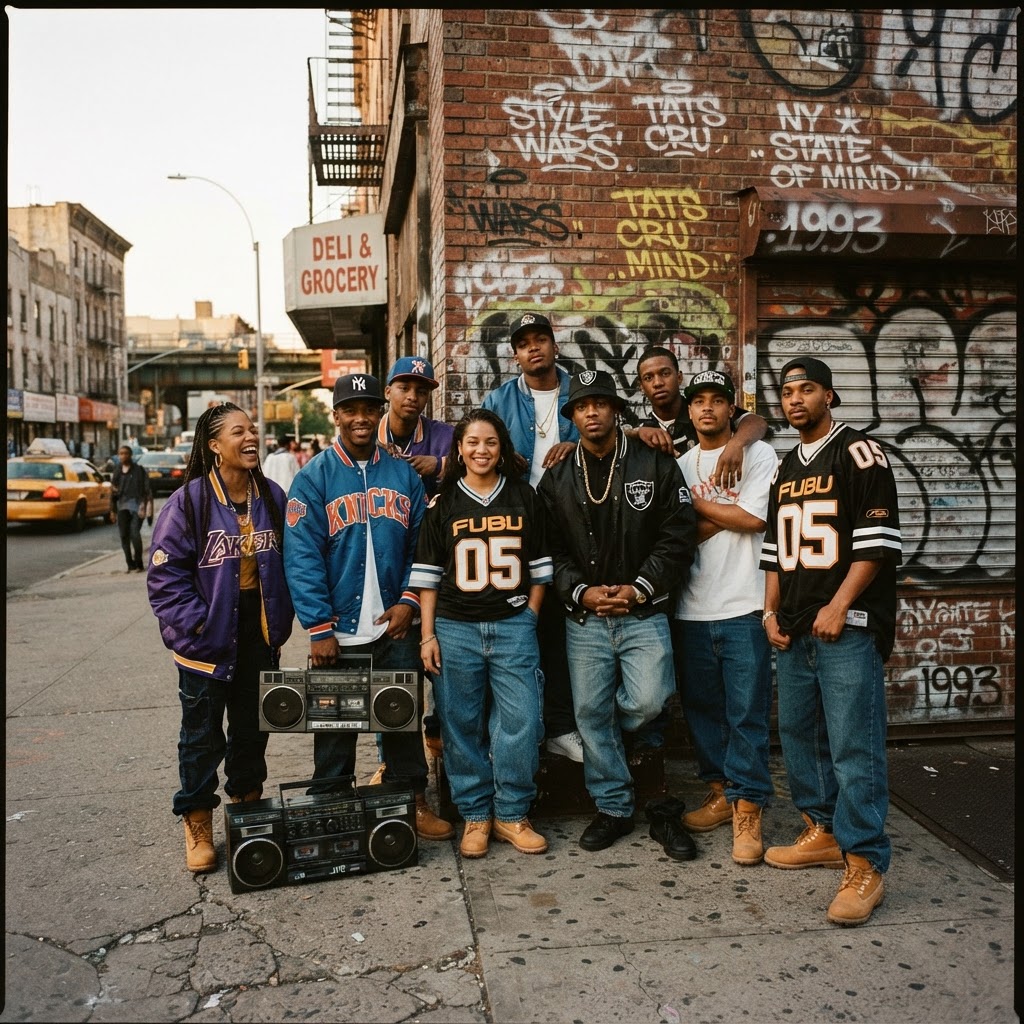
From the Block to the Runway: A Buyer's Guide to Authentic 1990s Hip-Hop Streetwear
Few fashion movements have reshaped global style as profoundly as 1990s hip-hop streetwear. Born in the housing projects and recording studios of New York, Los Angeles, and Atlanta, these looks went from the street corner to the cover of Vogue in under a decade. Whether you're a seasoned collector or a first-time vintage buyer, understanding the roots of this culture will help you shop smarter — and wear history with intention.
The Cultural Roots of Hip-Hop Fashion
To understand 1990s hip-hop streetwear, you have to go back to the block. Hip-hop emerged as a complete cultural system in the South Bronx during the late 1970s — encompassing DJing, MCing, breakdancing, and graffiti art. By the time the 1990s arrived, the music had gone platinum, and the fashion had followed. What artists wore on BET's Rap City or in the pages of The Source magazine wasn't styled by a fashion editor. It was authentic self-expression, and the world took notice.
This was fashion as identity politics. Young Black men and women used clothing to communicate wealth, neighborhood loyalty, artistry, and resistance all at once. The result was one of the most visually dynamic and culturally loaded wardrobes in modern history.
The Big Labels: Who Defined the Decade
Several brands became synonymous with 1990s hip-hop, and knowing them is essential for any serious vintage collector.
FUBU — which stands for "For Us, By Us" — was perhaps the defining label of the era. Founded in Hollis, Queens in 1992 by Daymond John and his friends, FUBU was a direct statement of Black entrepreneurship and cultural ownership. The brand's bold embroidered logos, hockey jerseys, and oversized denim became wardrobe staples. Authentic FUBU pieces from the mid-to-late 1990s are increasingly collectible today.
Karl Kani brought tailored sensibility to the oversized silhouette, pioneering the baggy jeans and color-blocked aesthetic that Tupac Shakur and Notorious B.I.G. both wore proudly. Cross Colours, founded in 1989 and peaking in the early 1990s, introduced bold Afrocentric color palettes and political messaging directly into mainstream fashion.
Of course, sportswear giants played an equally massive role. Nike Air Jordans, Adidas tracksuits, and Timberland boots transcended their athletic and workwear origins to become hip-hop uniforms. The Champion reverse weave hoodie and crewneck sweatshirt — long a staple of athletic departments — became street-level luxury before the brand was ever considered "heritage."
Silhouettes, Fits, and Key Pieces to Look For
The defining aesthetic of 1990s hip-hop streetwear was volume. Oversized everything. Baggy jeans worn low on the hips, often with a visible waistband of Calvin Klein or Tommy Hilfiger boxers. Flannel shirts worn open over white tees. Puffer jackets — particularly the iconic Polo Sport and Nautica styles — worn in vivid primary colors.
Here are the key pieces that define the era and what to look for when shopping vintage:
Starter Jackets: The satin-finish, snap-button Starter jacket was everywhere from 1990 to 1996. Originally a licensed NFL and NBA outerwear piece, it became so coveted in urban communities that stories of theft and violence followed certain colorways. Authentic Starter pieces from this era feature the original embroidered team logos and the distinctive Starter wordmark tag inside the collar. Look for clean satin with no fading and intact snaps.
Denim: Brands like JNCO, Girbaud, and Parasuco produced the wide-leg and carpenter-style jeans that defined the era's bottom half. Girbaud's signature velcro strap detailing is an instant authenticator. Expect some wear on the hem — that's not a flaw, that's provenance.
Hoodies and Crewnecks: Champion, Russell Athletic, and early Polo Ralph Lauren hoodies in deadstock or near-deadstock condition are grails for collectors. Look for the Champion C logo on the left sleeve — before the mid-2000s, this was a mark of quality construction, not a fast-fashion shortcut.
Footwear-adjacent accessories: While shoes fall outside traditional clothing, bucket hats, Kangol berets, and doo-rags were critical to completing the look. Vintage Kangol pieces — particularly in wool and velour — are highly sought after and relatively affordable.
Women in Hip-Hop Fashion: An Underappreciated Archive
The women of 1990s hip-hop created their own visual language that deserves far more collector attention than it currently receives. Artists like TLC, Lil' Kim, Missy Elliott, and Foxy Brown pushed the boundaries of gender, body politics, and color in ways that were genuinely avant-garde.
TLC's Left Eye popularized the look of oversized sports jerseys worn as dresses, layered over biker shorts or leggings — a look that is both deeply 1990s and utterly contemporary. Lil' Kim's designer-hip-hop fusion anticipated the luxury streetwear crossover by nearly two decades. Missy Elliott's Hype Williams-directed music videos introduced futurist silhouettes — inflatable suits, reflective fabrics, asymmetrical cuts — that feel more like wearable art than fashion.
When shopping vintage women's hip-hop pieces, look for biker shorts in neon or earth tones, crop tops with bold logo prints, platform sneakers, and slip dresses layered over long-sleeve shirts — a key TLC-era styling move.
The Luxury Crossover: When Hip-Hop Met High Fashion
By the mid-1990s, hip-hop artists had begun adopting — and subverting — luxury European fashion. Versace, Gucci, and Louis Vuitton logos appeared in rap lyrics before they appeared in most mainstream American wardrobes. This wasn't aspiration — it was provocation. Artists like Biggie and Jay-Z wore Coogi sweaters (an Australian knitwear brand almost unknown outside collector circles before hip-hop) and Iceberg graphic sweaters featuring cartoon characters, transforming niche items into cultural touchstones.
Ralph Lauren's Polo line was arguably the most significant luxury-adjacent story. The Lo Lifes, a Brooklyn-based crew, famously shoplifted Polo en masse and built an entire subculture around the brand — years before Ralph Lauren itself acknowledged hip-hop's role in saving its relevance. Vintage Polo Sport pieces, Snow Beach jackets, and Stadium collection items are now among the most aggressively collected vintage items in the streetwear market.
How to Authenticate and Date 1990s Pieces
Shopping vintage 1990s streetwear requires a trained eye. Here are a few practical tips:
- Check the tag: Union labels ("Made in USA" with a union bug) appear frequently on early 1990s pieces and are a strong indicator of age and authenticity. Many brands shifted production offshore by the mid-1990s, so domestic tags can help date a piece.
- Look at stitching quality: Authentic 1990s Champion, FUBU, and Starter pieces used dense, tight stitching on logos and emblems. Reproduction pieces often show looser embroidery or screen-printed imitations of what should be embroidered details.
- Examine the hardware: Snap closures on Starter jackets, zipper pulls, and metal grommets all aged in specific ways. Shiny, uniform hardware on a supposedly 30-year-old jacket is a red flag.
- Smell and handle the fabric: Vintage satin and nylon have a particular hand-feel that modern reproductions rarely replicate. There's no shame in trusting your tactile instincts.
Building Your Collection Intentionally
The best vintage collections tell a story. If you're drawn to 1990s hip-hop streetwear, think about the narrative you want to build. Are you focused on a specific city — Compton, Harlem, Atlanta? A specific year or album cycle? A particular gender expression within the culture? Focused collecting leads to more meaningful, more valuable archives.
Prioritize condition, authenticity, and cultural specificity over trend-chasing. A single immaculate FUBU jersey or an unworn pair of Girbaud jeans with the tags still attached will outlast a closet full of fast-fashion 1990s "inspired" pieces in both monetary and cultural value.
Conclusion: Shop the Archive at Ensemble
The 1990s hip-hop streetwear movement is one of the most significant — and most copied — aesthetic chapters in modern fashion history. Wearing an authentic piece from this era isn't just a style choice; it's an act of cultural preservation.
At Ensemble, our curated marketplace connects collectors and fashion lovers with authenticated vintage clothing from the 1920s through the 2010s. Whether you're hunting for a pristine Polo Snow Beach pullover, a deadstock Cross Colours tee, or a clean pair of Girbaud carpenter jeans, our sellers specialize in exactly the kind of intentional, historically significant pieces this guide describes. Browse our 1990s collection today — history is always in style.