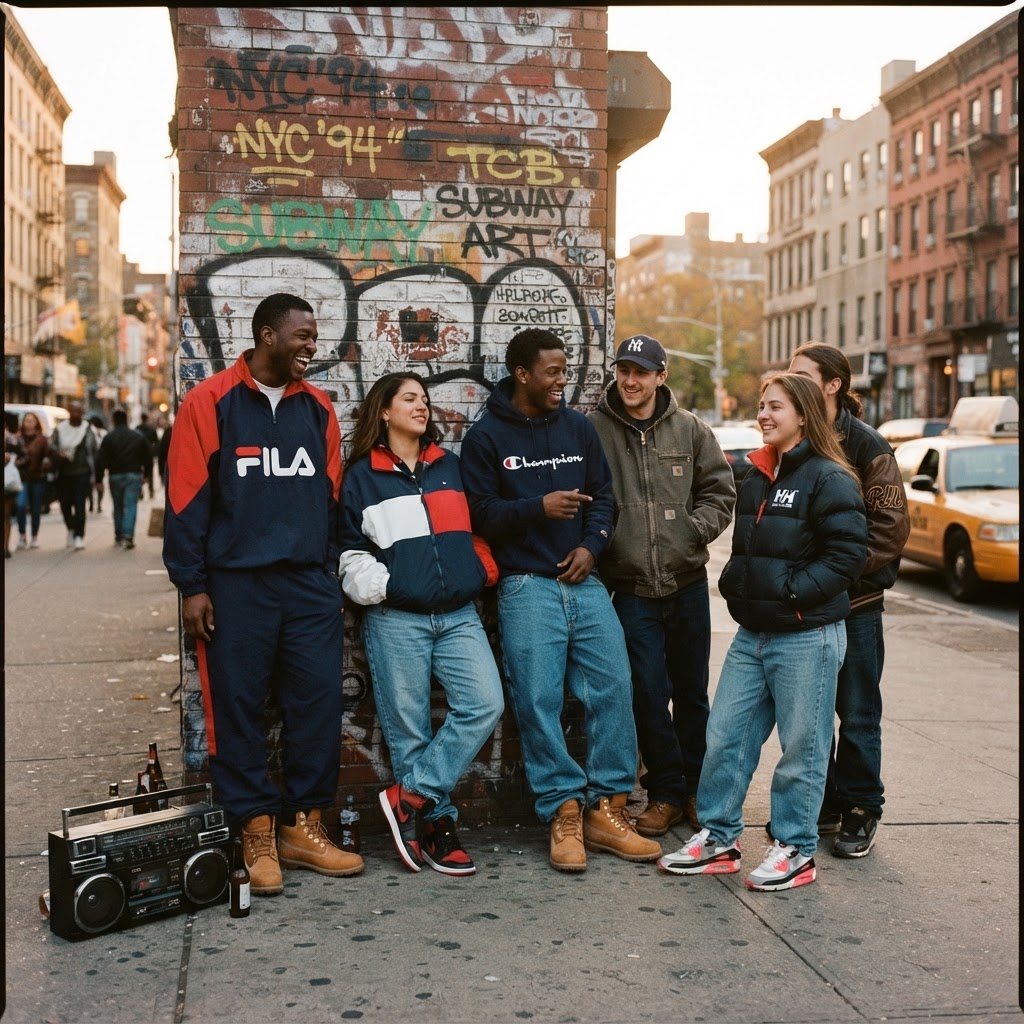
From the Block to the Boutique: How 1990s Hip-Hop Streetwear Changed Fashion Forever
What started on the streets of New York, Los Angeles, and Atlanta became one of the most influential fashion movements of the 20th century. 1990s hip-hop streetwear didn't just dress a generation — it rewrote the rules of style, identity, and cultural power. If you're sitting on a collection of vintage 90s pieces, you're holding more than clothing: you're holding history.
The Streets as Runway
Long before luxury fashion houses started borrowing from hip-hop culture, the culture was building its own aesthetic from the ground up. The 1990s marked the golden age of hip-hop, and with it came a visual language that was bold, intentional, and deeply tied to community identity. Streetwear wasn't a marketing category back then — it was a lifestyle, a statement, and for many, a form of resistance.
Unlike the glossy, aspirational fashion of the mainstream, 90s hip-hop style was rooted in accessibility and attitude. It borrowed from sportswear, workwear, and luxury simultaneously, remixing them into something entirely new. Understanding this history isn't just culturally enriching — for vintage sellers, it's essential market intelligence.
The Origins: New York City and the Bronx Blueprint
The foundation was laid in the boroughs of New York City, where hip-hop was born in the late 1970s. By the time the 90s arrived, the culture had exploded nationally, and its fashion codes had crystallized. Oversized silhouettes became the defining shape of the era — baggy jeans, extra-large hoodies, and voluminous puffer jackets weren't accidents of taste but deliberate rejections of the fitted, preppy styles that dominated mainstream fashion.
Brands like Polo Ralph Lauren took on new meaning when adopted by groups like Lo-Life, a Brooklyn collective that flipped the brand's old-money connotations into a symbol of street prestige. This kind of cultural reappropriation was everywhere in 90s hip-hop fashion — taking what wasn't meant for you and making it undeniably yours.
The Rise of Sportswear Giants
No conversation about 90s hip-hop streetwear is complete without acknowledging the dominance of sportswear brands. Nike, Adidas, and FILA weren't just athletic companies — they were cultural currencies. A fresh pair of Air Jordans or a classic Adidas tracksuit signaled taste, status, and belonging.
Run-DMC had famously celebrated Adidas in the 1980s, but by the 90s, the relationship between hip-hop artists and sportswear had deepened into something more complex and commercially powerful. Artists weren't just wearing these brands — they were defining how they should be worn. Shell-toe Adidas with no laces, Nike Air Max sneakers in pristine condition, Champion reverse-weave sweatshirts — each piece carried specific codes that insiders understood immediately.
For vintage sellers today, authenticated sportswear from this era commands serious attention. Deadstock sneakers, vintage Champion hoodies, and original FILA tennis sets are among the most sought-after items on platforms like Ensemble.
Denim, Denim, Denim
If the 90s had an official fabric, it was denim — and hip-hop wore it in every conceivable way. JNCO jeans with their impossibly wide legs, Levi's 501s worn low and loose, Girbaud jeans with their distinctive Velcro straps — each style told a different story about where you were from and what you were about.
Karl Kani deserves special mention here. Often called the godfather of urban fashion, Kani built one of the first brands specifically designed for and by the hip-hop community. His oversized denim sets were worn by Tupac Shakur, Biggie Smalls, and countless others, cementing his place in fashion history. Authentic Karl Kani pieces from the 1990s are genuine collector's items today.
The Luxury Crossover: Timberland, Nautica, and Tommy Hilfiger
One of the most fascinating dynamics of 90s hip-hop fashion was its relationship with preppy and outdoor luxury brands. Timberland boots, originally designed for New England work and outdoor use, became iconic footwear in urban communities — especially in the Northeast. The brand initially distanced itself from this association, which only deepened the cultural claim hip-hop placed on it.
Tommy Hilfiger and Nautica underwent similar transformations. When Grand Puba and later Aaliyah wore Tommy on television, sales skyrocketed overnight. Hip-hop hadn't just adopted these brands — it had rescued and reinvented them. The Tommy Hilfiger flag logo rugby shirt, the Nautica sailing jacket, the Polo Sport windbreaker — these are now grail pieces for vintage collectors worldwide.
As a seller on Ensemble, provenance and condition are everything with these crossover pieces. A well-preserved Tommy Hilfiger color-block jacket from 1995 isn't just a shirt — it's a document of cultural history.
West Coast Flavor: Dickies, Chucks, and Cholo Influence
While New York shaped much of the early streetwear aesthetic, the West Coast — particularly Los Angeles — brought its own powerful visual vocabulary. Gangsta rap and West Coast hip-hop introduced the world to Dickies work pants, white T-shirts, Converse Chuck Taylors, and flannel shirts worn open over plain tees. This aesthetic drew heavily from Chicano culture and the lowrider community, creating a distinctive look that was simultaneously casual and charged with meaning.
Brands like Ben Davis and Dickies became symbols of West Coast authenticity in the same way that Polo and Tommy represented East Coast status. Vintage Dickies sets and original Ben Davis shirts from the 90s are increasingly rare finds that resonate deeply with collectors who understand the cultural context.
The Women of 90s Hip-Hop Fashion
It would be a significant omission to discuss this era without honoring the women who shaped it. TLC, Missy Elliott, Lil' Kim, Salt-N-Pepa, and Aaliyah each brought distinct and powerful aesthetics that pushed boundaries in different directions.
TLC's color-blocked athletic wear and playful layering. Lil' Kim's fearless fusion of streetwear and high fashion. Aaliyah's perfection of the midriff-baring crop top paired with baggy jeans — a look so iconic it has never truly left fashion. Missy Elliott's futuristic and gender-fluid takes on streetwear. These women weren't accessories to the movement; they were architects of it.
Vintage pieces associated with this feminine hip-hop aesthetic — crop tops, platform sneakers, colored faux fur, vinyl and patent leather accessories — are enormously popular with contemporary buyers who grew up watching these artists.
Why This Era Matters to Vintage Sellers Right Now
The cultural rehabilitation of 90s hip-hop fashion is in full swing, driven by nostalgia, the influence of Gen Z consumers, and a broader recognition of hip-hop's artistic and historical significance. In 2023, hip-hop celebrated its 50th anniversary, sparking a renewed wave of interest in the aesthetics that defined its golden era.
Resale values for authenticated 90s streetwear have climbed steadily. Buyers are sophisticated — they know the difference between a mid-90s FUBU four-for-four jersey and a later reproduction. They're looking for original tags, authentic colorways, and pieces with demonstrable provenance.
As a seller, your job is to educate as much as to sell. Write descriptions that tell the cultural story of a piece. Who wore this style? What did it mean? Where was it worn? Context transforms a used garment into a collectible artifact.
Conclusion: Sell the Story, Not Just the Shirt
The history of 90s hip-hop streetwear is one of creativity, community, and cultural power. These garments carried meaning that transcended fashion — they were declarations of identity in a world that often refused to see the people wearing them. That weight doesn't diminish with age; it deepens.
At Ensemble, we believe that every decade has its own story to tell through clothing, and the 1990s speak louder than most. Whether you're listing a vintage Tommy Hilfiger rugby, a pair of deadstock Jordans, or an original Karl Kani set, you're not just offering a product — you're offering a piece of living cultural history. List thoughtfully, price with knowledge, and let the story sell itself.