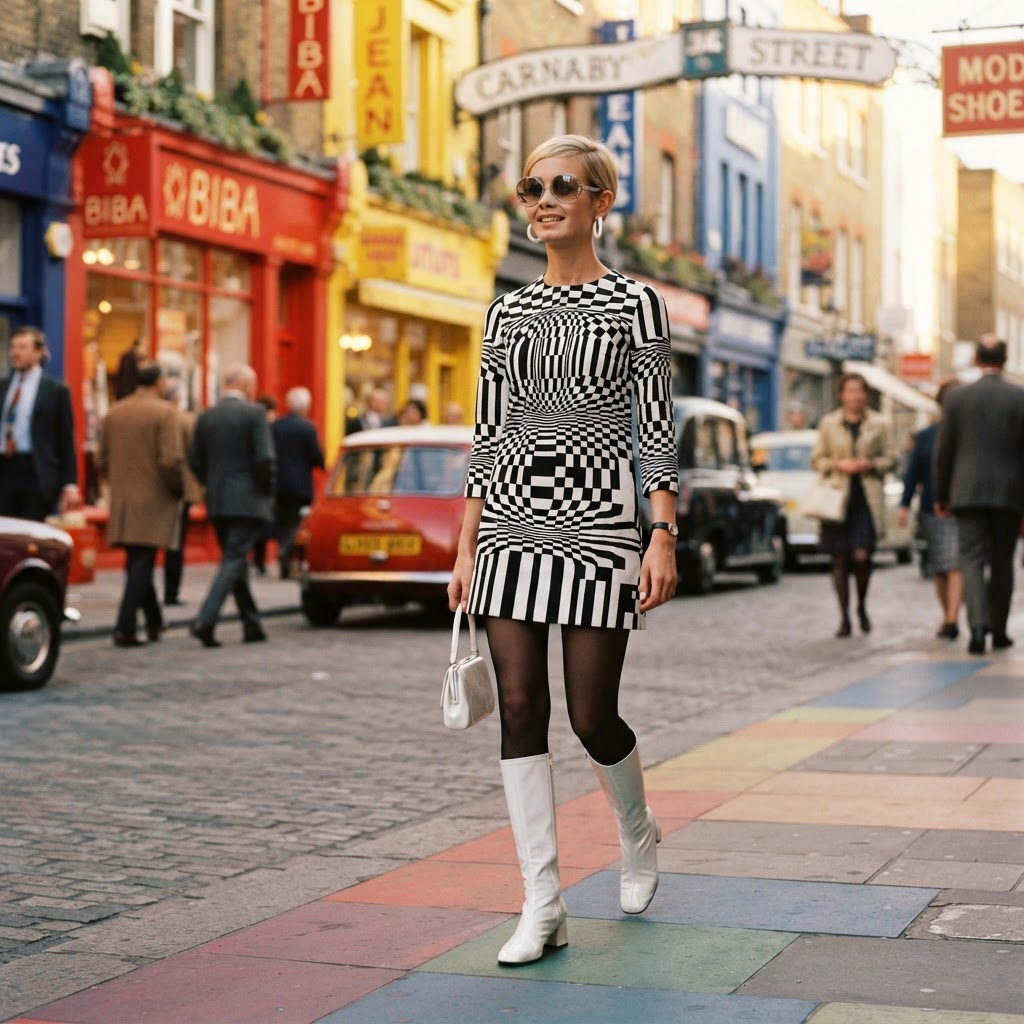
From Carnaby Street to Your Closet: The Story Behind 1960s Mod Fashion and Its Timeless Appeal
Few fashion movements have left as bold a mark on style history as the 1960s mod scene — a revolution stitched together from bold geometry, rebellious youth energy, and a fierce desire to break free from the past. Whether you're a seasoned vintage seller or just beginning to curate your shop, understanding mod fashion's origins and enduring influence can help you better describe, price, and market these iconic pieces. Read on to discover the full story behind one of the twentieth century's most electrifying style moments.
The Birth of a Movement
To understand mod fashion, you have to understand the world it was born into. Post-war Britain in the late 1950s was a place of cautious optimism — rationing had ended, a new generation was coming of age, and young people were hungry for something entirely their own. What emerged from the streets of London, particularly around Carnaby Street and the King's Road in Chelsea, was nothing short of a style revolution.
The word "mod" itself is short for modernist, a term borrowed from the jazz subculture that prized sharp dressing and a forward-thinking attitude. By the early 1960s, it had evolved into a full-blown aesthetic identity: clean lines, bold geometric patterns, space-age silhouettes, and an unmistakable sense that the future had finally arrived.
The Designers Who Defined the Decade
No conversation about mod fashion is complete without Mary Quant, the London designer widely credited with popularizing — if not inventing — the miniskirt. Quant opened her boutique Bazaar on the King's Road in 1955, and by the mid-1960s she was dressing a generation of young women who refused to look like their mothers. Her designs were playful, bold, and unapologetically youthful, often featuring graphic color-blocking, vinyl fabrics, and daringly short hemlines.
Alongside Quant, André Courrèges was bringing a similar space-age sensibility to the Paris runways, introducing white go-go boots, clean A-line silhouettes, and futuristic cutouts that seemed beamed in from another century. Meanwhile, Paco Rabanne was experimenting with unconventional materials — chainmail, plastic discs, and metal — creating garments that looked like wearable sculpture.
For menswear, the mod movement was equally transformative. Labels like John Stephen — dubbed the "King of Carnaby Street" — offered slim-cut suits, Chelsea boots, turtlenecks, and bold printed shirts that gave young men permission to be just as fashion-forward as their female counterparts.
The Icons Who Wore It
Fashion movements need faces, and the 1960s mod scene had some of the most memorable in history. Twiggy, born Lesley Lawson, became the defining supermodel of the era with her androgynous frame, dramatic lashes, and pixie cut — a walking advertisement for the mod aesthetic. Her image, plastered on magazine covers worldwide, made the look globally recognizable almost overnight.
Jean Shrimpton, another towering figure of '60s fashion photography, brought a softer but equally modern sensibility to the movement. And of course, the broader cultural landscape — from The Beatles in their early collarless suits to Mick Jagger in ruffled shirts — reinforced that mod was as much about music and attitude as it was about clothing.
On screen, films like Blow-Up (1966) captured the frenetic, color-saturated world of swinging London fashion, while TV shows like The Avengers gave audiences Diana Rigg in sleek, geometric ensembles that made mod style look simultaneously dangerous and effortlessly chic.
The Key Pieces: What to Look For
For vintage sellers, knowing exactly which pieces embody authentic 1960s mod style is essential. Here's what to keep an eye out for when sourcing inventory:
- Mini skirts and shift dresses: The shorter, the more mod. Look for A-line silhouettes in bold solids or op-art patterns — think black-and-white geometric prints inspired by the visual art movement of the same name.
- Go-go boots: White, low-heeled, and knee-high. These are perennial bestsellers and incredibly recognizable to buyers.
- Mod coats: Structured, single-breasted coats in bright colors or houndstooth check, often with large statement buttons.
- Nehru collar shirts and jackets: The collarless, mandarin-collar silhouette was a menswear staple closely associated with both mod fashion and The Beatles.
- Vinyl and patent leather accessories: Shiny, futuristic handbags, belts, and shoes in white, black, or primary colors.
- Tights and hosiery: Brightly colored or patterned tights were a mod essential, often coordinated deliberately with the dress above.
When writing listings for these pieces, lean into the specific vocabulary of the era. Words like "space-age," "geometric," "op-art," "Carnaby Street," and "swinging sixties" resonate with buyers who are searching for exactly this aesthetic.
Why Mod Never Really Went Away
One of the most remarkable things about 1960s mod fashion is how thoroughly it has refused to stay in the past. Decade after decade, the aesthetic resurfaces on runways, in street style, and in pop culture — proof that its appeal is genuinely timeless rather than merely nostalgic.
The 1990s saw a massive mod revival, fueled in part by Britpop culture. Bands like Oasis and Blur brought back parkas, slim-cut trousers, and bold graphic prints, while designers like Paul Smith consistently referenced the era. Kate Moss in the mid-'90s was frequently styled in ways that consciously echoed Twiggy.
In the 2000s and 2010s, mod silhouettes appeared regularly in the collections of Marc Jacobs, Miuccia Prada, and Stella McCartney — designers who understood that clean geometric lines and youthful irreverence never truly go out of style. The mod mini dress in particular has become a perennial fashion staple, reinterpreted every few seasons with new fabrics, colors, and embellishments.
Even today, TikTok's vintage fashion community has embraced authentic 1960s pieces with enormous enthusiasm. Searches for "60s mod dress" and "vintage go-go boots" consistently trend upward, particularly among younger buyers who are discovering the era for the first time and falling in love with its bold, joyful energy.
Seller Tips: How to Market Mod Pieces Effectively
Understanding the history is only half the battle — translating that knowledge into compelling listings is where the real work happens. Here are a few practical tips for sellers working with 1960s mod inventory:
Tell the story. Buyers of vintage clothing aren't just purchasing a garment — they're purchasing a connection to a specific moment in history. Use your listing description to briefly contextualize the piece. A shift dress isn't just a shift dress; it's a silhouette born on Carnaby Street and worn by a generation that changed the world.
Use era-specific keywords. Terms like "Mary Quant style," "op-art print," "space-age silhouette," and "swinging London" help your listings surface in searches from buyers who know exactly what they're looking for.
Photograph boldly. Mod fashion is inherently graphic and visually striking — let your photography reflect that. Clean backgrounds, strong lighting, and shots that emphasize the geometric lines of a garment will always outperform cluttered or low-contrast images.
Price with confidence. Authentic 1960s pieces in good condition are increasingly rare and genuinely collectible. Research comparable sold listings, factor in condition and provenance, and don't undersell the historical significance of what you're offering.
The Mod Legacy Lives On
From the boutiques of Carnaby Street to the feeds of today's vintage enthusiasts, 1960s mod fashion has traveled an extraordinary distance without losing a single step of its swagger. It was a movement built on optimism, creativity, and the radical idea that style could be an act of liberation — and those qualities resonate just as powerfully today as they did six decades ago.
At Ensemble, we believe that every vintage piece carries a story worth telling. Whether you're listing a pristine vinyl handbag or a beautifully preserved op-art shift dress, you're not just selling clothing — you're preserving a piece of cultural history and passing it on to someone who will love it as much as the original owner did. That's what makes vintage fashion so endlessly compelling, and it's exactly what makes selling on Ensemble so rewarding.