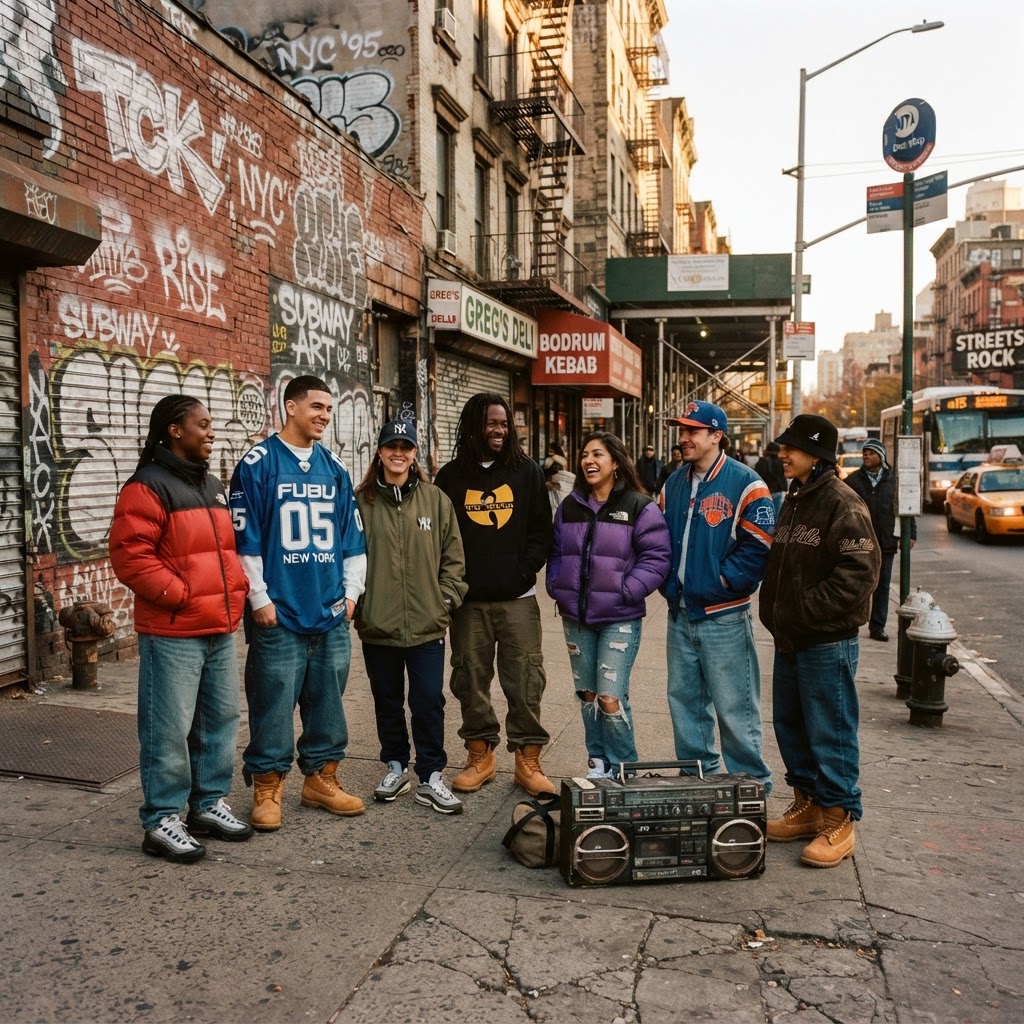
Fresh to Def: A Buyer's Guide to Authentic 1990s Hip-Hop Streetwear
Few fashion movements have reshaped global culture as profoundly as 1990s hip-hop streetwear. Born on the block and broadcast to the world, these looks are now coveted vintage treasures. Here's everything you need to know before you shop.
The Streets as Runway: How Hip-Hop Defined 1990s Fashion
Long before luxury houses were sending rappers down their runways, hip-hop artists were building their own fashion language from the ground up. The 1990s was the decade when that language became fluent, loud, and impossible to ignore. What started as practical workwear — oversized flannels for warmth, baggy jeans for freedom of movement, Timberland boots for navigating city streets — evolved into a full-blown aesthetic philosophy that said: we define ourselves.
The cultural stakes were enormous. At a time when mainstream fashion largely ignored Black communities, hip-hop artists and their fans created a parallel universe of style that was aspirational, political, and deeply personal. By the mid-1990s, that universe had swallowed the mainstream whole. Today, the garments from this era are not just clothing — they are artifacts of a movement.
Key Silhouettes and Why They Mattered
The defining silhouette of 1990s hip-hop streetwear was volume. Baggy was not merely a trend; it was a statement of autonomy. JNCO jeans, with their cartoonishly wide legs, and Karl Kani oversized denim pushed proportions to deliberate extremes. Pairing massive bottoms with an equally oversized Polo Ralph Lauren rugby shirt or a Champion reverse-weave hoodie created a look that was relaxed, powerful, and unmistakably intentional.
Logomania was another pillar of the era. Wearing a brand's logo large and proud was a form of cultural fluency — knowing which logos carried weight on which blocks. Tommy Hilfiger famously exploded into hip-hop culture after Aaliyah wore a Tommy crop top on TLC's CrazySexyCool tour and Grand Puba name-dropped the brand in lyrics. Nautica, FUBU, Cross Colours, and Rocawear each carried distinct subcultural meanings that serious vintage collectors still decode today.
Footwear was equally codified. Nike Air Max 95s, Timberland 6-inch wheat boots, Adidas Superstars, and Nike Air Force 1s weren't just shoes — they were punctuation marks at the end of an outfit's sentence.
The Rise of Black-Owned Brands
Perhaps the most culturally significant fashion story of the 1990s hip-hop era is the explosion of Black-owned streetwear labels. FUBU — For Us, By Us — wasn't just a brand name; it was a manifesto. Founded by Daymond John and his partners in Hollis, Queens, FUBU generated over $350 million in revenue by 1998, fueled in no small part by LL Cool J wearing FUBU gear in a Gap commercial (with the FUBU logo cleverly hidden in plain sight). Authentic early FUBU pieces — hockey jerseys, phat farm jackets, embroidered caps — are among the most historically significant items a vintage collector can own.
Cross Colours, founded in 1989 and peaking in the early 1990s, brought Afrocentric pan-African color palettes and political messaging onto T-shirts and jackets worn by everyone from TLC to Kris Kross. Karl Kani, Walker Wear, and Phat Farm (founded by Russell Simmons in 1992) each added chapters to a story of economic self-determination that ran parallel to the music.
When you purchase one of these pieces through a vintage marketplace, you're not just buying a garment — you're preserving evidence of a remarkable entrepreneurial and cultural moment.
West Coast vs. East Coast: Two Distinct Wardrobes
The East Coast/West Coast divide that defined 1990s hip-hop journalism also produced two visually distinct style tribes, and knowing the difference matters when you're building a collection.
East Coast style, rooted in New York City, leaned heavily into sportswear luxury: Polo Sport, North Face puffer jackets (particularly the North Face Nuptse in bold colorblocking), Carhartt work jackets repurposed as street armor, and Nike ACG gear. Wu-Tang Clan's influence pushed Wallabee creepers and Clarks desert boots into heavy rotation. The palette tended toward darker, grittier tones — black, navy, burgundy — punctuated by bright athletic logos.
West Coast style, shaped by Compton, South Central, and the broader LA scene, favored Dickies work pants in khaki or black, oversized flannels in plaid (worn open over white tees), Starter jackets representing LA Raiders or LA Kings, and Chuck Taylor All Stars or Nike Cortez. The look was deeply influenced by Chicano lowrider culture as much as by hip-hop, creating a hybrid West Coast aesthetic that artists like Snoop Dogg, Dr. Dre, and Tupac broadcast globally.
Spotting Authenticity: What to Look For
Buying vintage 1990s hip-hop streetwear requires a trained eye. Here are the key authentication checkpoints:
Check the tags. Authentic 1990s garments carry period-correct tags. FUBU tags from the early-to-mid '90s have specific font treatments and label placements. Champion's iconic C logo reverse-weave has subtle differences across production years. Familiarize yourself with the label history of the brands you're pursuing.
Examine the construction. Garments from this era were often made with heavier cotton weights than modern reproductions. A genuine Champion hoodie from 1994 has a thick, substantial feel that fast-fashion knockoffs simply cannot replicate. Check the stitching density, the weight of the fabric, and the hardware on zippers and snaps.
Verify the colorways. Many of the most iconic colorways — the Polo Stadium collection's multicolor patchwork, the Tommy Hilfiger color-block rugby in red, white, and blue — have been re-released or faked extensively. Cross-reference with archival lookbooks and editorial photography from publications like The Source, Vibe, and XXL to verify that a colorway existed in the original production run.
Condition grades matter. In vintage streetwear, even distressed or worn pieces can command premium prices if the piece is rare enough. However, understand what you're buying: fading, cracking graphics, and pilling are signs of age and authenticity, but structural damage like seam separation or significant staining impacts both wearability and value.
Styling Authentic 1990s Hip-Hop Pieces Today
One of the great joys of collecting from this era is that the clothes were built to be worn. The oversized proportions that defined the decade happen to align beautifully with contemporary silhouettes favored by today's fashion-forward dressers.
A FUBU hockey jersey pairs effortlessly with modern wide-leg trousers and chunky sneakers. A North Face Nuptse puffer in its original colorblock pattern works as a statement outer layer over contemporary basics. Cross Colours graphic tees hold their own as standalone pieces tucked loosely into high-waisted denim. The key is to let the hero piece speak — these garments were designed to command attention, and they still do.
Avoid over-costuming. Mixing one or two authentic period pieces with modern wardrobe staples creates a dialogue between eras that feels intentional rather than theatrical.
Why These Pieces Are Only Getting Rarer
The window for acquiring authentic, well-preserved 1990s hip-hop streetwear is narrowing. Many pieces from this era were worn hard and discarded — they were work clothes and party clothes, not museum pieces. What survives in excellent condition is increasingly scarce, and collector demand has grown dramatically as the cultural significance of the era receives its proper historical reckoning.
Institutions like the Smithsonian and the Museum at FIT have begun acquiring hip-hop fashion artifacts. Academic programs now study the era's aesthetic output. Prices for key pieces — a pristine Polo Snow Beach pullover, a deadstock FUBU platinum jersey, an unworn Tommy Hilfiger color-block windbreaker — have risen sharply and show no signs of retreating.
This is not a trend. This is the market recognizing genuine cultural history.
Find Your Piece of History at Ensemble
At Ensemble, we curate authentic vintage clothing from every decade of the twentieth and early twenty-first centuries, and our 1990s hip-hop streetwear collection is among the most carefully sourced on the market. Every piece in our marketplace is verified for authenticity, graded for condition, and documented with detailed photography so you can shop with confidence.
Whether you're a dedicated collector building an archival wardrobe or a style-conscious shopper looking for one perfect statement piece, Ensemble is where the history is waiting for you. Browse our 1990s collection today — the culture deserves to be worn, not forgotten.