Free Spirit, Modern Soul: How to Style 1970s Boho Fashion for Everyday Wear
The 1970s bohemian aesthetic never really left — it just waited for the right moment to come back stronger than ever. With flowing silhouettes, earthy tones, and a carefree attitude that feels revolutionary even now, 70s boho is the decade-defining style that translates effortlessly into modern wardrobes. Whether you're a seasoned vintage collector or a curious newcomer, here's how to channel that free-spirited decade without looking like you raided a costume shop.
Why 1970s Boho Still Resonates Today
There's something deeply magnetic about the 1970s bohemian movement. Born from the tail end of the counterculture revolution, it was a style that rejected conformity in favor of self-expression, natural beauty, and a kind of effortless wanderlust. Think Stevie Nicks twirling in a chiffon skirt, or Bianca Jagger striding through a sun-drenched field in a wide-brimmed hat. The aesthetic was — and still is — about dressing like you live a beautifully unscheduled life.
In today's fashion landscape, that energy couldn't feel more relevant. As maximalism makes its comeback and people seek clothing with character and history, 1970s boho sits at the perfect intersection of nostalgic and now. The key to wearing it in 2024 is balance: letting the vintage pieces speak while grounding them in a contemporary context.
The Essential Pieces of 70s Boho Style
Before you can style the era, you need to understand its building blocks. The 1970s bohemian wardrobe was built on a handful of iconic staples that still feel incredibly wearable today.
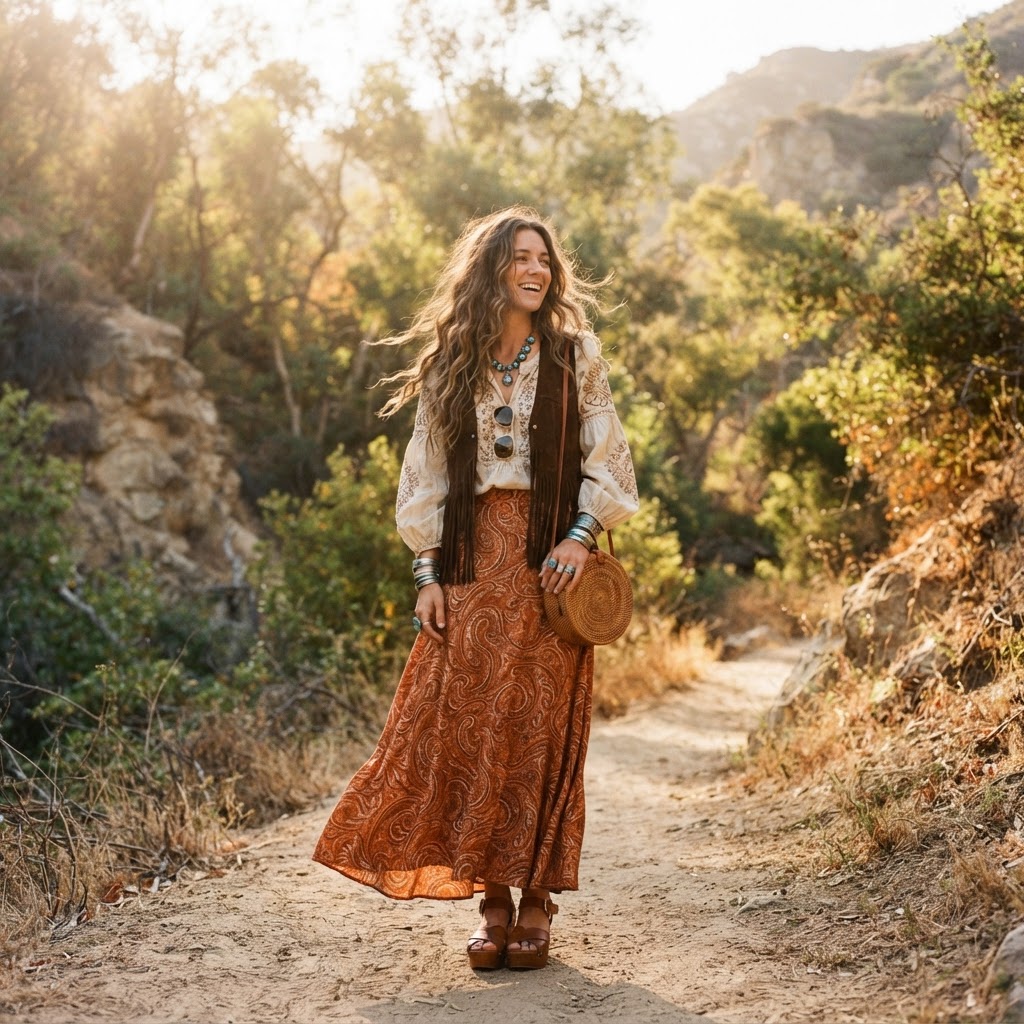
Maxi skirts and dresses were the crown jewels of the movement. Sweeping to the floor in fabrics like crinkle cotton, gauze, and chiffon, these pieces moved with the wearer and created that signature floaty, romantic silhouette. Look for earthy tones — rust, mustard, chocolate brown, forest green — or bold floral and paisley prints.
Flared and wide-leg trousers are another cornerstone. High-waisted with a dramatic flare from the knee down, these pants are incredibly flattering and surprisingly versatile. Paired with a tucked-in blouse or a cropped knit, they work just as well in a modern office as they do at a weekend farmers market.
Peasant blouses — loose, embroidered, often with billowing sleeves and a drawstring neckline — are the quintessential 70s boho top. Authentic vintage examples often feature intricate needlework from Mexican, Eastern European, or Indian textile traditions, adding a layer of artisanal beauty that fast fashion simply can't replicate.
Suede and leather accents grounded the ethereal fabrics with something earthy and tactile. Fringe bags, leather belts with oversized buckles, and platform sandals or heeled clogs completed the look with a satisfying thud of texture.
Finally, layering was everything. Vests over blouses, cardigans over dresses, scarves tied into hair — the 70s boho woman (or man) never wore just one thing when five would tell a better story.
Modern Pairings: Making It Work for Today
The secret to wearing vintage without veering into costume territory is strategic contrast. You want the vintage piece to be the star, supported by modern basics that keep the overall look grounded.
Maxi Skirt + Modern Minimal Top
Take a gorgeous authentic 1970s printed maxi skirt — perhaps one in a warm terracotta with a swirling floral pattern — and pair it with a clean, contemporary fitted white ribbed tank. Finish with simple leather slides and a small structured crossbody bag. The skirt does all the talking; the rest of the outfit simply listens. This combination works for brunch, gallery visits, or an afternoon of errands and looks intentional rather than costumey.
Wide-Leg Trousers + Crisp Button-Down
Vintage wide-leg trousers in a warm plaid or solid camel are extraordinarily easy to integrate into a modern wardrobe. Tuck a crisp white oxford shirt into the high waist, add a slim leather belt, and finish with mules or loafers. This pairing has a polished, editorial quality that works in creative professional environments. You're not dressing up as the 70s — you're borrowing its best silhouette and making it yours.
Peasant Blouse + Contemporary Denim
Perhaps the easiest 70s boho entry point: slip an embroidered peasant blouse over your favorite straight-leg or wide-leg jeans. The contrast between the ornate, handcrafted blouse and the familiar casual denim creates an easy, approachable look. Add platform espadrilles or chunky sandals and a woven tote, and you have a perfect summer uniform that feels both relaxed and considered.
Full Boho Commitment
Sometimes, you just want to go all in — and that's completely valid. A head-to-toe vintage 70s boho look, done thoughtfully, is a statement of confidence and style knowledge. Layer a printed maxi skirt with a matching or complementary peasant top, add a suede fringe vest, stack your wrists with hammered brass bangles, slip into wedge sandals, and finish with oversized tinted sunglasses. The key to pulling this off is fit and condition: make sure every piece fits your body well and is in excellent, clean condition. Well-curated maximalism reads as intentional style; ill-fitting or worn pieces read as thrift chaos.
Accessories: The Soul of 70s Boho
If the clothing is the canvas, accessories are the paint in a 1970s boho look. This is an era defined by adornment, and getting the accessories right can elevate even a simple outfit into something special.
Hats were enormous — literally. Wide-brimmed felt hats, floppy sun hats, crocheted caps — headwear was a statement. A single vintage wide-brim hat can transform a simple modern dress into a full boho moment.
Jewelry leaned natural and abundant. Turquoise and coral, hammered metals, wooden beads, and layered chains were all hallmarks. Don't be afraid to stack rings, layer necklaces of varying lengths, or pile on bangles. The more handcrafted and textural the pieces look, the more authentically 70s they feel.
Bags in the 70s were tactile artworks: woven rattan clutches, saddle bags in tan leather, hobo bags with fringe, crocheted pouches. Sourcing an authentic example adds immediate vintage credibility to any outfit.
For footwear, platforms, clogs, and heeled sandals are your friends. Even a modern pair of platform sandals in a natural leather tone will harmonize beautifully with vintage 70s pieces.
Caring for Your Vintage Finds
Authentic 1970s garments deserve proper care. Natural fibers like cotton, wool, and silk — common in this era — respond well to gentle hand washing or dry cleaning. Always check for any existing repairs or fragile embroidery before washing. Store delicate pieces like embroidered blouses or chiffon maxi dresses on padded hangers away from direct sunlight to prevent fading and fabric stress. Suede and leather pieces benefit from occasional conditioning with a quality leather balm. Treat these garments as the irreplaceable objects they are, and they'll reward you with decades more of wear.
Building a 70s Boho Wardrobe Intentionally
Rather than buying everything at once, approach your 70s boho collection like a slow, pleasurable curation. Start with one or two anchor pieces — a statement maxi skirt or a beautifully embroidered blouse — and build outward. Let each piece earn its place in your wardrobe by asking whether it genuinely excites you and whether it works with at least three other things you own.
Authenticity matters both aesthetically and ethically. Genuine vintage clothing carries a smaller environmental footprint than newly produced clothing, and it carries something new clothes never can: actual history. The peasant blouse you find was worn by someone, somewhere, in the decade that made it. That provenance is part of the magic.
Conclusion: Find Your 70s Boho Story at Ensemble
The 1970s bohemian aesthetic is a love letter to freedom, craftsmanship, and individuality — values that feel just as urgent today as they did fifty years ago. Wearing it in a modern context isn't about imitation; it's about conversation, pulling the best ideas from a remarkable decade and weaving them into the story of who you are right now.
At Ensemble, our carefully curated marketplace of authentic vintage clothing from the 1920s through the 2010s is the perfect place to discover your 70s boho anchor pieces. Every listing is authenticated and described with care, so you can shop with confidence and build a wardrobe that's genuinely, beautifully yours. Explore our 1970s collection today and find the piece that starts your story.