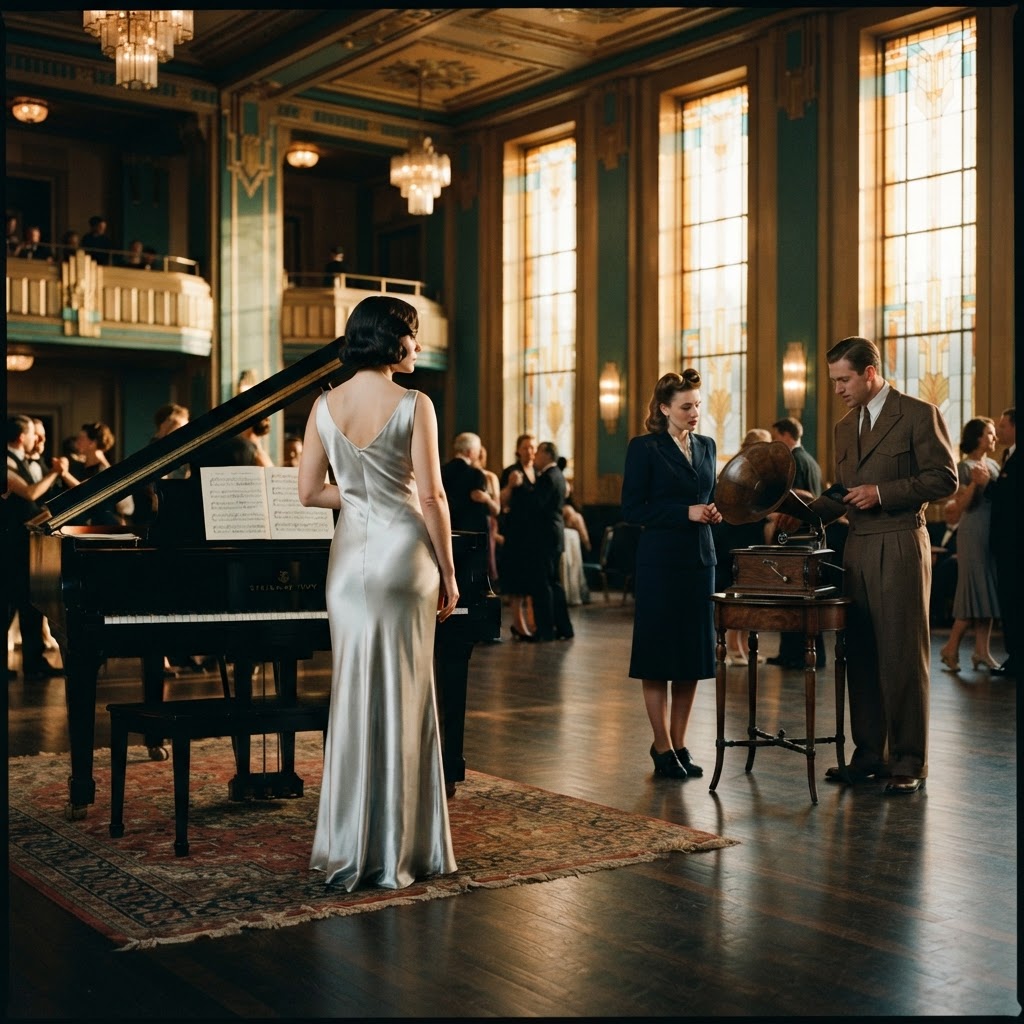
Dressed for the Times: What 1920s–1940s Fashion Still Tells Us About Power, Freedom, and Identity
From the liberated silhouettes of the Jazz Age to the resourceful utility dressing of World War II, the clothes worn between 1920 and 1949 were never just clothes. They were declarations, adaptations, and quiet rebellions stitched into every seam. Understanding what people wore in these pivotal decades is to understand the forces that shaped the modern world.
The Roaring Twenties: When Hemlines Became Headlines
No decade in fashion history announces itself quite so boldly as the 1920s. After the suffocating constraints of the Edwardian era — with its corsets, its rigid class codes, and its expectation that women would remain ornamental and obedient — the flapper silhouette arrived like a thunderclap. Waists dropped. Hemlines rose, scandalously, toward the knee. Hair was shorn into the iconic bob cut, and suddenly the very shape of womanhood looked different.
But these changes were never merely aesthetic. The 1920s were the first full decade in which American women could vote, and the fashion of the era reflected a society renegotiating the terms of female autonomy in real time. The drop-waist dress deliberately obscured the hourglass figure that had long been fetishized and corseted into submission. To dress as a flapper was, on some level, to reject the idea that a woman's body existed primarily for the male gaze or for reproduction. It was radical, and the cultural panic it provoked — from religious leaders, politicians, and newspaper columnists — tells you everything about how seriously that radicalism was taken.
At the same time, the 1920s were an era of dazzling contradictions. The Jazz Age brought Black American music, art, and culture to the center of mainstream entertainment, and yet the white women dancing the Charleston in beaded drop-waist dresses were rarely extending that cultural admiration into calls for racial equality. Fashion absorbed the energy of the Harlem Renaissance without fully reckoning with its meaning. This tension — between borrowing and belonging, between celebration and appropriation — is one the fashion industry is still working through today.
The Craftsmanship Behind the Glamour
What makes authentic 1920s and early 1930s garments so extraordinary to hold and wear today is the sheer quality of their construction. Art Deco motifs — geometric patterns, chevrons, sunburst beading — were applied by hand to silk charmeuse, georgette, and crepe de chine. Beaded flapper dresses could weigh several pounds, each glass bead sewn individually by artisans working in ateliers from Paris to New York. The labor was intensive, the materials were luxurious, and the results were garments built to last generations.
This craftsmanship reflected the values of a couture-forward industry not yet transformed by mass production. Even ready-to-wear garments of the period were cut with a precision and finished with a care that is genuinely difficult to find in contemporary fast fashion. When you encounter a true vintage piece from this era, you are not just wearing history — you are wearing evidence of what clothing can be when it is made with patience and intention.
The 1930s: Depression-Era Elegance and the Politics of Beauty
The stock market crash of 1929 sent the world spinning into economic catastrophe, and fashion responded in ways that seem almost paradoxical at first glance. Rather than retreating into austerity, mainstream style in the early 1930s became, in many ways, more glamorous. The bias cut, perfected by French designer Madeleine Vionnet and made iconic by figures like Jean Harlow, transformed how fabric moved on the body. Gowns cut on the diagonal clung to curves, pooled at the feet, and shimmered under electric light with an almost liquid quality.
This was escapism, yes — Hollywood was selling dreams to a population desperate for them — but it was also something more resilient. The Golden Age of Hollywood created a new democratization of glamour. A secretary in Cincinnati could study the gown Greta Garbo wore in a film and have a version made by a local dressmaker for a fraction of the cost. Style became aspirational in a newly accessible way, detached from the exclusive domain of the European aristocracy.
The 1930s also saw the rise of sportswear as a legitimate fashion category, led by American designers like Claire McCardell. As women entered the workforce in greater numbers and pursued more active leisure lives, clothing had to keep pace. The seeds of the practical, body-conscious, movement-friendly aesthetic that dominates how most of us dress today were planted firmly in this decade.
The 1940s: Utility, Ingenuity, and the Uniform of Resilience
If any decade proves that fashion is inseparable from politics, it is the 1940s. World War II restructured virtually every aspect of daily life, and clothing was no exception. In Britain, the Utility Clothing Scheme, introduced in 1941, placed strict government restrictions on how much fabric could be used in a single garment. Hems rose. Pleats were eliminated. Decorative buttons were rationed. The result was a silhouette defined by clean lines, structured shoulders, and a no-nonsense practicality that has become one of the most enduring aesthetics in fashion history.
In the United States, L-85 regulations imposed similar restrictions, limiting the amount of fabric in women's skirts and banning double-breasted suits for men. And yet, within these constraints, designers and everyday wearers found extraordinary creativity. Women painted seams on their bare legs to simulate nylon stockings, which had been redirected to the war effort for parachutes. They re-cut men's suits into tailored women's jackets. They embroidered, patched, and reimagined garments in an era when Make Do and Mend was not a lifestyle brand but a genuine survival strategy.
The broad-shouldered, nipped-waist silhouette of 1940s womenswear also carried an unmistakable message about female strength. With millions of women entering factories, shipyards, and offices to fill roles left by men at war, clothes reflected a new sense of competence and capability. The silhouette was powerful without being masculine — a careful balance that communicated a society in the middle of a profound shift in gender expectations.
What These Decades Teach Us Today
Looking back at the fashion of 1920 through 1949 with contemporary eyes, several themes emerge with striking relevance.
First, clothing has always been political. Every generation believes it invented the idea of fashion as protest or identity, but the flappers, the Harlem Renaissance dandies, and the utility-dressing women of wartime Britain were all making pointed statements through what they chose to wear. The garments were arguments.
Second, constraint breeds creativity. The most technically innovative and visually enduring fashion of the mid-twentieth century was often produced under conditions of genuine scarcity. The ingenuity of Depression-era dressmaking and wartime utility fashion offers a compelling counterargument to the idea that great style requires abundance.
Third, quality endures. The fact that garments from these decades survive at all — that they can be worn and admired eighty or a hundred years after they were made — is a testament to the standards of construction that defined the era. It is a rebuke, quiet but firm, to the throwaway culture of contemporary fast fashion.
Wearing History Responsibly
To wear a genuine 1920s beaded dress or a 1940s utility suit today is to participate in a kind of living history. It is also to make a choice: to invest in something made with care rather than haste, to step outside the cycle of seasonal trend-chasing, and to carry forward a story that deserves to continue.
At Ensemble, we believe that the most meaningful wardrobe is one built with intention and context. Our curated collection of authentic vintage pieces from the 1920s through the 2010s is selected not just for beauty, but for the stories each garment carries — the cultural moments it witnessed, the hands that made it, the lives it has already lived. Explore our vintage collection and find the piece of history that speaks to you.